 By Ande Jacobson
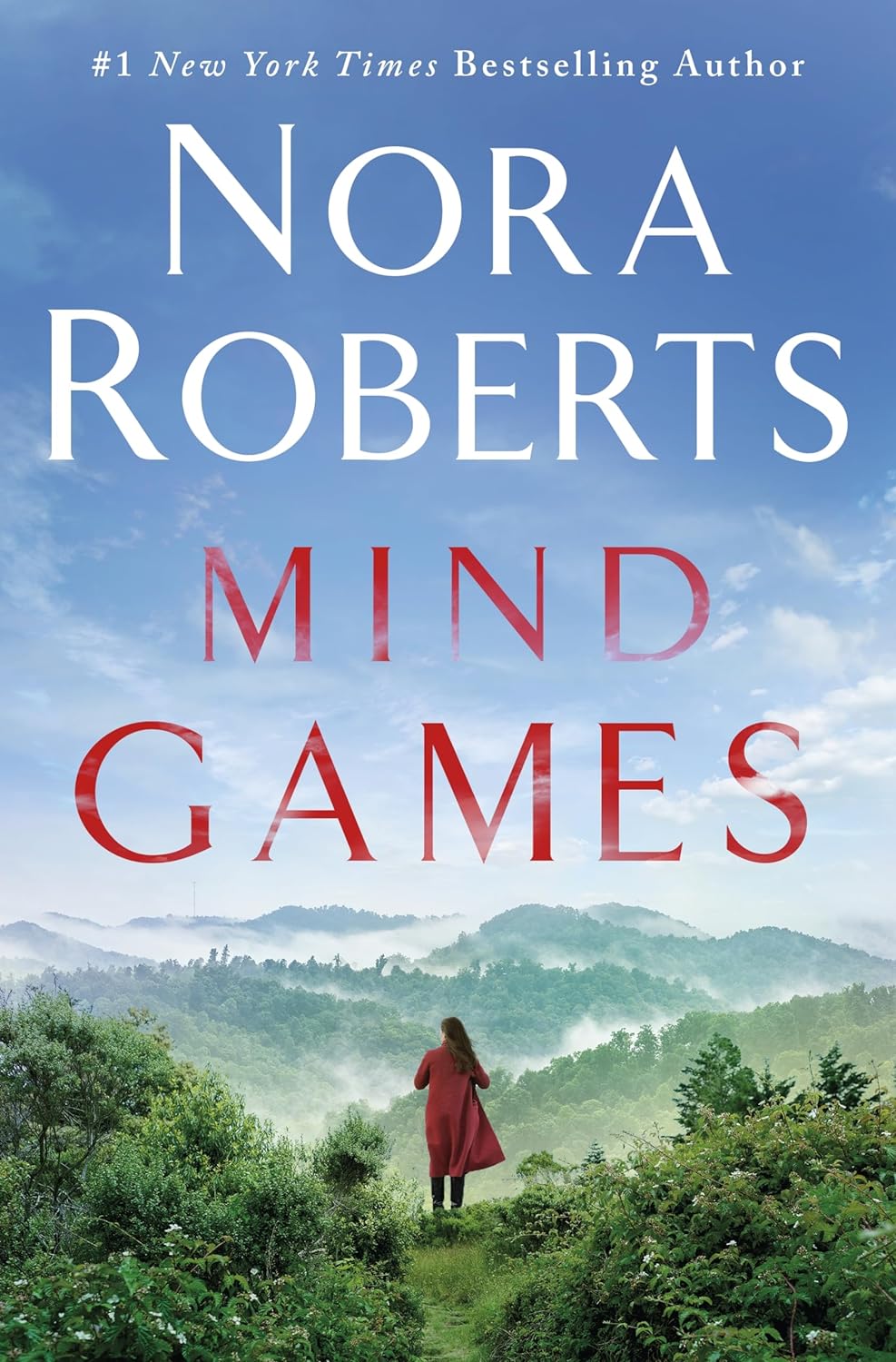
Imagine that you could read another person’s thoughts seeing what they see or have seen. In Nora Roberts’ 2024 book, Mind Games, Thea Fox has such a gift. It’s a gift that runs in her maternal line. While her mother also had the gift, it scared her, so she chose not to use it. Thea’s grandmother, on the other hand, recognized that the gift wasn’t something she asked for, but it was something that she had, and as such she wasn’t afraid of it. Instead, she treasured it, but didn’t abuse it. She knew its power, and chose to use it to help others.
Thea’s younger brother, Rem, doesn’t have the gift. None of the men in her family line do. With the knowledge of her own family’s experience of the gift, she later discovers that even though the gift is limited to the women in her family, that’s not necessarily true in other family lines. How she comes to realize this stems from the most traumatic event in her childhood.
When Thea was twelve, she and Rem had just begun their annual start of summer stay with Grammie, their mom’s mom, in the mountains of Kentucky where their mom had grown up. Their parents had brought them from their home in Virginia to the quaint Kentucky homestead, stayed the night and returned home. They were scheduled to pick them up in two weeks to begin the rest of the summer break. Their father was from an entirely different walk of life having grown up in a ritzy part of San Diego, California, the son of a wealthy but cold old money couple. He grew up in privilege, but when he met his future wife his first year of college, he chose a path his parents never accepted.
Grammie had a small farm, and the kids loved helping out with the daily chores and going on rounds with her as she helped her friends and neighbors. At night, Thea often dreamt vividly of worlds of her own making, but this first night after her parents returned home, she instead had a nightmare. In her dream she saw a young man break into their house and brutally murder her parents. When she awoke, she knew that it was far more than a dream, and shaking, she told Grammie what happened. Grammie had also had a vision but not to the same level of detail as Thea’s. Grammie called the local sheriff to check with the Virginia police, and two detectives were dispatched to interview Thea. When she recounted what happened from her vision they were skeptical, but through the investigation they came to recognize Thea’s gift and eventually caught the killer. More than that, they gained a considerable respect for Thea and her gift and called upon her from time to time to help with other investigations.
The dangerous part of all of this was that the killer, a young man named Ray Riggs, also had the gift, and so began a game of cat and mouse between him and Thea, one that would last decades. Ray abused his gift for his own amusement and used it to torment others. Fortunately, he was convicted of the murders (along with others) and sentenced to multiple life terms without parole. He had felt Thea’s presence the night he killed her parents, and he sought to hurt her. Being incarcerated, though he threatened her in her dreams, he couldn’t get to her physically. Unfortunately, with the power of his mind he was able to torment her, but Thea was stronger than he knew, and he was playing a dangerous game.
Roberts is known for writing romantic thrillers, and this is no exception, although the thriller aspect is riveting. Roberts delves into the supernatural but in a way that doesn’t seem far-fetched given the events of the story. Readers come to know Thea, Rem, Grammie, the detectives who caught Ray, and many others. Fortunately for Thea and Rem, their parents had arranged for Grammie to become their guardian in the event that anything happened to them. The kids were well cared for and loved. Readers follow them through the rest of the childhoods, through college, and into their careers as they live full, interesting lives. Roberts captures the beauty of the Appalachian Mountains, the quaintness of the town, even the personalities of the farm animals and pets along the way. She explores Thea and Rem’s inner conflicts, and their determination in all of their endeavors. Both kids are brilliant, and Grammie ensures that they have the support they need to follow their dreams. They are close in age, and close to one another having together survived one of the most traumatic events that could befall a child. Their father’s family abandoned them entirely, which given the disdain their father’s parents displayed for their mother suited them just fine.
One of Grammie’s neighbors had a large parcel of land, much of which she sold to Thea and Rem. After college, Thea had a nice home built on her piece of the land and worked out a deal to work from home as a game designer. She threw herself into her work with great gusto creating the fantasy worlds and characters of her games. She had a real talent for game design combining her software knowledge and graphic design with her vivid imagination to create compelling games for a company that sought her from the time she was still a student. Her professor had given her an introduction, and her work from a school design project did the rest to convince them to hire her.
As for the romance. Thea had a childhood crush on a young rock star growing up, a man by the name of Tyler Brennan, or Ty. Turns out that Grammie’s neighbor who sold Thea and Rem part of her land was his great-grandmother, and she left her home and remaining land to him. Ty turns up with his toddler son in tow, a single doting father trying to figure out what to do with his life after his band stopped touring. Thea is dumbstruck at first, but Roberts treats their romance tenderly albeit not without a few obstacles.
The guts of the story though surrounds Thea and her psychic battle with Ray. The crossover between her game designs and that battle are interesting and imaginative. Roberts brings in fascinating details concerning the process Thea uses to design her games and the skills she cultivates beyond her software and storytelling work. While the psychic portions of the story stretch readers’ imaginations, the game design portions of the story are quite realistic. The romance too is realistic right down to the conflicts they face along the way.
And Thea’s dog Bunk (short for Rambunctious) is adorable. He’s huge, watchful, and loveable, and readers can clearly picture and feel his presence as they read.
The story’s resolution on all fronts is satisfying, although there is some terror along the way. Roberts also leaves open the possibility of revisiting Thea and company in a future story, not with dangling threads, but just out of interest to find out how the rest of her life unfolds.
Reference:

 A Good Reed Review