SCP’s ‘Fiddler’ 2017 Tech Week Chronicles from the pit

By Ande Jacobson

Starting at the end of this story, on opening night, this Sunnyvale Community Players production of Fiddler on the Roof received not one, but two standing ovations! Needless to say, all the hard work over the many months, and especially this final week, Tech Week, paid off. This last week was a doozy, but we not only survived, we thrived, and the show runs at the Sunnyvale Theater Thursdays – Sundays through 8 October 2017. Now on to the focus of this article, the path through our final week of rehearsals from the pit.

Tech Week, or more colloquially, Hell Week, is always an adventure in the theatre, particularly for musical theatre. Tech Week is that last week leading up to opening night when all the elements are combined, both technical and artistic, which in the case of a musical also includes the music itself. Everything that can go wrong often does, but somehow, magically, it all works by the time the last element is added – the audience. Fiddler on the Roof is a big show, and this Sunnyvale Community Players production includes a cast of 38 (with around 20 of them wearing individual mics) and a full 25-piece orchestra (with every instrument on its own mic) covering every part in the licensed orchestration. By the time we arrived at the first day of tech, the cast had been rehearsing for two months, and two sitzprobes with cast and orchestra together had been conducted.

The video below is a sample from early in the week. The pictures in the video are still shots of the stage action from scenes throughout the show, and the audio is from our recording session of the John Williams mini-symphony on the second night of tech. Note that this Williams piece was originally written for the 1971 film version of Fiddler on the Roof covering the opening credits, the Entr’acte, and the end credits. We will be performing this work in its entirety each show as intermission entertainment, featuring Eric Sun playing the iconic Isaac Stern solo violin part:
Continue reading

Paroxysms, circa 1880s, abound at the Pear

By Ande Jacobson

According to a handy, modern medical dictionary, a paroxysm is defined as:

  1. a sudden violent attack, especially a spasm or convulsion, or
  2. the abrupt worsening of symptoms or recurrence of disease.

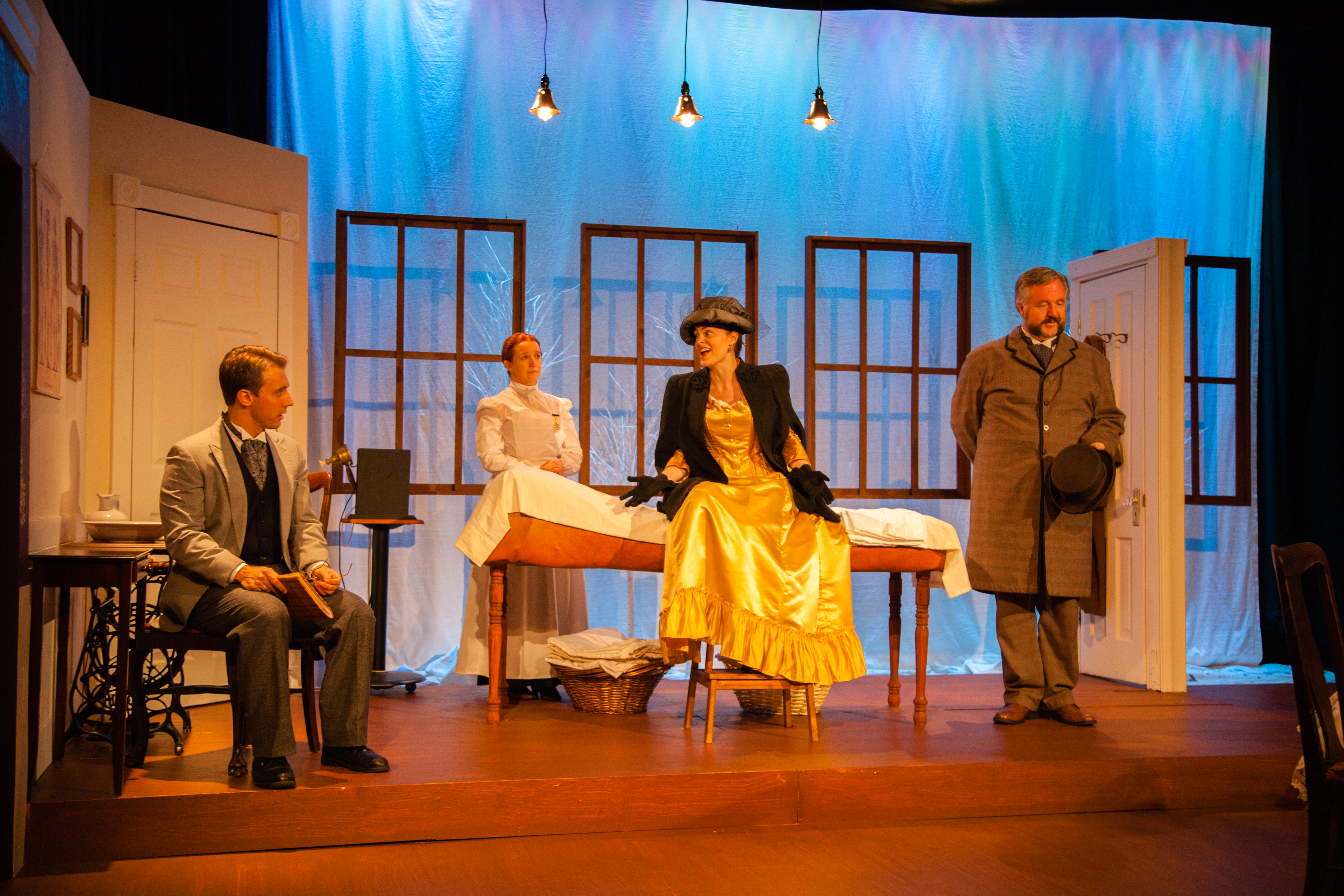
In a broad sense, the first definition fits the 1880s meaning in terms of all outward appearances, but that’s not exactly what they meant by the word in those days – at least as it’s used in Sarah Ruhl’s play, In the Next Room or the vibrator play, currently on stage at the Pear Theatre. This work was inspired by Rachel P. Maines‘ research. Maines specializes in the history of technology and accidently discovered an odd connection between medical practice of late 19th century and technological advances in the use of electricity based on ads from numerous American women’s magazines from the era. The new gadget of the time was the precursor to the modern vibrator, and it was used to treat the nebulous, mostly female malady known as “hysteria” through “manipulation of the uterus” resulting in “paroxysms” that were supposed to fix the imbalance. Looking back from the present, it seems far more likely that the symptoms this 19th century device was supposed to treat resulted from taboos surrounding intimacy, ignorance, fiendish fashion norms, gender discrimination, and an extremely patriarchal society. Continue reading

SCP’s ‘Fiddler on the Roof’ promises cheers and tears – opens 16 September 2017

By Ande Jacobson

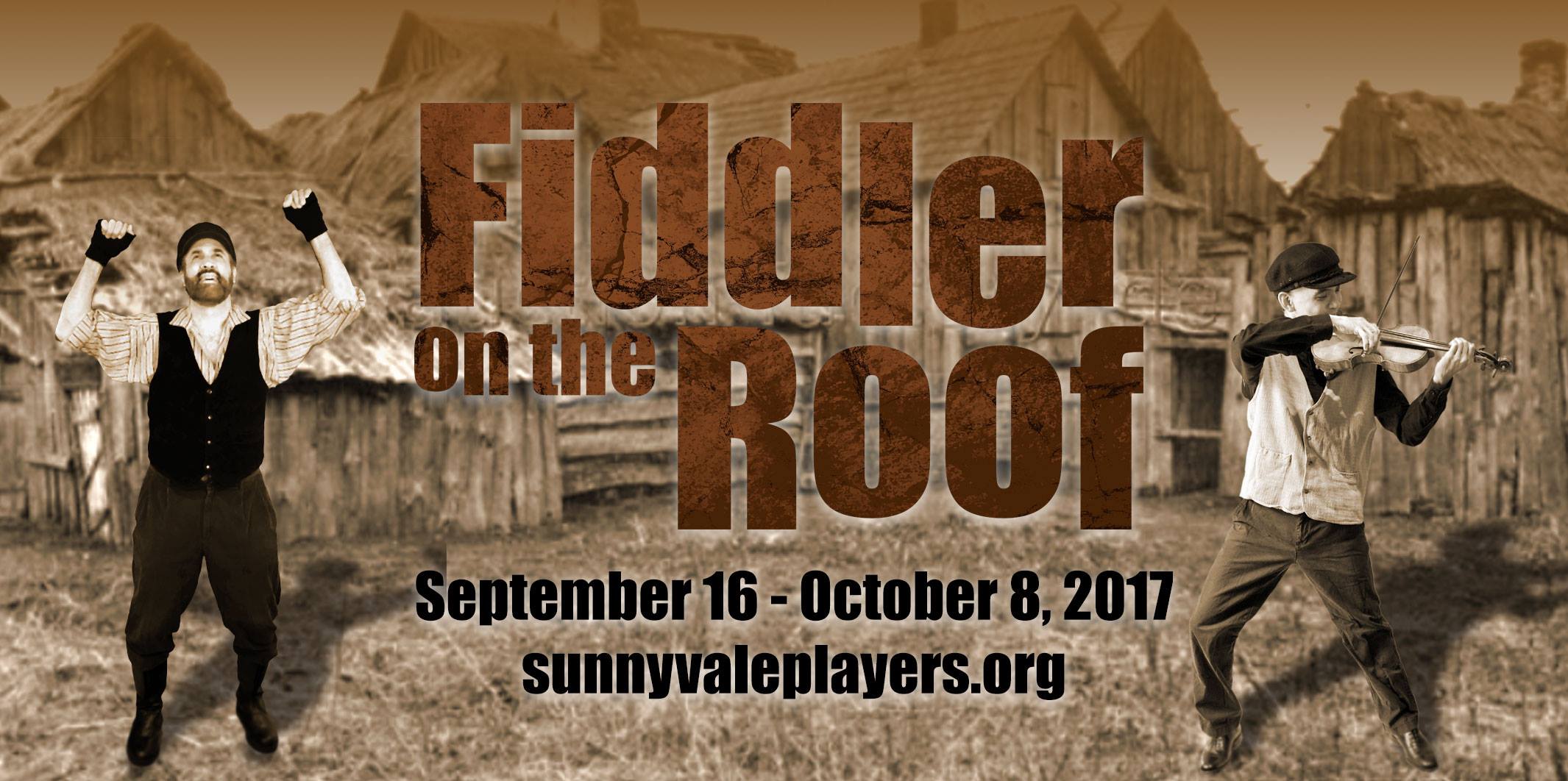
Sunnyvale Community Players’ production of Fiddler on the Roof is going to delight audiences in ways that no previous Fiddler production has. The well-known story is based on the works of Sholom Aleichem, often called the Jewish Mark Twain. Playwright Joseph Stein collaborated with composer Jerry Bock and lyricist Sheldon Harnick to create a captivating presentation of the lives of the people of Anatevka, a little village in Czarist Russia in the early 20th Century. Its themes of tradition vs. change, family, and community are timeless, and given the current state of the world today, they are especially timely. This Broadway favorite first hit the stage in 1964, became a highly acclaimed feature film in 1971, and is beloved the world over. Continue reading

What if…

By Ande Jacobson

What if you could explore the impacts of everything you’ve ever done along with everything you’ve never done? Constellations (written by Nick Payne and currently on stage at TheatreWorks) combines the science surrounding the concept of the multiverse (i.e., multiple universes existing simultaneously) through the lives of two people who meet by chance, fall in love, and live out their lives together; or maybe they don’t. Continue reading

‘The Student Conductor’ masterfully merges politics, history, fiction, and musical reality

By Ande Jacobson

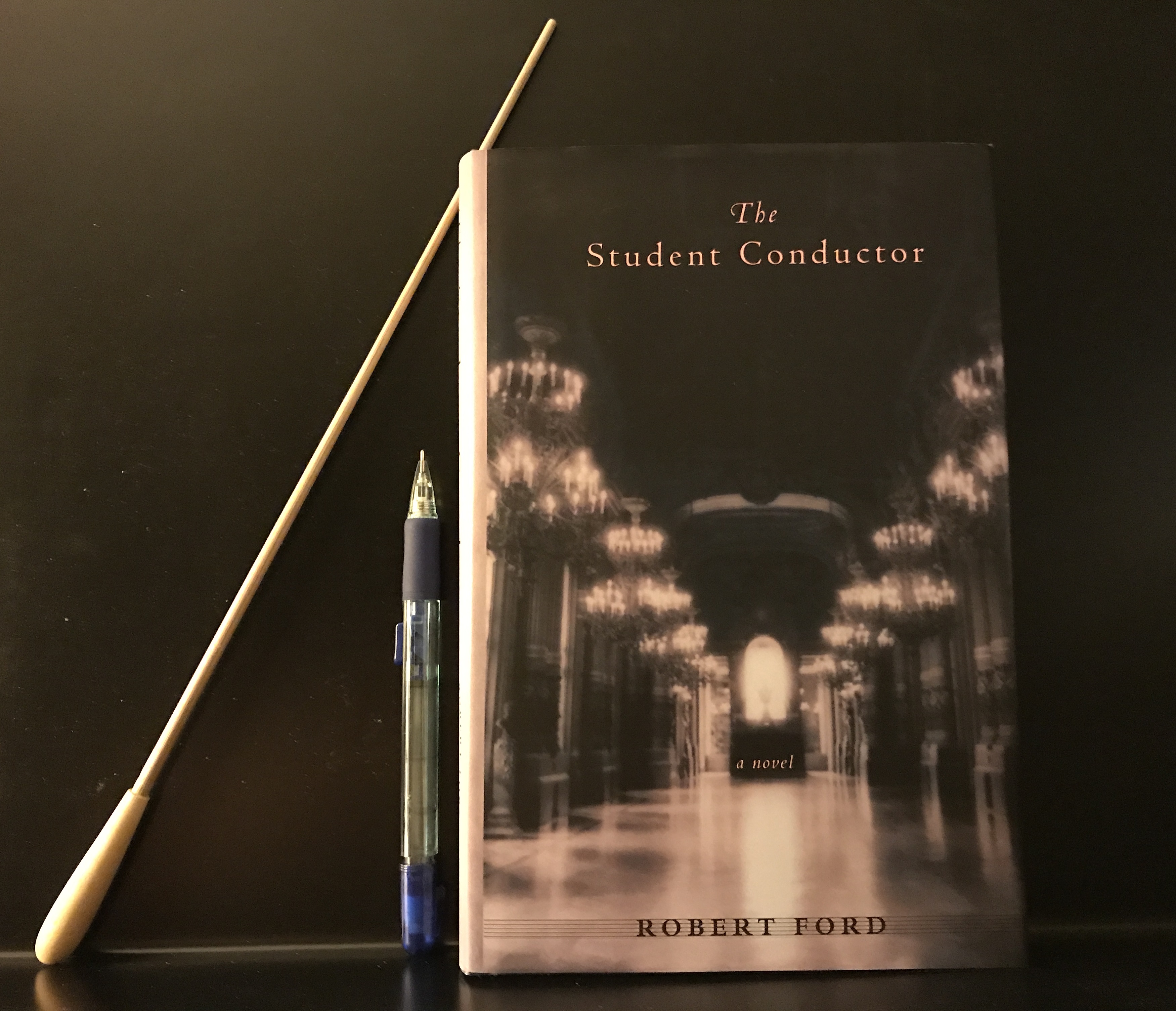
Robert Ford isn’t exactly a household name, and it’s been over a decade since he published his first (and seemingly only) novel. He went on to write several award-winning one-act and full-length plays that have been produced both in the U.S. and in Europe, but his novel remains a unique work. The Student Conductor was first published in the U.S. in 2003 with subsequent editions in Europe and Australia. It gives readers a look into Ford’s imagination as he conjures up plenty of intrigue and heart. He also guides readers deep into the magical world of classical music giving them an idea of just what it takes to become a professional symphony conductor. Continue reading

‘Lord of the Flies’ reveals the savageness within us

By Ande Jacobson

A Theatre Near U tackles the stage adaptation of William Golding’s classic novel, Lord of the Flies, a story touching on timeless themes showing just how tenuous a thing civilization can be. Golding’s novel was published in 1954, a time of high tension in various parts of the world. He’s quoted as saying that writing this story was “like lamenting the lost childhood of the world.” He knew of whence he wrote having lived through both world wars, served in the Royal Navy in WWII, and spent several years as a schoolmaster. As such, he was well-versed in the fortitude and foibles of humanity overall, and of schoolboys in particular. Continue reading

FMT lets its Freak Flag fly!

By Ande Jacobson

This summer, Foothill Music Theatre (FMT) shows its heart with its rendition of Shrek The Musical. The show is based on the animated DreamWorks film, Shrek, and it puts all of the magic and message of the film live on stage. The musical version (with book and lyrics by David Lindsay-Abaire and music by Jeanine Tesori) debuted on Broadway in 2008 and in London in 2011. Since then, the show continues to be a family-friendly audience favorite as it now makes the rounds in regional and community theatres.

The story is, in broad strokes, a sassy mashup of traditional fairy tales mixed with some current events. Its well-known Freak Flag anthem packs a powerful, positive message about celebrating one’s uniqueness. The lively story turns the traditional boy meets girl theme on its head with a clever twist and sends audiences home in high spirits. Continue reading

The piano: the principal prelude to musical prowess

By Ande Jacobson

There is no question that music touches us deeply. There are also myriad studies showing the cognitive benefits of listening, but there are even more benefits when actively participating in making music. For the purposes of this discussion, the assumption is that the reader, for whatever reason, is now intent on learning to play a musical instrument. Whether their goal is personal or professional, an initial instrument must be chosen, i.e., they have to start somewhere. This commentary proposes that the piano be that starting point.

There can be many goals such as:

  • Mastering the piano and all of its intricacies;
  • Composing music;
  • Playing the guitar, or bass, or drums in a rock band;
  • Playing the violin, or cello, or bassoon in a symphony orchestra;
  • Playing the clarinet or trumpet in a wind band;
  • Playing the saxophone or trombone in a jazz band;
  • Conducting a band or an orchestra;
  • Teaching music;
  • Becoming a music therapist;
  • Developing more tools for connecting with family and friends;
  • Mastering one’s voice for the theater, the opera, or that rock combo.

No matter the goal, the piano is still the best prelude for all of it. It can take a lifetime to master the piano (if one ever truly does). Even when one studies it as a stepping stone to any other musical endeavor, the foundation that piano study helps to build makes everything else much easier to learn. Continue reading

Why care about classical music?

By Ande Jacobson

Many years ago when I was still married, my husband asked me if I would have become a musician if my parents hadn’t played instruments. I told him that there was no way to know for sure if my study and lifelong affinity for music would have happened had I not had my early childhood exposure. That answer surprised him a bit. He knew that I grew up with music as a very important part of our family life, a subject I wrote about in my book, Remembering Mom and Dad, in the story entitled Music in the House. He also frequently had to put up with my practicing various instruments for my numerous musical endeavors.

After taking a music appreciation college course and dabbling with the piano for the first time, he decided that wasn’t for him. Still, he wanted to learn to play an instrument in self-defense, although he was careful to select something I didn’t play (I play the woodwinds shown above for public consumption along with piano and trumpet for my ears only). He didn’t have any musical training other than that very brief introduction in his music appreciation course, so he found a teacher and started from scratch learning classical guitar. Continue reading

Take a farcical romp back to high school

By Ande Jacobson

A Theatre Near U is presenting another Tony Kienitz world premiere, this time taking a farcical trip down memory lane back to the all-important crises of high school. His latest work, Like, Like, Like?, presents a unique view of high school to which audience members of all ages can relate. For those whose high school years are viewed from a distance through the rear-view mirror of their life, this presentation will likely trigger a bit of nostalgia. For those in the midst of their high school years, these young actors may embody a view of their friends with a level of familiarity. And for those eagerly awaiting to start high school, the characterizations may show them that they have nothing to fear and plenty to savor. Continue reading