 By Ande Jacobson
Something unexpected happened recently.
Almost a year ago, I wrote an essay about a controversial post I made on Facebook with a simple thesis. Reading and listening are not the same thing. In the course of my background reading for that piece, I dug into some of the research surrounding the differences between reading and listening as it pertained to absorbing and processing written material. One interesting note came to light during that investigation, that being that there’s also a difference in comprehension and retention based on how you read printed material. There was some study evidence that reading an e-book isn’t quite as good for comprehension as reading a physical book. Given that wasn’t the focus of my previous essay, I noted it, mentioned it in passing in the essay, and set it aside.
I personally flip between e-books and physical books depending on which format I happened to acquire. I find that e-books are particularly useful for reading while on my elliptical while physical books are preferable for single tasking – i.e., reading the book while curled up on the couch or studying at the kitchen the table. I use both formats for bedtime reading as I have blue blockers on all of my glasses, and I have all of my devices set to switch to nighttime mode in the early evening to mitigate any blue light exposure. Which format I read before bed generally depends upon which books I happen to have going at any given time rather than choosing material based on the format.
All that aside, I recently experienced an unexpected demonstration of the power of a physical book compared to its electronic sibling.
Last summer, I had the opportunity to review an early electronic version of a book slated to be released in February 2024. The book hadn’t yet been published, and a physical version didn’t yet exist, so I acquired a PDF review copy. The book was a graphic novel that packed a punch. It’s an important book that should be widely read once it’s released, and my review of it is linked in the reference section of this essay.
For my review of the aforementioned book, I read the PDF on my iPad, though I also looked at parts of it on my computer. The artwork was stunning and powerful, and the story the words told was gripping. That said, I very recently received a pre-publication hardback copy of the book. The content was identical to the PDF I reviewed those months ago, yet when I sat down and read parts of the printed book, it was far more vivid and impactful than it had been on my computer or iPad screens. I hadn’t expected that to be the case given the identical content, yet the presentation made an appreciable difference in how I perceived the material.
Books have always been an important part of my life. When I was young and learning to read, my parents made sure that I touched the books and held them in my hands. Turning the pages myself and pointing to various items of interest was an important part of the experience even when my parents read to me as a very young child.
The advent of electronic books allows us to carry whole libraries with us wherever we go. Books take up a lot less space when stored on a device instead of on a bookcase, but we lose something important albeit sometimes intangible if we only experience books in this way. Studies show that comprehension benefits from the physical interaction with books. Seeing the words in a particular location on the page, feeling the texture of the cover and the pages, and gauging how far into a book we’ve read all fold into the experience of reading. When the books also include graphics in addition to words, there’s a benefit to seeing them on the page as well. Of course a poor quality print of a book would diminish some of this, and there can be an advantage to being able to change the size of the font or of the pictures in an e-book if needed.
It makes me wonder if I would have experienced a similar difference had I printed out the PDF when I reviewed it. Then again, that print would only be as good as my printer’s output which wouldn’t have been as vivid as the professionally printed hardback book. Therein lies another difference – hardback books compared to paperbacks. Sometimes a hardbound book is a little bigger and a bit brighter than the same book in paperback, although that’s not always the case. After all, many graphic novels or even photographic journals are only available in a softcover, magazine-type format which can be every bit as vivid as a hardbound book. One thing that all physical formats have in common though is that they take up space. They can be held and the pages must be manually turned bringing the reader into physical contact with the book. Those actions go beyond the mere tactile response. They build associations with the material making it stickier.
In an early episode of the original Star Trek, Court Martial, an eccentric lawyer touts the virtues of books at a time when they’ve become extremely rare. In that series, most reading was done on computers or on pads that resemble today’s tablets – almost everything in electronic form. In the 21st Century, we are becoming far more reliant on electronic technologies whether it be our reading material, our audio libraries, or even our video access. Online streaming has largely taken the place of records, CDs, and DVDs. It’s become more difficult to find many of these products in stores that used to carry them. They are still available, but many shoppers often have to search online to find sources for them. E-books haven’t replaced all physical books yet, but they are being pushed more heavily even by some libraries. Electronic versions are far more cost effective for the providers, but if physical books become a thing of the past, we’ll lose something special. We’ll lose an important piece of our history.
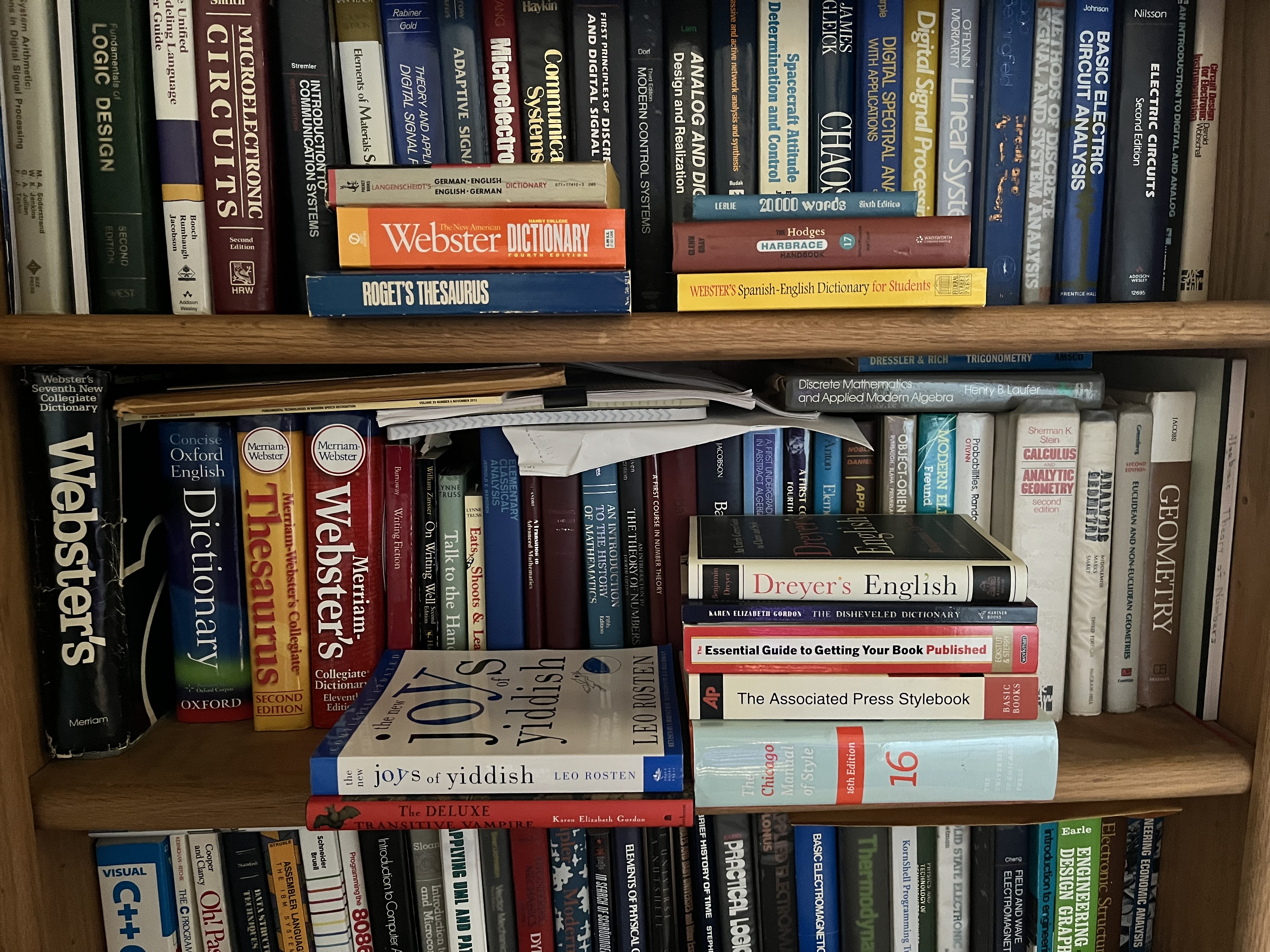 Beyond the differences in comprehension, books provide a permanent record. Electronic material is much more easily modified; whereas, a printed book is the end form and is a piece of history. A revision can certainly be released, but it requires more printing, and more space; whereas, an electronic copy, particularly one not stored locally, can be updated and obliterate the previous version. In so doing, historical records can be modified or even erased if the physical books recording such things are lost.
From many perspectives, books matter.
References:
https://agoodreedreview.com/2023/02/12/social-media-post-controversy/
https://time.com/5388681/audiobooks-reading-books/
https://agoodreedreview.com/2023/08/25/wear-a-raincoat/
A Good Reed Review also gratefully accepts donations via PayPal to help defray the costs of maintaining this site without creating paywalls.

 A Good Reed Review