 By Ande Jacobson
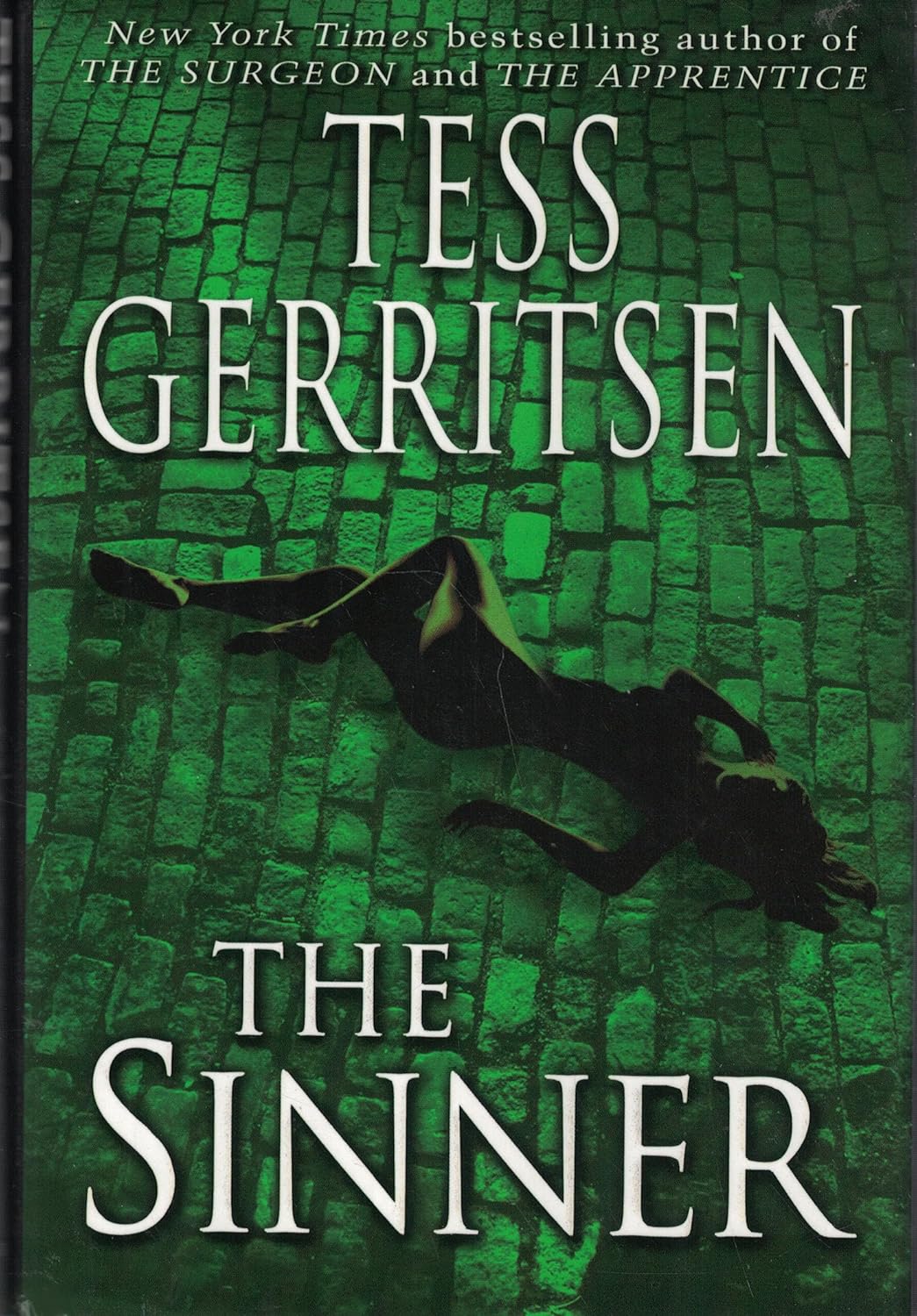
Keeping on her yearly schedule, Tess Gerritsen’s third book in the Rizzoli & Isles series, The Sinner, first appeared in August 2003. Gerritsen goes in a new direction this time digging deeper in the personal lives of Detective Jane Rizzoli and Dr. Maura Isles. Maura’s ex-husband, Victor Banks, is also a doctor though not a medical examiner. Victor features prominently in this story, and their complicated history intrudes on Maura’s work this time. Of course there are murders to solve, the first one of a nun killed in Graystones Abbey, the home of a sequestered order. Two nuns were attacked, one died at the scene, the other was taken to the hospital, but the story doesn’t end there. There are some other seemingly disconnected murders across a surprisingly wide region. The story has tentacles that reach across states and across the world in surprising ways. Gerritsen is masterful in her storytelling, interweaving the professional and personal lives of her characters, and as always the details matter.
Maura and Victor are very different from one another. Maura, ever the professional, and Victor, the idealist. Readers know from the previous book that Maura Isles had been a professor at USCF Medical School in San Francisco before becoming the Chief Medical Examiner for the Commonwealth of Massachusetts. Victor was and still is a doctor with the non-profit, One Earth, trying to save the world one small village at a time. For some unknown reason, Victor shows up in Boston looking for Maura after they’d not had any contact for three years. After she dodges his calls to her work for days, he ambushes her in the parking lot, and so begins their dance. They clearly still have feelings for one another, but there’s more behind the visit than it first appears. As the case progresses, difficult questions arise about why he’s there now, and whether he’s potentially involved in the murders the team is investigating.
The suspect pool widens and at one point includes a priest, Father Daniel Brophy. The good Father administers to the nuns at the abbey, and as such is a frequent visitor behind the walls. He cares about his flock, and he’s appropriately demonstrative, laying his hands on a shoulder or arm in comfort. It’s all very innocent, but every move by anybody connected to the order is immediately suspect. Maura is drawn to the good Father, in part because of her conflicted history with the church, and in part because they clearly have a strong rapport.
The nun that barely survived the attack at the abbey, Sister Ursula, is met with kindness and concern at the hospital from a hippie-looking GP, Dr. Matthew Sutcliffe, and from neurosurgeon Dr. James Yuen. On the surface the Saint Francis Hospital’s medical team seems on the ball and works hard to pull Sister Ursula through the trauma. She goes quickly from the ER to the OR in an attempt to save her life.
Ursula’s isn’t the only medical malady under consideration. From the autopsy, Maura determines that young Sister Camille, the one who died at the scene of the crime, had recently given birth which opens an entirely new and disparate investigation. Who was the father? Where was the infant? The investigation leads to Camille’s family, her father incapacitated by a stroke, and her step-brothers vying for most evil sibling. Her step-mother too is a piece of work, but are any of them involved in the crimes in some way? And what of their business interests?
Additionally, a severely disfigured woman shows up on Maura’s autopsy table, a woman who they eventually determine had Hansen’s Disease, more colloquially known as Leprosy, though that’s not what killed her. It becomes clear that she was murdered, though it takes serious investigation to determine the woman’s origins, how she came to Boston, and why she landed on Maura’s table. That search uncovers numerous secrets that are in turn related to the attack at the abbey. A most unlikely witness helps Maura and Jane make various connections necessary to eventually solve the case. Before that happens, the investigation runs through some corporate deception and even international intrigue running from Boston to India. Gerritsen’s narratives in far flung places always give readers a strong sense of the locations almost as though they are immersed in them.
There is also a very personal story concerning Jane Rizzoli. The story arc began in the previous book, continues in this one, and has far-reaching life changes that inform Jane’s character in the book series significantly separating it from the television show the series inspired. In many ways, it makes her a far more complex a character in the books. Once the case is eventually solved, Jane’s personal story continues to an extremely satisfying peak knowing that there will be far more to come in future books. Gerritsen humanizes her and makes her an extremely sympathetic character who isn’t all trauma and neglect. She gets to experience significant joy in her life.
Gerritsen again includes significant medical details in the storytelling. The detailed descriptions not only include the autopsies that Maura performs, but they also come from deep dives in the hospital sequences surrounding Sister Ursula’s critical care, all serving to educate readers along with the investigators in the story. Gerritsen is masterful in providing the details without being pedantic or too scholarly. As such, readers learn the medical minutia from the actions and thoughts of the characters as part of an adventure almost by osmosis.
Maura is the one in this story who seems to suffer in her personal life. Her character isn’t the outgoing, warm, quirky medical examiner that viewers know from television. She is sensitive on the inside, but on the outside, she’s the consummate professional, brilliant and almost unapproachable. She has feelings that she can’t express because the men she’s attracted to are either unavailable, or have hurt her in the past. She’s not trusting. She can’t afford to be. And yet she melts on the inside unable to express her true emotions either due to propriety or out of fear of being hurt again. Meanwhile, she’s almost superhuman in her work, choosing to give the dead the benefit of her brilliant mind.
References:
The Surgeon, by Tess Gerritsen
The Apprentice, by Tess Gerritsen
The Sinner, by Tess Gerritsen
https://www.tessgerritsen.com/
https://www.starttv.com/lists/the-differences-between-the-rizzoli-isles-books-and-tv-show

 A Good Reed Review