 By Ande Jacobson
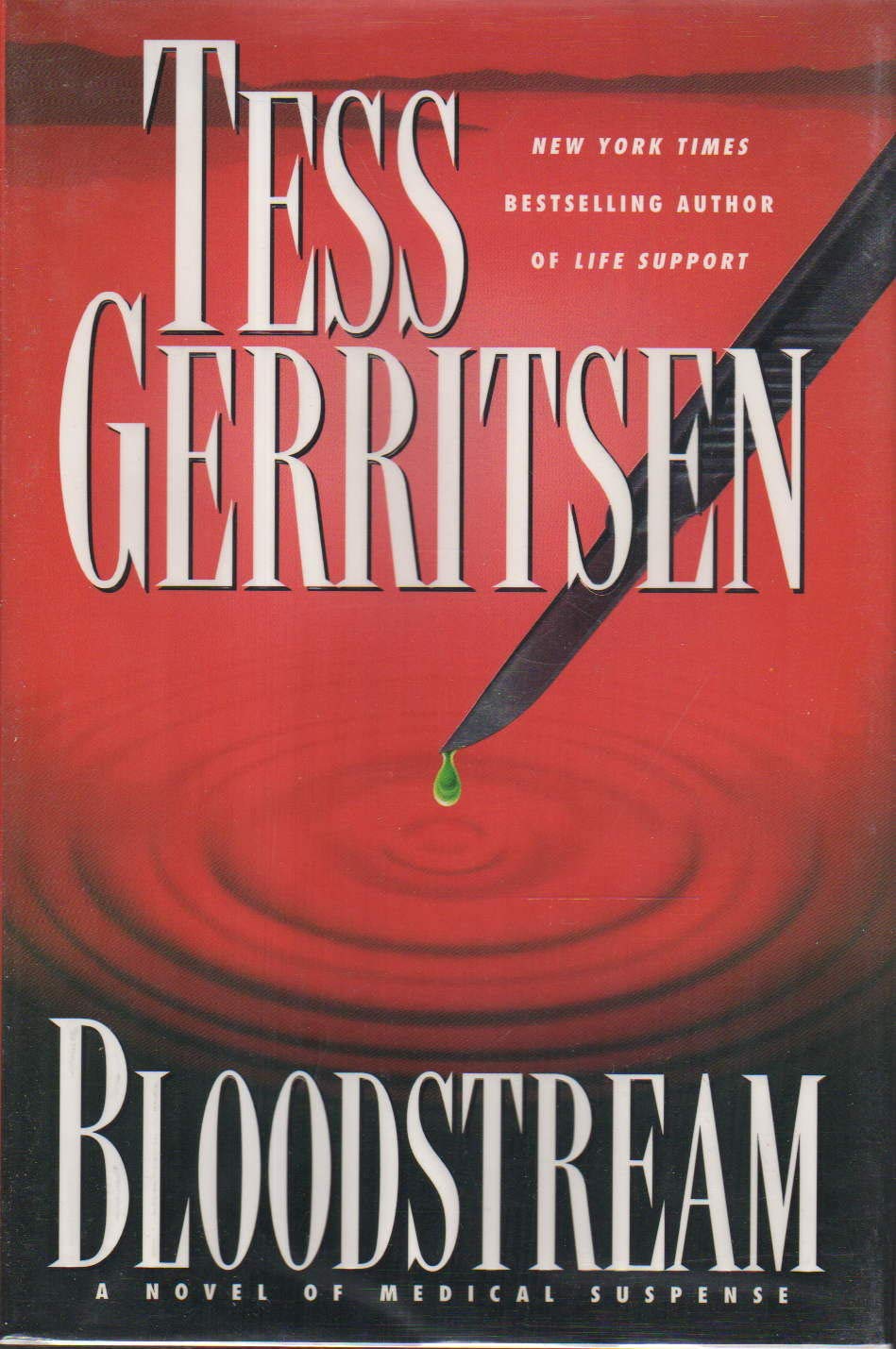
Tess Gerritsen continues her medical thrillers with Bloodstream, first released in August 1998. As she has done with her previous medical stories, she again tackles a complex medical mystery that wreaks havoc on a community and intersects with a serious societal issue. This time the story takes place in a quaint fictional town in Maine named Tranquility. As a point of interest, Gerritsen later revisits Tranquility in a different book series – The Martini Club series. Tranquility is modeled after the town where Gerritsen and her husband live. It’s a town where everyone knows everyone else, but there are some skeletons in the community closet both in real life and in the fictional counterpart. For Bloodstream, the story begins in the past in 1946 when a horrific spate of violence occurred. While readers are introduced to the rage that ensued, it’s not fully explained at that point. Gerritsen then moves to the present at the time of her writing in the late 1990s. Claire Elliot is the town’s new doctor having bought her medical practice after the previous town doctor died. She and her teenage son Noah moved to Tranquility from Baltimore for a new start. Claire had been widowed young, and she and her son were both still having difficulty coming to grips with their loss. She is a very capable general practitioner, but she runs up against the provincial attitudes often seen in many small towns. There is an inherent distrust of any outsider that acts as a barrier to community inclusion. Noah too has difficulty fitting in with his cohort, and at the start at least, he really wants to go back to Baltimore.
As the story progresses in the present, some of the kids in town start becoming overly aggressive for no apparent reason. Two boys land in the hospital after particularly egregious behavior, but their initial exams show nothing substantive that Claire can pinpoint as a cause. Gerritsen goes into great detail about the medical diagnostic processes which include not only blood tests and rudimentary scans, they also encompass physical exams and chronicling behavioral changes that the police, the school, and the other kids have noted. As an outsider to the town, Claire has a difficult time getting information crucial to her medical investigation. The building aggression among the kids goes way beyond normal teenage hormonal changes and has some unintended but not unexpected consequences. As Gerritsen gets further into the story, she shows that Claire is being actively blocked from learning the truth about what’s really happening.
The horror from 1946 and the present have an intriguing commonality, which of course veteran Gerritsen readers would expect given she always ties the opening flashback to the current problem in some complex way. The unrelenting aggression overtaking the town in the present time is oddly similar to what happened in 1946 down to the irregular weather pattern before the behavioral changes became noticeable. Once Claire links the weather patterns, she gets closer to the truth and the hidden motives putting her and those around her in serious danger. A small number of bad actors on the periphery of the story embody the worst of human nature when medical science and greed combine.
Gerritsen always brings motives to light when bad actors interfere with the progression of a medical investigation. What happens to Tranquility, while natural in origin, could have been mitigated had the town been aware of what was really happening. There are a small number of townsfolk who lived through the horror of what happened in the past, and as they watch it happen again, they stay silent for far too long. One is in a particularly powerful position and could have helped the investigation much sooner than they eventually do, but much of the town is complicit in burying the past, even those who didn’t live through it. These community skeletons just aren’t talked about making the town ripe for some unscrupulous outsiders to worsen the damage for their own aims. While the outsiders don’t directly cause the affliction, they also hide what they know about it turning the town into a dangerous experiment reminiscent of Tuskegee from 1932 to 1972 or San Francisco in 1950.
To complicate the story because it’s not already complicated enough, both Claire and Noah develop strong friendships with somebody in town. In Claire’s case, it’s the chief of police. In Noah’s, it’s the innocent daughter in a dangerous blended family in town. He crosses the wrong person, and in doing so unintentionally puts both himself and Claire in grave danger. To make matters worse, Noah is eventually afflicted with the mysterious aggression before Claire can solve the medical mystery.
After the action builds to a breathtaking climax, Gerritsen’s resolution is satisfying and leaves the story open to further exploration should she wish to pick it up again. Although she revisits Tranquility in The Spy Coast (the first Martini Club book), the cast of characters does not overlap. We’ll see if that’s still the case when the second book in that series drops in 2025. Given that Bloodstream takes place almost 30 years before The Spy Coast, it’s not at all surprising that the characters don’t yet overlap. Still, Gerritsen has quite a fondness for her little fictional town of Tranquility, so who knows who we may meet again.
Tying a serious ethical issue surrounding either medical research or practice into her medical thrillers makes these stories all the more urgent. In this story, were informed consent applied, it’s doubtful anyone would have participated in the “study” forced upon them involuntarily.
Gerritsen has written numerous standalone novels across multiple subgenres of suspense. Of those, five are explicitly medical thrillers. Those include Harvest (1996), Life Support (1997), Bloodstream (1998), Gravity (1999), and The Bone Garden (2007), so she jumped into the Rizzoli & Isles series after Gravity and much of that series included the same kind of medical detail that became a bit of a Gerritsen trademark from her earlier medical thrillers.
References:
Harvest, by Tess Gerritsen
Life Support, by Tess Gerritsen
https://www.tessgerritsen.com/
https://www.bookseriesinorder.com/tess-gerritsen/

 A Good Reed Review