 By Ande Jacobson
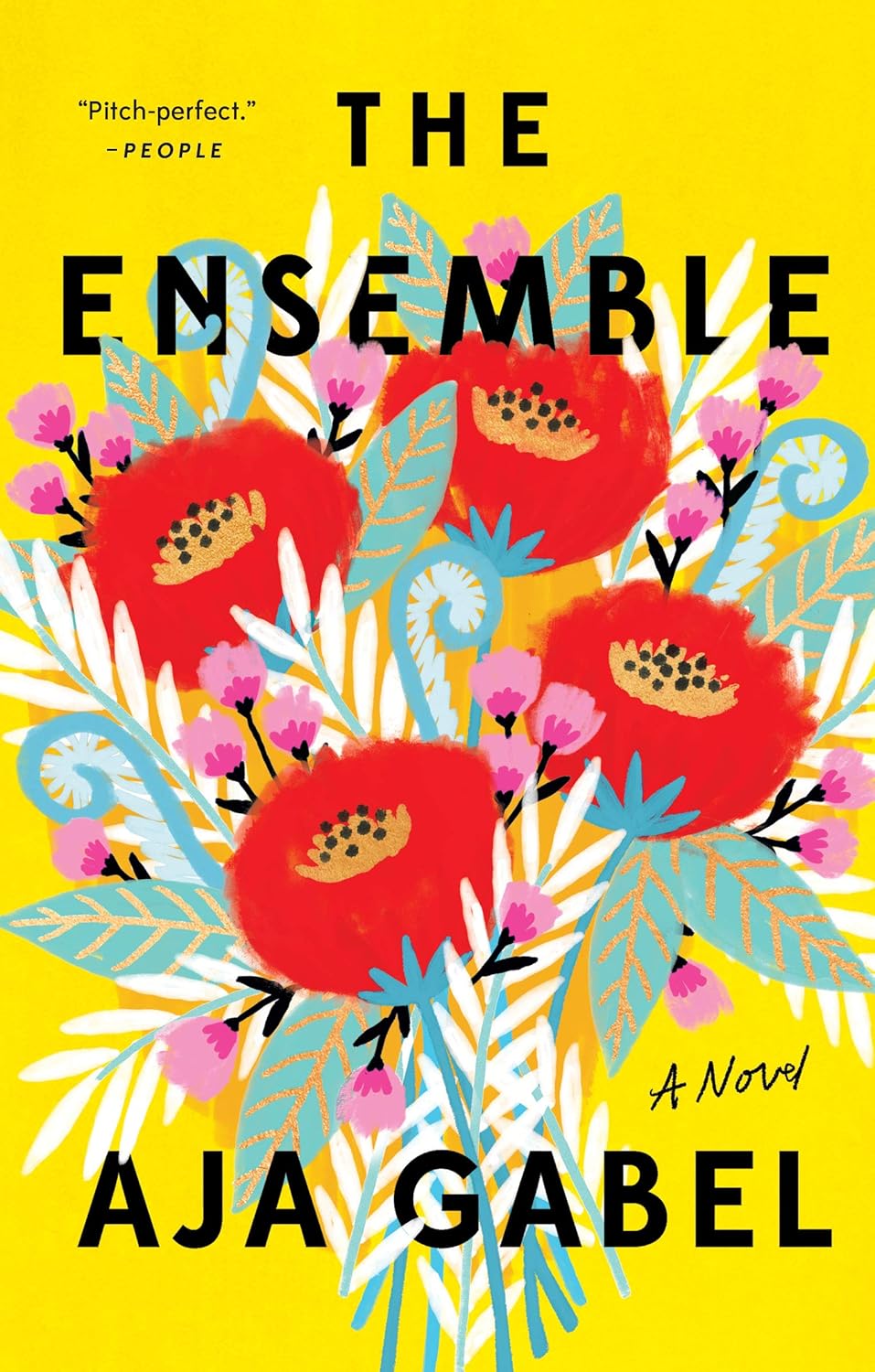
Aja Gabel’s debut novel, The Ensemble, is a masterwork combining her early training as a musician with her prowess as a writer. She follows Jana, Brit, Henry, and Daniel from their first meeting as graduate students at the San Francisco Conservatory through the twists and turns of their lives as musicians playing together in a tight string quartet. Of course the closeness the ensemble requires tightly intertwines their personal and professional lives. Gabel injects her thorough knowledge of music and the idiosyncrasies of the instruments involved given her experience as a violinist and cellist into the story. She alternates voices between the members of the quartet by chapter focusing on each individual’s point of view.
Jana is the leader, the first violinist. She projects confidence even though that’s not always what she’s feeling. Brit is the feeler, the second violinist, and the one most eager to please. Henry, the violist, is the youngest, a child prodigy just exiting his teens who has never struggled with anything he’s attempted when he comes to the quartet. Daniel, the cellist, is the ensemble’s elder, several years older than everyone else. He’s what would be considered a non-traditional student age-wise, and he too has talent and hidden insecurities.
The four are very different people from varied backgrounds. Jana has a strained relationship with her mother. Brit lost her parents fairly young. Henry has a very close-knit and supportive family. Daniel, somewhat like Jana, has a strained relationship with his parents, but for very different reasons. Gabel takes readers on a journey of discovery as the quartet forms and matures. Each of the members is flawed, but together they create something beautiful.
Gabel also explores the environment that classical musicians navigate. It’s competitive and takes discipline. It also takes a bit of luck along the way given so many talented musicians often vie for every notable position. Unlike many professions, that of a musician requires not only mental discipline, but also physical prowess that is constantly tested. Gabel shows this dramatically through all of them, but most viscerally through Henry when he develops a debilitating condition from his playing.
Most instruments are not particularly friendly from an ergonomic standpoint. They often require the player to contort into uncomfortable, and more importantly, unhealthy positions for long periods of time. Skillful professionals have to put in extensive playing time which puts them at risk for numerous long term injuries because of their playing positions. While repetitive stress injuries are very common among instrumentalists, they aren’t the only danger. When an injury becomes severe enough to affect a musician’s playing, that can limit their options to compete and perform. Some performers in this situation change their focus to teaching to limit their playing time and reduce the damage their playing does to their bodies. Others suffer through the pain and discomfort until they can no longer play at all. Beyond the physical strain from playing, musicians also often have to travel, sometimes extensively for competitions and performances which in itself presents various challenges both personally and professionally. In short, the life of a musician isn’t an easy one as Gabel makes clear as she follows the quartet.
Gabel introduces readers to several masterworks through the story. The book is broken into four parts plus a coda that returns to the very beginning. As each part of the book is introduced, specific masterworks are listed that the quartet tackles with varying degrees of success. Gabel gets into some of the nuance of the pieces as the quartet works through them sometimes delving into the technical aspects of the various individual parts. Musicians can greatly appreciate this detail, and non-musicians will likely marvel at the complexity involved in playing and performing these great musical works.
Throughout the story, the feel of the rehearsals and performances comes alive. The story itself is fiction, but the inspiration for it came from a real string quartet that Gabel admires. While the specific events are also fictionalized, they are drawn realistically. Competitions like those described do exist, although the names and locations have been changed. The feelings ring true such as the apprehension before a big performance, the squabbles and debates during rehearsals, and even the interpersonal oddities and attachments between the ensemble members. They read as real people who share an appreciation for the intangibles that playing and performing at such a high level expose. Musicians have a way a fully embracing the world they enter when they play. It engulfs them. It inspires them. Most importantly, it fulfills them. Even when not playing, music is never far from their innermost thoughts.
While romantic entanglements are also a part of their lives and the story, both from within and external to the ensemble, they don’t let those interfere with the work that is so important to them. While difficult, that’s even more important when someone’s life partner isn’t also a musician, although one might wonder if such a relationship would have to be doomed from the start.
Gabel’s characters evolve and mature through the story, in some cases smoothing the rough edges of their youth, and in others offering wisdom drawn from their experiences. Nothing is forever though, and when one member eventually makes the difficult decision to leave the quartet, they all suffer a significant loss as they prepare for that eventuality.
Although the story ends before the eventual transition, it’s clear the ensemble will endure. It won’t be the same ensemble though. A quartet that’s been together for almost 20 years functions as a single organism when playing, each player is fully integrated and works in concert with the others. Replacing a player disrupts that equilibrium. That’s not to say that it will be better or worse than before, but it will be different.
The end harkens back to their early conservatory days together. They were eager to compete, but they weren’t quite ready yet. As such, in their first international competition as an ensemble, they don’t do particularly well. Part of the reason for that is that they hadn’t yet gelled. They weren’t the fully integrated, cohesive unit they would eventually become. Part of the loss they suffer at the end of the story is knowing that they’ll need to reintegrate and find their new sound and equilibrium. That thought pushes them out of their comfort zone, but because of their experience, it’s clear they’ll not only survive the upcoming transition, they’ll undoubtedly thrive.
Reference:
The Ensemble, by Aja Gabel

 A Good Reed Review