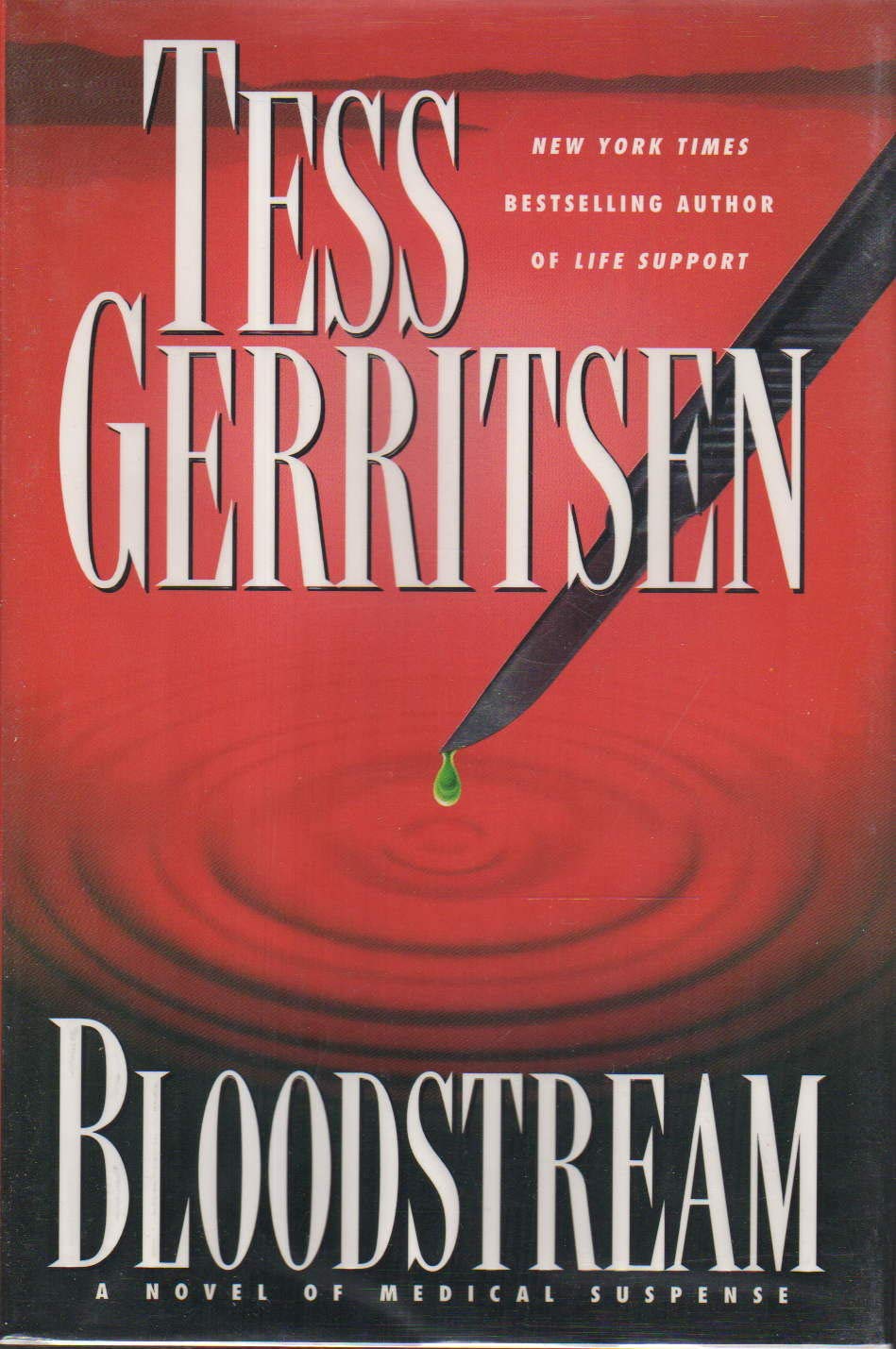
Tess Gerritsen continues her medical thrillers with Bloodstream, first released in August 1998. As she has done with her previous medical stories, she again tackles a complex medical mystery that wreaks havoc on a community and intersects with a serious societal issue. This time the story takes place in a quaint fictional town in Maine named Tranquility. As a point of interest, Gerritsen later revisits Tranquility in a different book series – The Martini Club series. Tranquility is modeled after the town where Gerritsen and her husband live. It’s a town where everyone knows everyone else, but there are some skeletons in the community closet both in real life and in the fictional counterpart. For Bloodstream, the story begins in the past in 1946 when a horrific spate of violence occurred. While readers are introduced to the rage that ensued, it’s not fully explained at that point. Gerritsen then moves to the present at the time of her writing in the late 1990s. Claire Elliot is the town’s new doctor having bought her medical practice after the previous town doctor died. She and her teenage son Noah moved to Tranquility from Baltimore for a new start. Claire had been widowed young, and she and her son were both still having difficulty coming to grips with their loss. She is a very capable general practitioner, but she runs up against the provincial attitudes often seen in many small towns. There is an inherent distrust of any outsider that acts as a barrier to community inclusion. Noah too has difficulty fitting in with his cohort, and at the start at least, he really wants to go back to Baltimore. Continue reading
What is the cost of living forever?
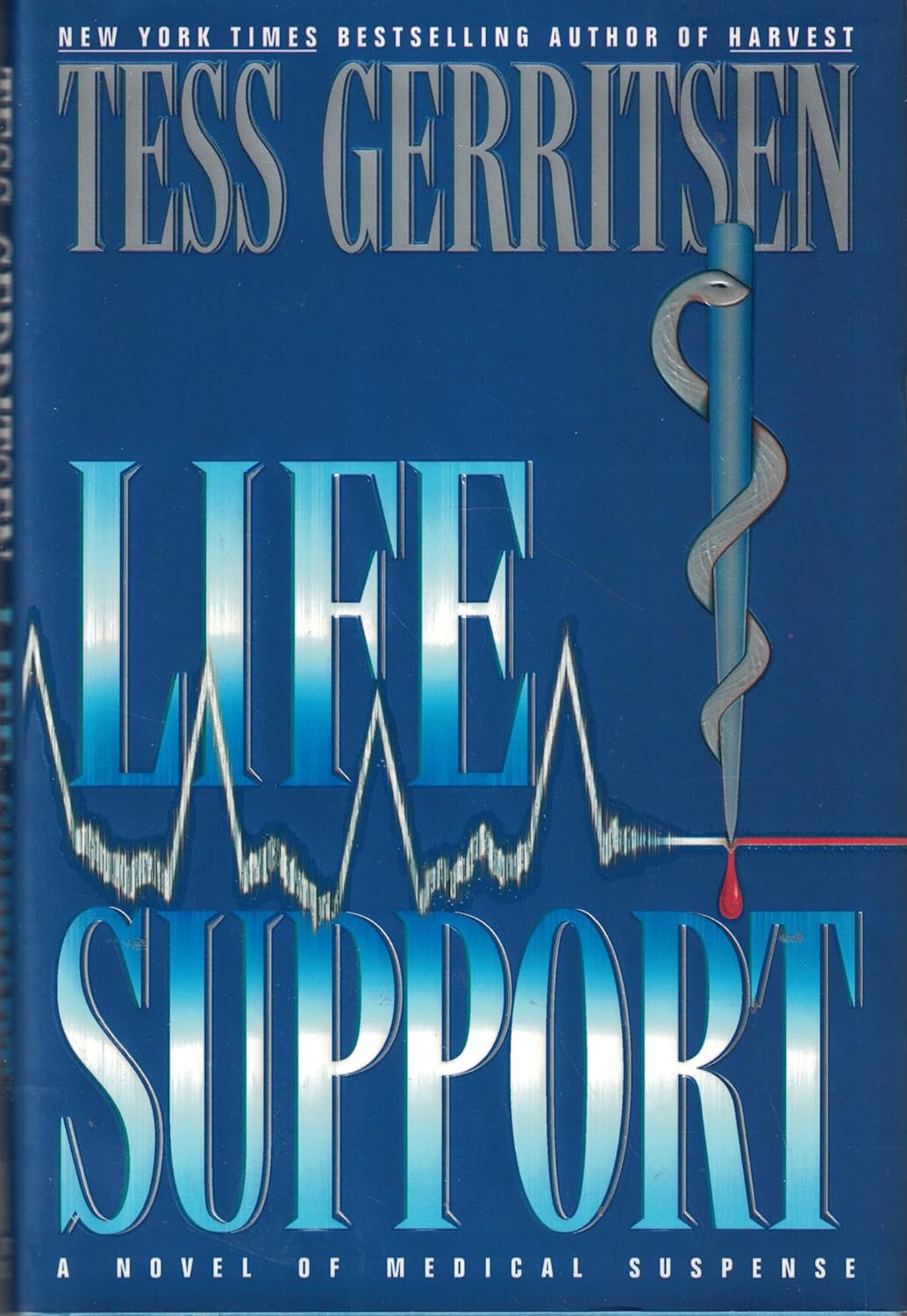
Tess Gerritsen continues her medical thrillers with Life Support, first released in September 1997. As she did in the first of her medical thrillers, she tackles a controversial area of medicine, this time dealing with research into human life extension despite the dangers uncovered along the way. Gerritsen has a way of weaving a compelling story while drawing the reader deeply into disparate details that seem unconnected until much later in the story. She relies heavily on her background as a physician to give the reader a deep understanding of the medicine involved, carefully blurring the lines of what is currently possible. Along the way, Gerritsen also delves into medical research in a way that will likely give readers pause when it comes to exactly what goes into a given research project, from the medicine involved to a quick primer on some curious aspects of genetic engineering. Continue reading
Update to a landline alternative
In late April, I wrote a piece about Community Phone talking about its benefits as a landline alternative. In short, Community Phone provides a landline-like alternative to customers that doesn’t require internet connectivity and can work for up to 12 hours without power using two major nationwide cellular networks. Although they use cellular networks, their service isn’t a mobile service. It’s fixed to the service address, and the network used is whichever of the two is stronger at that location. Their base is a strong receiver that connects to a traditional landline/analog phone. Their service provides excellent call quality at that location. It’s not quite the same as copper of course, but it is better than VoIP services that require active internet service. The concept is good.
That said, I need to revise my initial recommendation a bit by first saying that I have recently downgraded my plan to their standard service. While their premium service has some excellent additional features, the system running that level of service is not yet stable. In the six months or so that I had Community Phone’s premium service, many of the advanced features had not been available most of the time, and even some of the standard features running on their advanced system had not been reliable. The price depends on where your service is located, but in general, the premium service is about $10 more per month than the standard service. For both levels of service, there is a discount for paying annually rather than monthly that equates to one month free per year at the monthly rate. Continue reading
Courageous followership matters
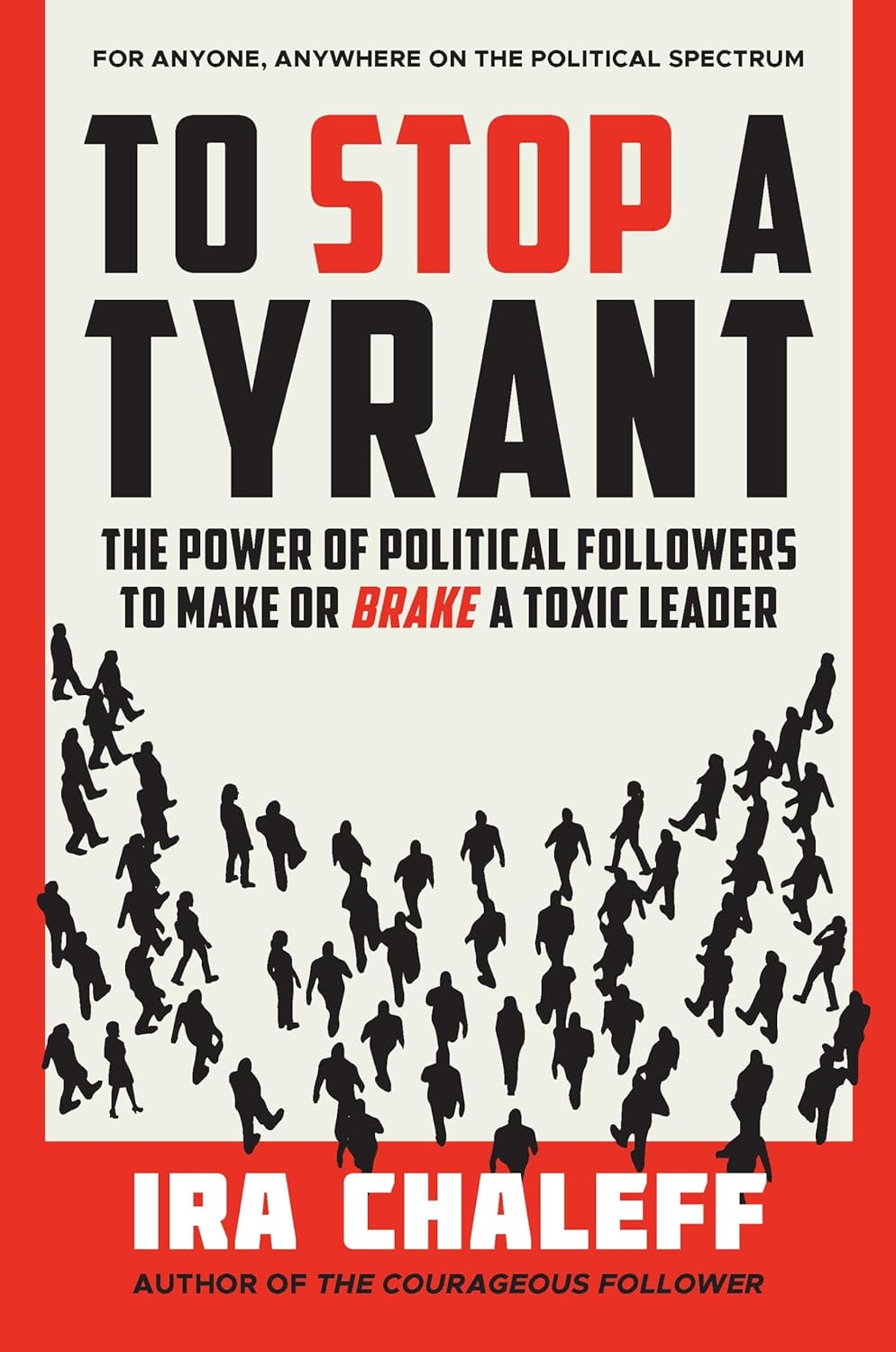
Ira Chaleff’s To Stop a Tyrant is both timely and timeless. Although he completed writing the book in March 2024, and it was released a few months later in early September just two months before a major U.S. presidential election with democracy on the line, there is no mention of this crucial election despite everything in the book being directly applicable. Chaleff chose not to discuss the election brewing in his midst in part because so much was changing very quickly at the time of his writing, and also because he wanted this book to transcend any current crises or partisanship. He uses numerous examples not only from his own personal experience but also from throughout human history, especially from the last 100 years up through fairly current times. From the more current perspective at the time of his writing, he covers the evolution from activist to prototyrant to dictator of both Victor Orbán of Hungary and Vladimir Putin of Russia to illustrate many of his points while also including some mention of the same phenomena during ancient Roman times to show that none of this is new. Continue reading
Are left-handers sinister?
Historically, left-handedness was considered sinister, stemming from the Latin for left. Its counterpart is dexter meaning right. The term sinister took on its nefarious character fairly early on though.
From a population perspective, about 10-12% of the human population is naturally left-handed, though some cultures strongly either discourage left-handedness, or outright forbid it. In the U.S. it was common to “convert” left-handers to using their right hand instead through the first half of the 20th Century. That slowly started changing in the 1960s and 70s, but educational theory at that time still focused on ensuring that children had a dominant side. Even that has fallen out of favor today. After all, being ambidextrous can be a great advantage at times. Continue reading
Parts for sale
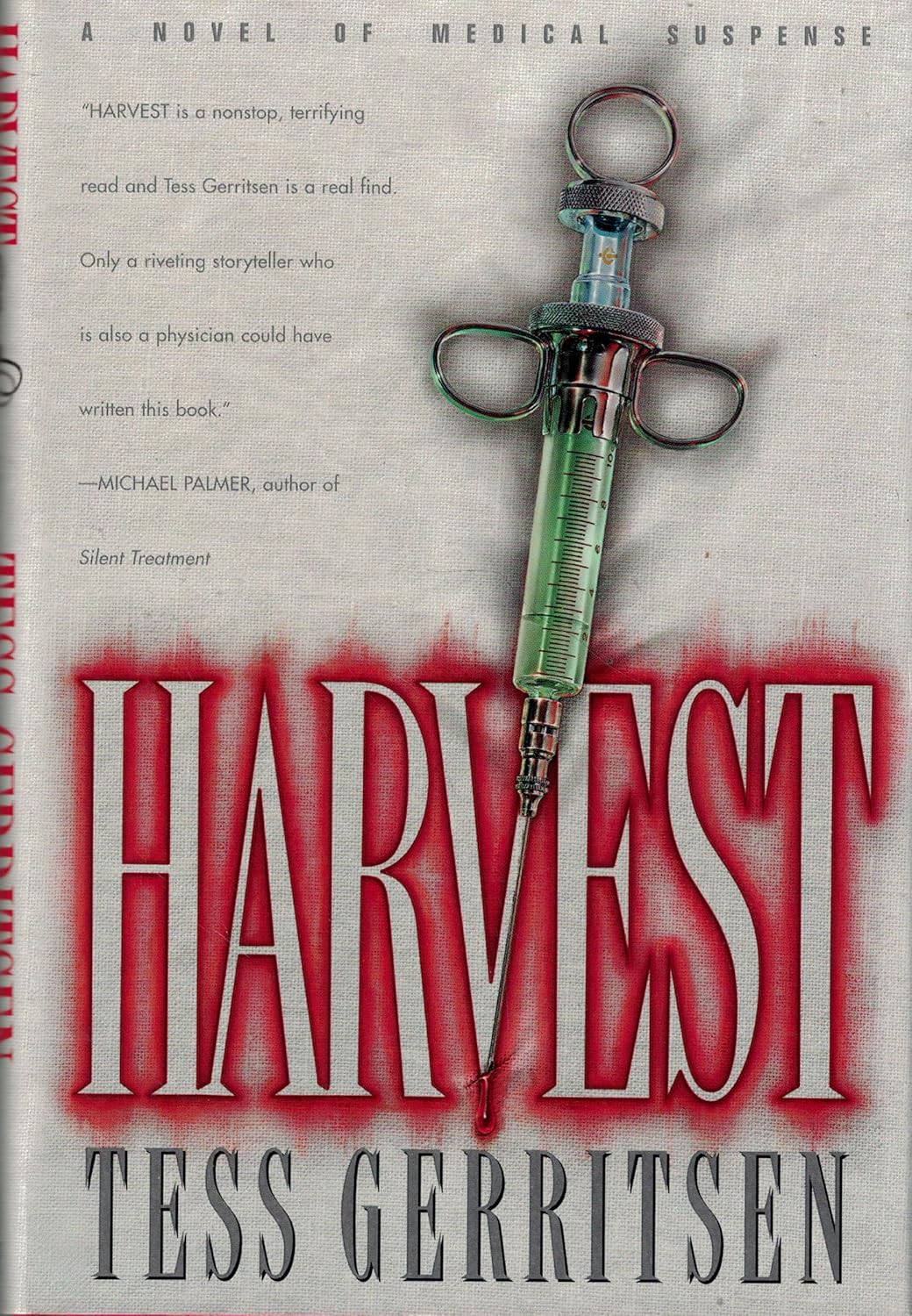
Before Tess Gerritsen began writing her Rizzoli & Isles series, she wrote a number of medical thrillers. The first of these was Harvest, released in September 1996. Her experience as a physician leant itself to tell compelling stories surrounding medical situations, and it also raised her awareness of various societal crises based on manipulation of the healthcare system. Harvest combines a riveting thriller with a very real crisis situation surrounding organ transplants. In particular, the mystery in this story explores how the morbidly wealthy and the very greedy can sometimes work together to circumvent the need-based processes in place. In the real world, organ transplants are lifesaving. They can take a person from death’s door to restored health, but they come at a cost. For most organs, particularly things like hearts and lungs, they come available only when an organ donor dies. While a directed donation can be made in some cases, the general system in place to provide these precious organs is based on patient need. The more severe the need, the higher a patient’s priority on the recipient list. Their financial and social status is not taken into account, only their medical need is relevant. Unfortunately, there’s a rather robust black market that some very wealthy individuals turn to in order to jump the line. The market consists of profiteers who garner the services of some less than reputable physicians to harvest organs from donors that are sometimes “created” to supply these precious organs to those willing to pay. Sadly, some with the resources available would be willing to pay almost any price to save their loved ones denying those in greater need of their very lives. Of course, evaluating medical need can also be tricky, particularly when so few organs are available meaning that whoever doesn’t get a given organ may not live long enough for another compatible organ to come available the normal way. Continue reading
The search for Die Jägerin
Kate Quinn is known for her historical fiction, often intertwining vivid fictional characters with real people and major historical events. Her book, The Huntress, is no exception. The main characters are fictional, albeit in some cases composites of various real people. Along the way, historical figures are mixed into the story in more minor roles. The central conceit of the story is a team of Nazi hunters’ search for Die Jägerin, a vicious killer from WWII Germany. The title character; however, isn’t the target of their search. In this case, the huntress in the story is a composite character representing a number of brave women from the infamous Russian Nachthexen or Night Witches, so named by the German forces they bested. Nina Borisovna Markova is the huntress in this story, and while she is a fictional character, her achievements and actions are drawn from her actual “sestry” from the Russian forces. As Quinn illustrates, Russia was the only nation in WWII to eventually make use of women in frontline combat roles, including as pilots, navigators, and mechanics, often greatly outperforming their male counterparts. The Night Witches were a real entity that was key to the allies winning the war against the axis forces. Their inclusion in this story was a handy way to tie together the post war Nazi hunters with their lives during the war, and most importantly, provides the motivation for their somewhat obsessive search for one killer in particular. Continue reading
We need to listen
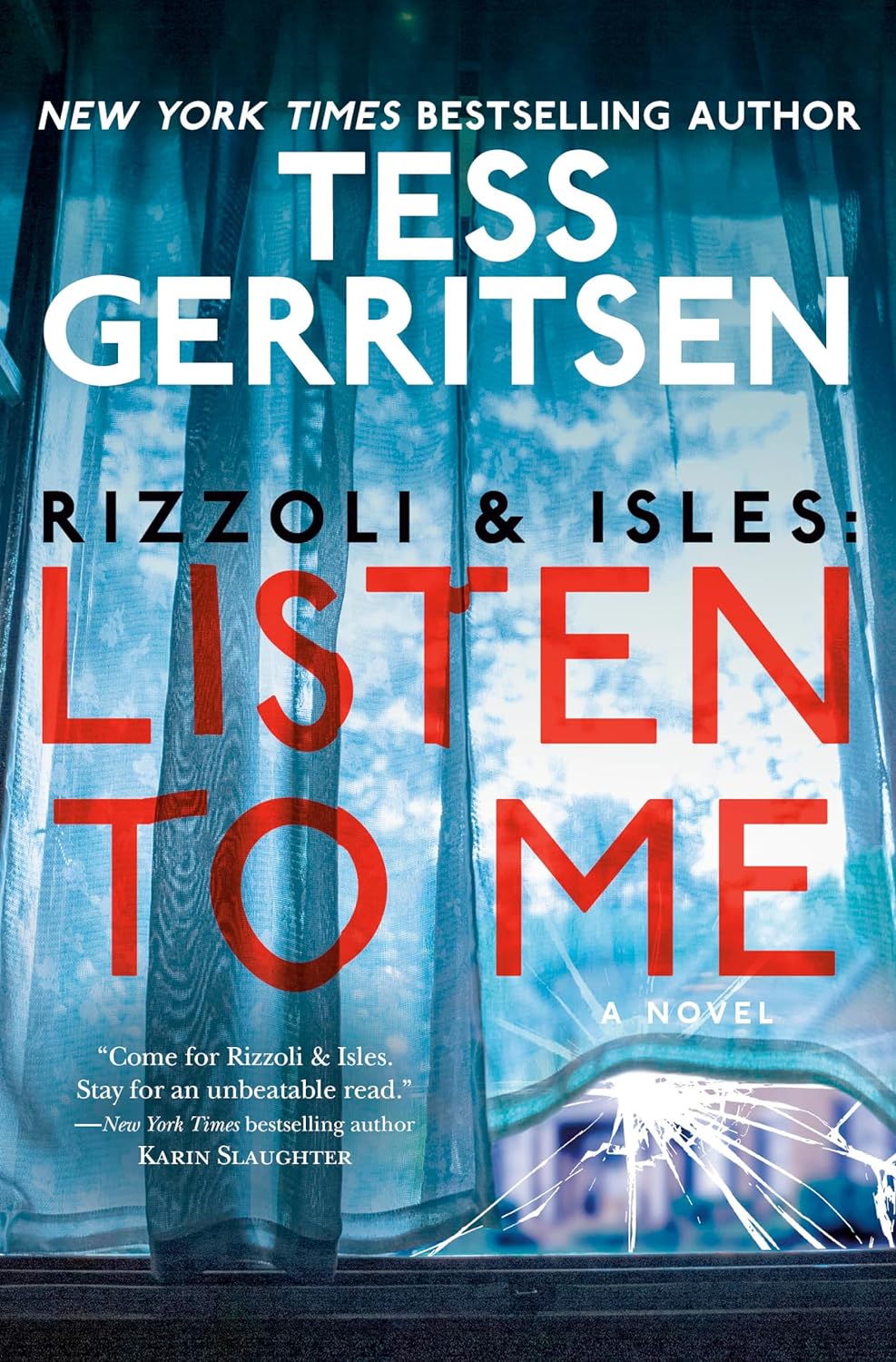
Tess Gerritsen’s Rizzoli & Isles series completes for now with Listen to Me, first released in July 2022. This ultimate series installment follows a different path than previous Rizzoli & Isles books. Gerritsen writes this one from multiple points of view focusing on each of the main female characters. As the POV shifts, we get more insight into series regulars Angela Rizzoli, Detective Jane Rizzoli, and Medical Examiner Maura Isles, and into newcomer Amy Antrim. Each has several chapters devoted to them and their thoughts, motivations, inner turmoil, and actions. A major theme of the book, particularly from Angela’s perspective, is “If you see something, say something,” a motto that can either help and hinder depending on the circumstances. As always in Gerritsen’s mysteries, there are numerous subplots that mingle and merge in unexpected ways as the story progresses, generally surrounding a series of murders in some fashion. This time is no exception except perhaps in the complexity of the subplots that each come to the forefront at different points in the story. This one also brings the dangers much closer to home. Continue reading
Substance matters
I’m concerned. No, that’s not right. I’m terrified.
We recently celebrated another U.S. Independence Day marking the anniversary of when the United States of America was founded. Now the biggest election of my lifetime (and perhaps in our nation’s history) looms over us in just under four months, and we have a media machine that seems determined to foment division by continuing its years long assault on the Democratic incumbent while at the same time ignoring his record of accomplishments and ignoring or normalizing the outright malfeasance of his likely GOP opponent. The media has presented the presidential race as a horse race rather than focusing on the real issues at hand which does the country a huge disservice. Why they are doing this is the subject of a lot of speculation. On the one hand, the media long ago moved away from their role as impartial observers and sources of information about current events into a much more lavish, dynamic, and profitable role as entertainers. They are businesses intent on turning a profit, so they do all they can to build audience and keep people coming back for more. Division and controversy sells far better than dry data, so their move toward the former in this quest became their imperative. Profits after all are more important than informing the public to many of these entities. A GOP presidency, particularly with their likely candidate, would garner them higher profits given the crises and favorable tax modifications that would result. Unfortunately, far too many people accept what they are told by the media without looking beyond the hype, and that could spell disaster for the country and the world. Continue reading
Childhood secrets can be dangerous
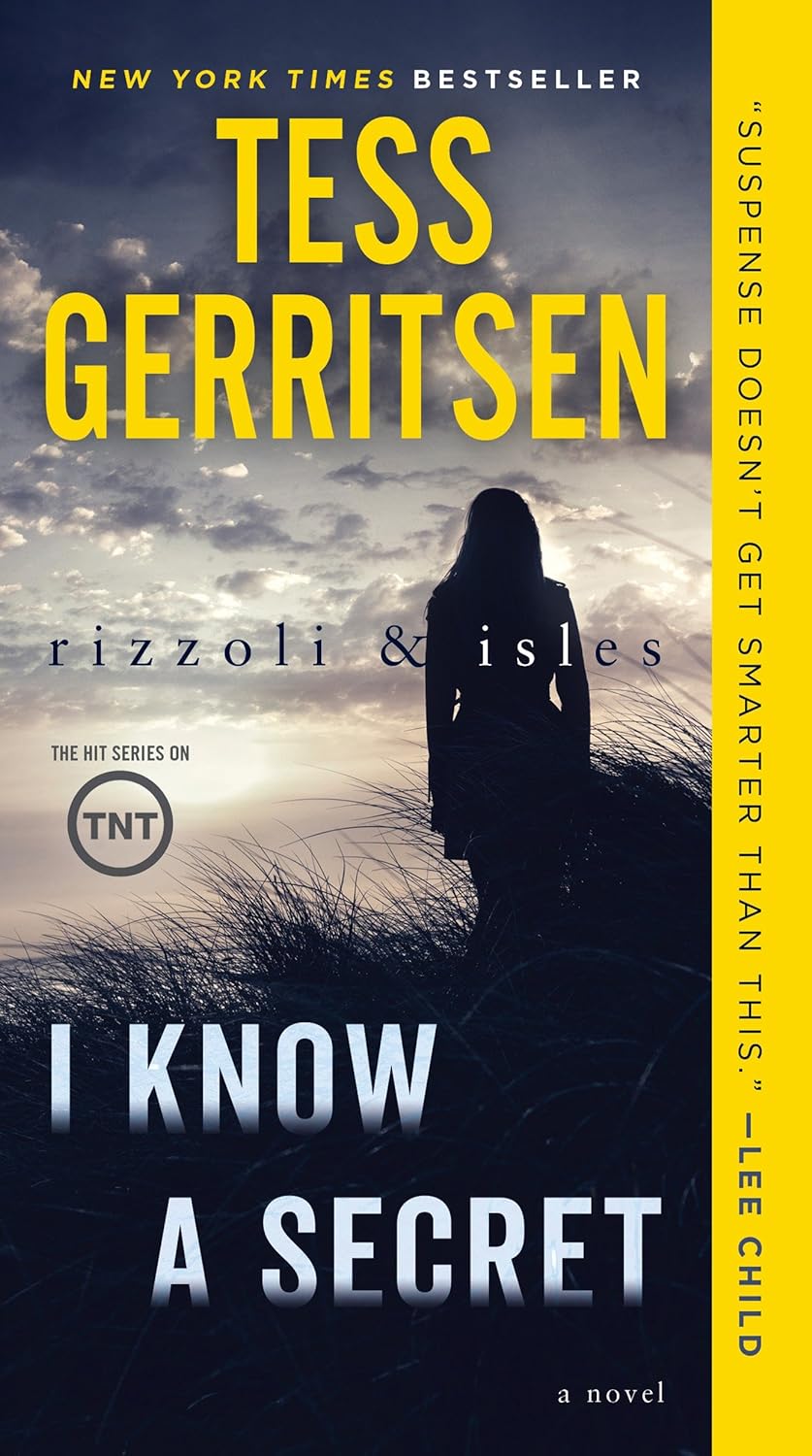
The penultimate book (so far) in Tess Gerritsen’s Rizzoli & Isles series, I Know a Secret, was first released in August 2017. This one is creepy dealing with sociopathic tendencies, childhood frailties, and how a long buried secret can wreak havoc even decades later. For most children, certain situations elicit expected and appropriate displays of emotion. In sad or somber situations like a relative’s funeral, that can sometimes mean tears. For those rare kids who are wired differently such that they don’t feel the normal range of emotions, this might end up being a learned behavior rather than an instinctual one. For such a child, their response can look like those of their peers while instead being a coldly calculated act to avoid standing out. So begins the story narrated by an adult who was once such a child. How that ties into the murders at hand takes most of the book to unfold, but the ending is worth the wait, unsettling though it may be. Continue reading