What if they really are out to get you?

By Ande Jacobson

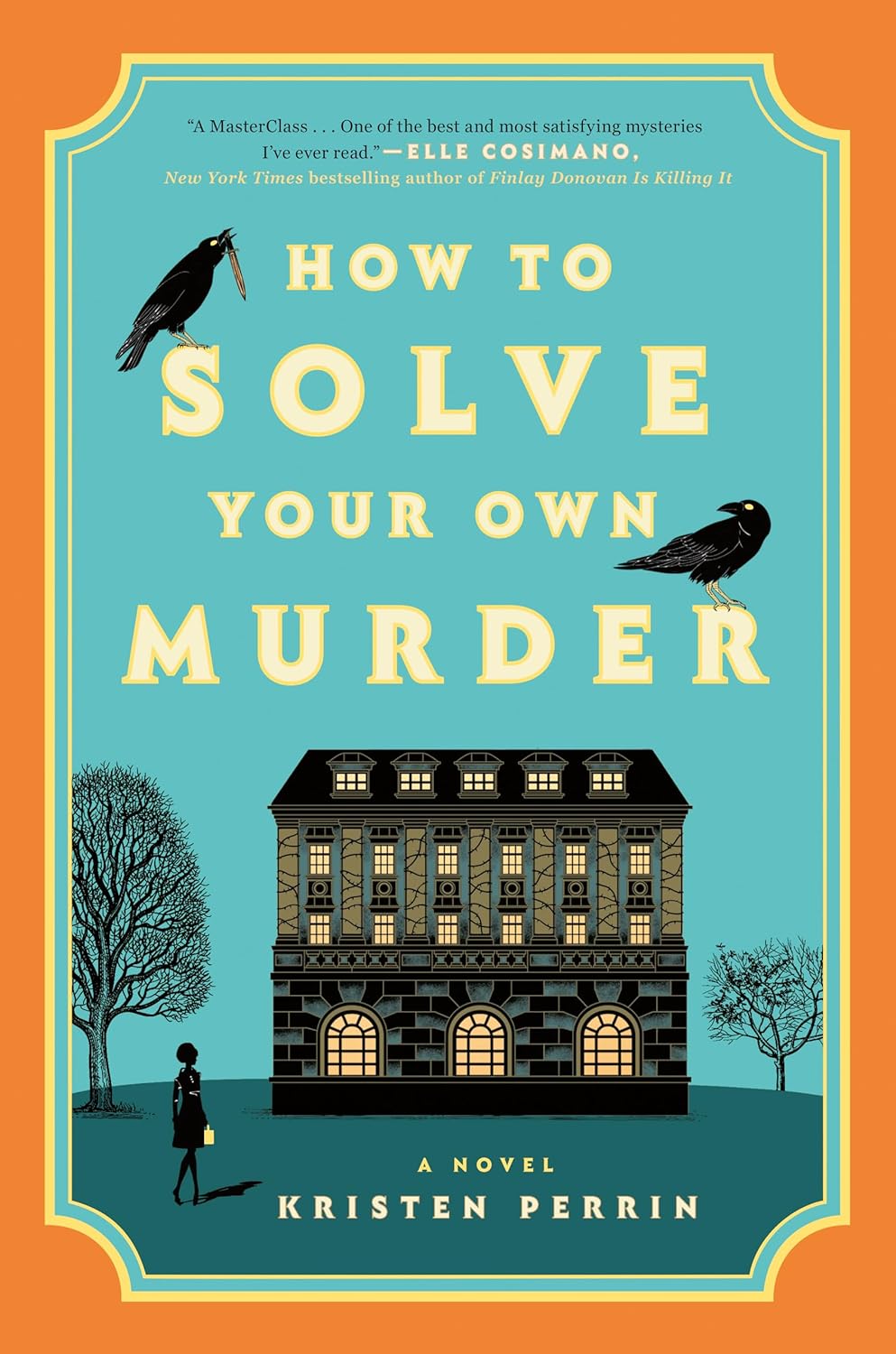
Imagine being a teenager and getting your fortune read. Now imagine that fortune is dark, a portent of what you believe might be your demise. What would you do? Frances Adams faced just that situation in Kristen Perrin’s novel, How to Solve Your Own Murder, first released in March 2024. It became an instant best seller and has continued to delight readers worldwide. Frances and her friends Rose Forrester and Emily Sparrow visit a fortune teller at the Castle Knoll Country Fair in 1965, an event that shapes the rest of Frances’ life. The three were longtime childhood friends, and while they suffered some of the usual teenage competition for boys and attention, they were often inseparable. Of course there’s far more to their friendship than readers suspect, much of which becomes clear as the story progresses.

The fateful fortune in question reads as follows:

“Your future contains dry bones. Your slow demise begins right when you hold the queen in the palm of one hand. Beware the bird, for it will betray you. And from that, there’s no coming back. But daughters are the key to justice, find the right one and keep her close. All signs point toward your murder.”

Continue reading

Artistic murder

By Ande Jacobson

A Trick of the Light is the seventh full-length mystery in Louise Penny’s Chief Inspector Armand Gamache (of the Sûreté du Québec) series, first released in 2011. This time, Clara Marrow has finally made it as an artist, as she has her solo show at the famed Musée d’Art Contemporain in Montreal. Unfortunately, her night of celebration ends with a tragic murder that isn’t discovered until the next morning. No, Clara isn’t the one murdered, but her one-time friend turned arch enemy is, and Three Pines is again on edge as there are too many suspects that Armand and his team must sort through to find the why and how and identify the real killer. Continue reading

History, mystery, and beyond

By Ande Jacobson

Bury Your Dead is the sixth book in Louise Penny’s Chief Inspector Armand Gamache (of the Sûreté du Québec) series, first released in 2010. This time, there are three separate, yet strangely related cases at hand. One is a case that happened between books and has caused Armand’s team serious harm. The details in the aftermath seep out throughout the book, bringing to light more of Armand’s and Jean-Guy’s inner fears and strengths. One is the case from the previous book, The Brutal Telling. Armand, never satisfied with the outcome of their last Three Pines murder asks Jean-Guy to return to Three Pines to re-investigate quietly to see what they might have missed. The third and primary case is a new mystery that brings into question aspects of Canadian history. Penny did a great deal of research for the main story this time delving much deeper into her nation’s history and various assumptions about the clashes between the Francophones and Anglophones who live side-by-side in Québec. Continue reading

Why is the question

By Ande Jacobson

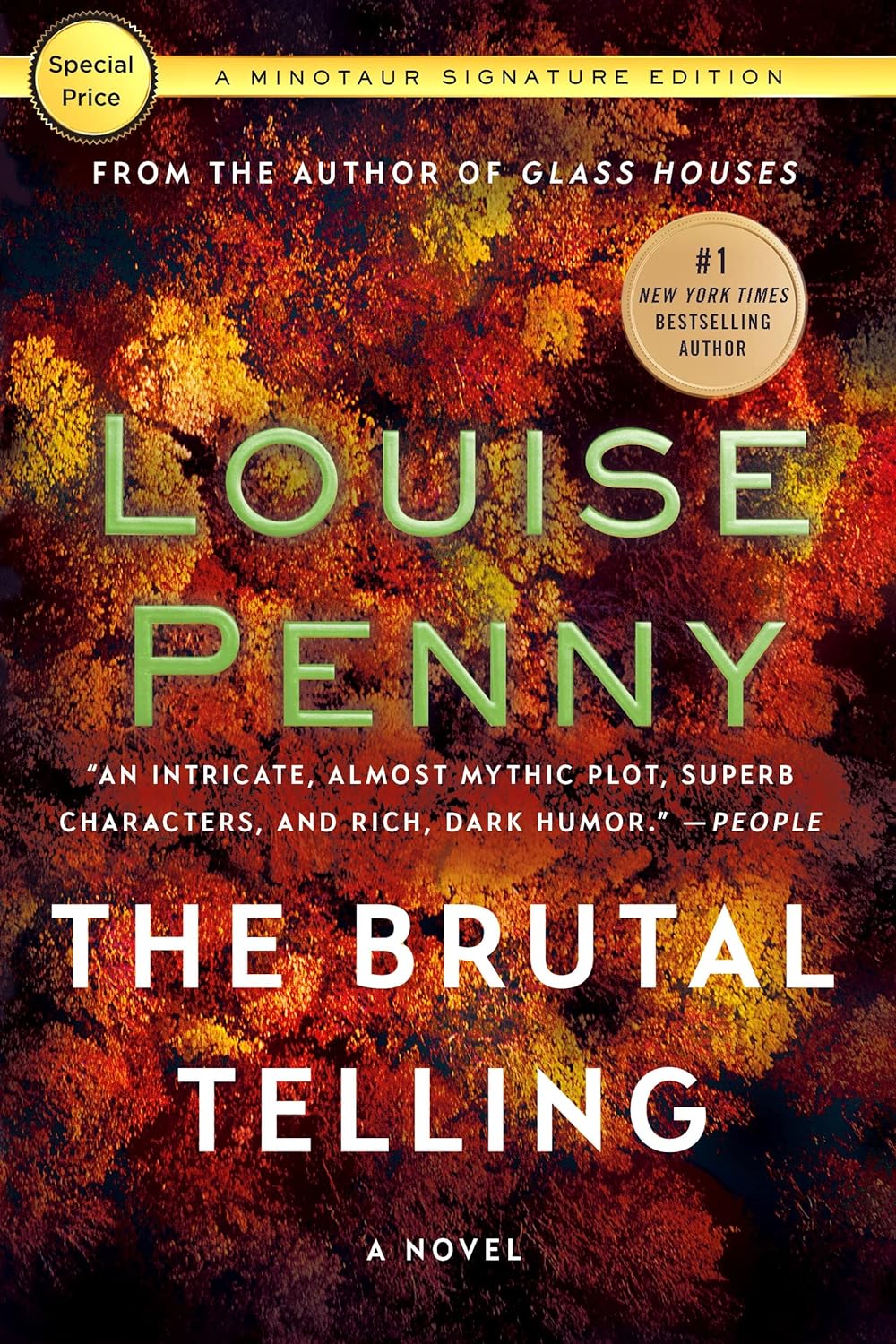
The Brutal Telling is book five of Louise Penny’s Chief Inspector Armand Gamache (of the Sûreté du Quebec) series, first released in 2010. Inspector Gamache and his team are back in Three Pines investigating a strange murder. This time, a body is found on the floor of the bistro owned by Olivier Brulé and Gabri Dubeau, and nobody appears to know who the victim was. Through the investigation, Gamache finds numerous inconsistencies, uncovers some deep seated animosities, and finds a cabin in the woods with treasures beyond comprehension. The murder victim apparently lived in the cabin, and as the investigation proceeds, it seems that despite his protestations to the contrary, Olivier knew him. Continue reading

Where do old spies go?

By Ande Jacobson

Kate Quinn’s The Alice Network is a masterful look at the heroic efforts by a female spy ring during WWI and beyond. While a work of historical fiction, she weaves in a lot of history following two timelines. The first is WWI and the efforts by the women of The Alice Network, a real underground network of British spies operating in foreign territory gathering huge amounts of crucial information that ultimately helped win the war. The parallel timeline in the “present” is just after the end of WWII. The story follows Charlotte (Charlie) St. Claire on her quest to find her missing cousin. On her travels, she connects with Evelyn Gardiner, a cranky, eccentric old woman with gnarled hands and a mysterious past, and her driver and protector, Finn Kilgore. The trio make their way through Europe first to help Charlie with her quest, but also to satisfy an old score of Eve’s. Continue reading

A bit of medical history and a mystery

By Ande Jacobson

Tess Gerritsen’s last standalone medical thriller was The Bone Garden, first released in September 2007. This one is a departure from her previous works in that it’s more a work of historical fiction concerned with the study of medicine, a couple of love stories, and a murder mystery built-in. As always, the introduction is a flashback, this time a letter dated March 20, 1888 signed O.W.H. who is a well-known historical figure. The letter is short, and it offers an intriguing introduction to a family history of note. The reader is then immediately transported to the present (at the time of book’s writing), and its present-day protagonist, Julia Hamill. Recently divorced, she set out to start a new life for herself purchasing a country estate outside Boston for a steal because its elderly previous owner had died on the premises. While working hard to rejuvenate her garden, Julia happens upon some remains which opens up an excavation, first by the local police and ME (a cameo by none other than Maura Isles, but this isn’t part of the Rizzoli & Isles series), and later by a well-known forensic anthropologist from Harvard once the remains are determined to be rather old. And so begins the main story. Continue reading

When ET lands, the unexpected happens

By Ande Jacobson

Tess Gerritsen continues her medical thrillers with Gravity, first released in September 1999. This time, she explores the unknown both on earth and in space. As she often does, she starts the book with a seemingly disconnected event, a deep sea researcher encountering an unknown life form on the ocean floor. It’s known that the fauna in the deep waters is not seen anywhere else on Earth, and many of the creatures living and even thriving there have unusual properties such as being able to live in super-heated, poisonous waters near volcanic vents. Gerritsen has done her homework on this one melding deep sea biology with space biology in a riveting story of what happens when life forms are thrust into alien environments. One of the biggest dangers to humans living in space is encountering a pathogen that threatens their existence, and this is a story of such an occurrence aboard the International Space Station (ISS). Continue reading

What does Briarwood House know?

By Ande Jacobson

Kate Quinn’s latest book, The Briar Club, while historical fiction in the broad strokes, leans into fantasy a bit with an interesting central character – a sentient house! Briarwood House, so named because it’s at the corner of Briar and Wood streets in Washington, D.C., is a boarding house for single women. It’s owned and run by Mrs. Nilsson, a crusty woman with two children, Pete – her teenage son, and Lina – her young daughter. The story of how and when Mrs. Nilsson’s husband left seeps out slowly as the plot develops. Before that though, the prologue jump starts the story with a murder, and most of the rest of the book is a series of flashbacks just a few years before as the various boarders are introduced. Interludes where the house reports on the current situation pop up in between, and once all the pieces are in place, readers are treated to a wonderful resolution of the mystery at hand. Quinn’s masterful weaving of each boarder’s backstory is riveting. The sentient house is a charming way to meld all of the stories together in this work that takes place in the 1950s during a rather tumultuous time in U.S. history. The Korean War is a factor as are the Cold War and Joe McCarthy’s witch hunts. Continue reading

What makes us tick?

By Ande Jacobson

Tess Gerritsen continues her medical thrillers with Bloodstream, first released in August 1998. As she has done with her previous medical stories, she again tackles a complex medical mystery that wreaks havoc on a community and intersects with a serious societal issue. This time the story takes place in a quaint fictional town in Maine named Tranquility. As a point of interest, Gerritsen later revisits Tranquility in a different book series – The Martini Club series. Tranquility is modeled after the town where Gerritsen and her husband live. It’s a town where everyone knows everyone else, but there are some skeletons in the community closet both in real life and in the fictional counterpart. For Bloodstream, the story begins in the past in 1946 when a horrific spate of violence occurred. While readers are introduced to the rage that ensued, it’s not fully explained at that point. Gerritsen then moves to the present at the time of her writing in the late 1990s. Claire Elliot is the town’s new doctor having bought her medical practice after the previous town doctor died. She and her teenage son Noah moved to Tranquility from Baltimore for a new start. Claire had been widowed young, and she and her son were both still having difficulty coming to grips with their loss. She is a very capable general practitioner, but she runs up against the provincial attitudes often seen in many small towns. There is an inherent distrust of any outsider that acts as a barrier to community inclusion. Noah too has difficulty fitting in with his cohort, and at the start at least, he really wants to go back to Baltimore. Continue reading

What is the cost of living forever?

By Ande Jacobson

Tess Gerritsen continues her medical thrillers with Life Support, first released in September 1997. As she did in the first of her medical thrillers, she tackles a controversial area of medicine, this time dealing with research into human life extension despite the dangers uncovered along the way. Gerritsen has a way of weaving a compelling story while drawing the reader deeply into disparate details that seem unconnected until much later in the story. She relies heavily on her background as a physician to give the reader a deep understanding of the medicine involved, carefully blurring the lines of what is currently possible. Along the way, Gerritsen also delves into medical research in a way that will likely give readers pause when it comes to exactly what goes into a given research project, from the medicine involved to a quick primer on some curious aspects of genetic engineering. Continue reading