Courageous followership matters

By Ande Jacobson

Ira Chaleff’s To Stop a Tyrant is both timely and timeless. Although he completed writing the book in March 2024, and it was released a few months later in early September just two months before a major U.S. presidential election with democracy on the line, there is no mention of this crucial election despite everything in the book being directly applicable. Chaleff chose not to discuss the election brewing in his midst in part because so much was changing very quickly at the time of his writing, and also because he wanted this book to transcend any current crises or partisanship. He uses numerous examples not only from his own personal experience but also from throughout human history, especially from the last 100 years up through fairly current times. From the more current perspective at the time of his writing, he covers the evolution from activist to prototyrant to dictator of both Victor Orbán of Hungary and Vladimir Putin of Russia to illustrate many of his points while also including some mention of the same phenomena during ancient Roman times to show that none of this is new. Continue reading

Parts for sale

By Ande Jacobson

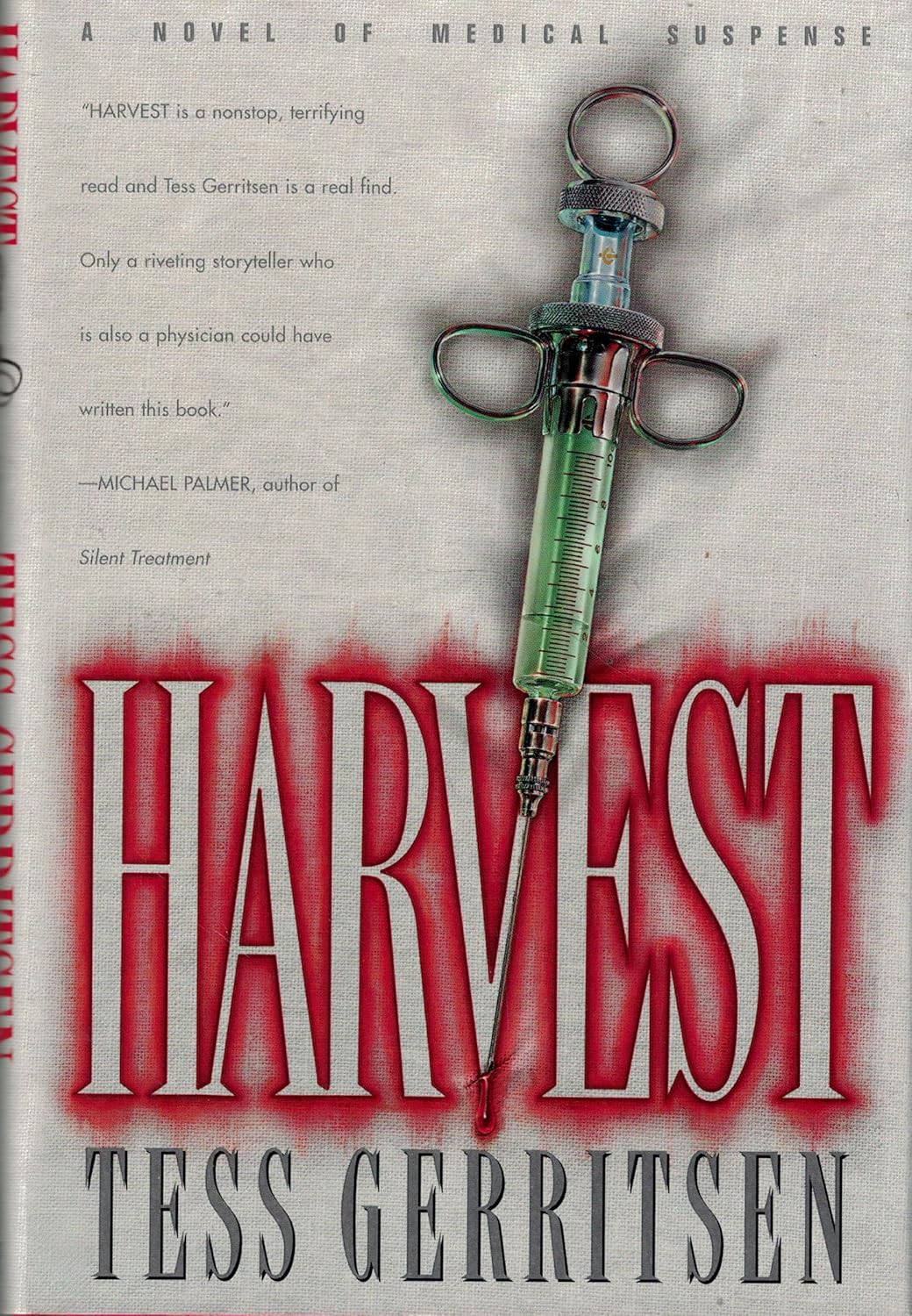
Before Tess Gerritsen began writing her Rizzoli & Isles series, she wrote a number of medical thrillers. The first of these was Harvest, released in September 1996. Her experience as a physician leant itself to tell compelling stories surrounding medical situations, and it also raised her awareness of various societal crises based on manipulation of the healthcare system. Harvest combines a riveting thriller with a very real crisis situation surrounding organ transplants. In particular, the mystery in this story explores how the morbidly wealthy and the very greedy can sometimes work together to circumvent the need-based processes in place. In the real world, organ transplants are lifesaving. They can take a person from death’s door to restored health, but they come at a cost. For most organs, particularly things like hearts and lungs, they come available only when an organ donor dies. While a directed donation can be made in some cases, the general system in place to provide these precious organs is based on patient need. The more severe the need, the higher a patient’s priority on the recipient list. Their financial and social status is not taken into account, only their medical need is relevant. Unfortunately, there’s a rather robust black market that some very wealthy individuals turn to in order to jump the line. The market consists of profiteers who garner the services of some less than reputable physicians to harvest organs from donors that are sometimes “created” to supply these precious organs to those willing to pay. Sadly, some with the resources available would be willing to pay almost any price to save their loved ones denying those in greater need of their very lives. Of course, evaluating medical need can also be tricky, particularly when so few organs are available meaning that whoever doesn’t get a given organ may not live long enough for another compatible organ to come available the normal way. Continue reading

The search for Die Jägerin

By Ande Jacobson

Kate Quinn is known for her historical fiction, often intertwining vivid fictional characters with real people and major historical events. Her book, The Huntress, is no exception. The main characters are fictional, albeit in some cases composites of various real people. Along the way, historical figures are mixed into the story in more minor roles. The central conceit of the story is a team of Nazi hunters’ search for Die Jägerin, a vicious killer from WWII Germany. The title character; however, isn’t the target of their search. In this case, the huntress in the story is a composite character representing a number of brave women from the infamous Russian Nachthexen or Night Witches, so named by the German forces they bested. Nina Borisovna Markova is the huntress in this story, and while she is a fictional character, her achievements and actions are drawn from her actual “sestry” from the Russian forces. As Quinn illustrates, Russia was the only nation in WWII to eventually make use of women in frontline combat roles, including as pilots, navigators, and mechanics, often greatly outperforming their male counterparts. The Night Witches were a real entity that was key to the allies winning the war against the axis forces. Their inclusion in this story was a handy way to tie together the post war Nazi hunters with their lives during the war, and most importantly, provides the motivation for their somewhat obsessive search for one killer in particular. Continue reading

We need to listen

By Ande Jacobson

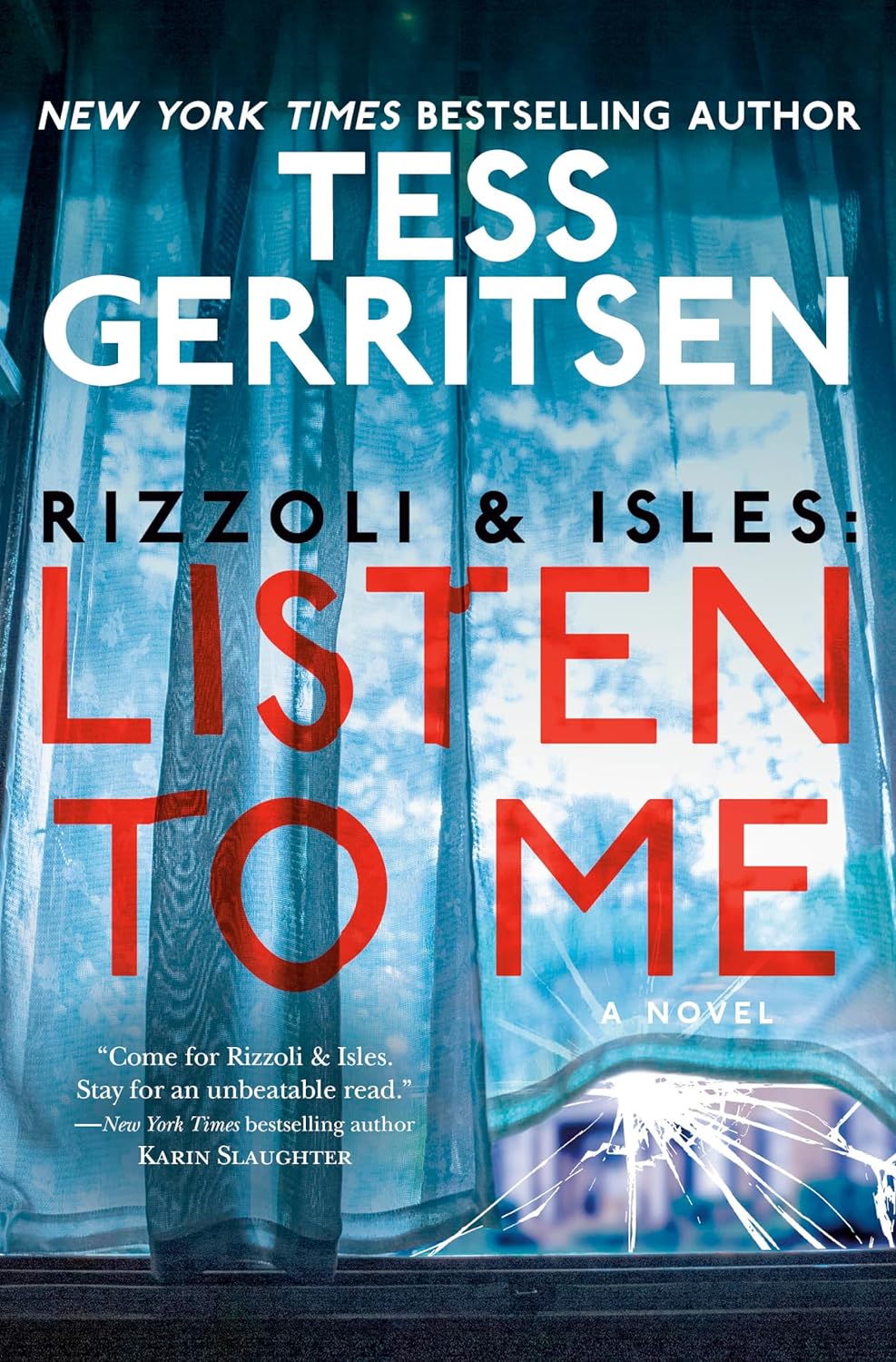
Tess Gerritsen’s Rizzoli & Isles series completes for now with Listen to Me, first released in July 2022. This ultimate series installment follows a different path than previous Rizzoli & Isles books. Gerritsen writes this one from multiple points of view focusing on each of the main female characters. As the POV shifts, we get more insight into series regulars Angela Rizzoli, Detective Jane Rizzoli, and Medical Examiner Maura Isles, and into newcomer Amy Antrim. Each has several chapters devoted to them and their thoughts, motivations, inner turmoil, and actions. A major theme of the book, particularly from Angela’s perspective, is “If you see something, say something,” a motto that can either help and hinder depending on the circumstances. As always in Gerritsen’s mysteries, there are numerous subplots that mingle and merge in unexpected ways as the story progresses, generally surrounding a series of murders in some fashion. This time is no exception except perhaps in the complexity of the subplots that each come to the forefront at different points in the story. This one also brings the dangers much closer to home. Continue reading

Childhood secrets can be dangerous

By Ande Jacobson

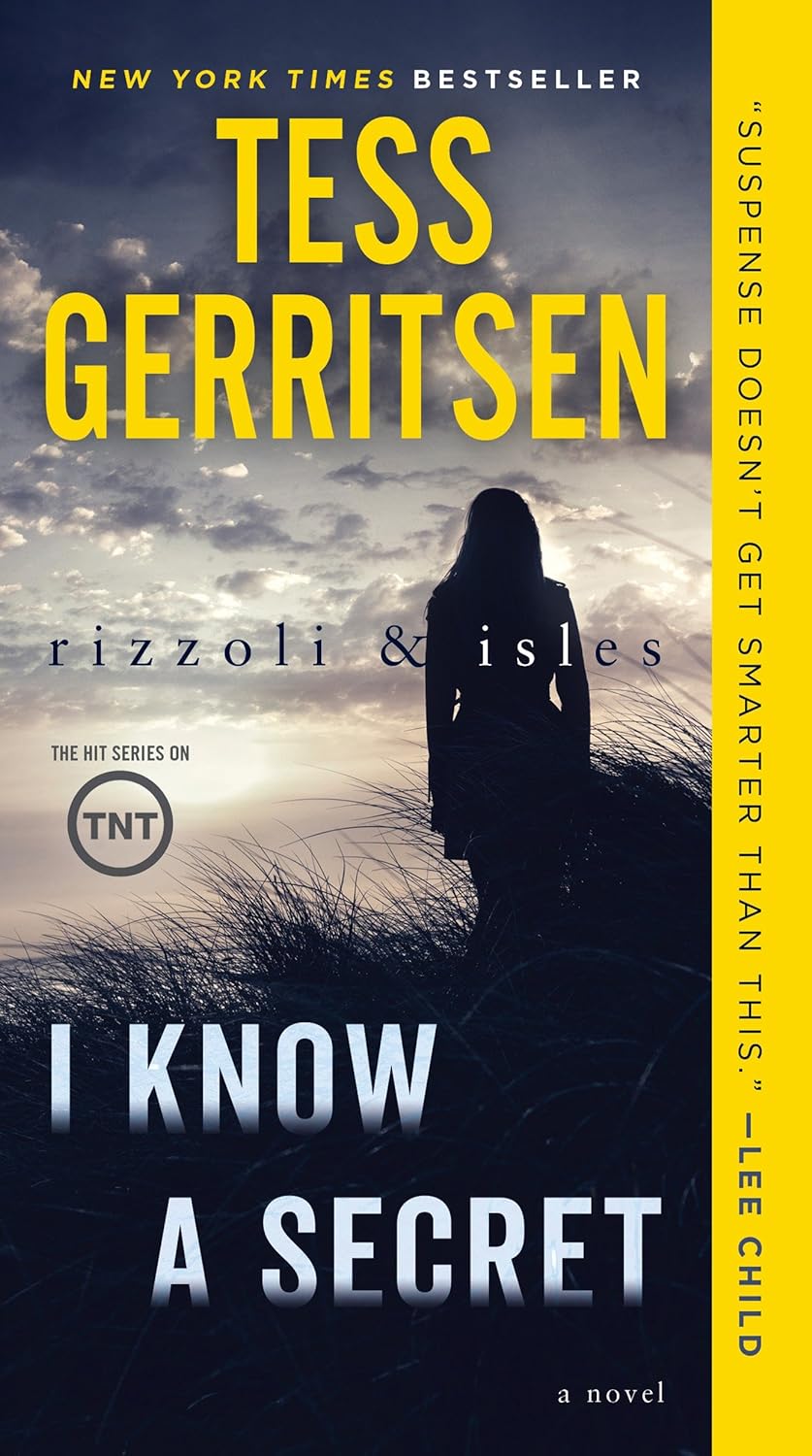
The penultimate book (so far) in Tess Gerritsen’s Rizzoli & Isles series, I Know a Secret, was first released in August 2017. This one is creepy dealing with sociopathic tendencies, childhood frailties, and how a long buried secret can wreak havoc even decades later. For most children, certain situations elicit expected and appropriate displays of emotion. In sad or somber situations like a relative’s funeral, that can sometimes mean tears. For those rare kids who are wired differently such that they don’t feel the normal range of emotions, this might end up being a learned behavior rather than an instinctual one. For such a child, their response can look like those of their peers while instead being a coldly calculated act to avoid standing out. So begins the story narrated by an adult who was once such a child. How that ties into the murders at hand takes most of the book to unfold, but the ending is worth the wait, unsettling though it may be. Continue reading

A dangerous case of mistaken identity

By Ande Jacobson

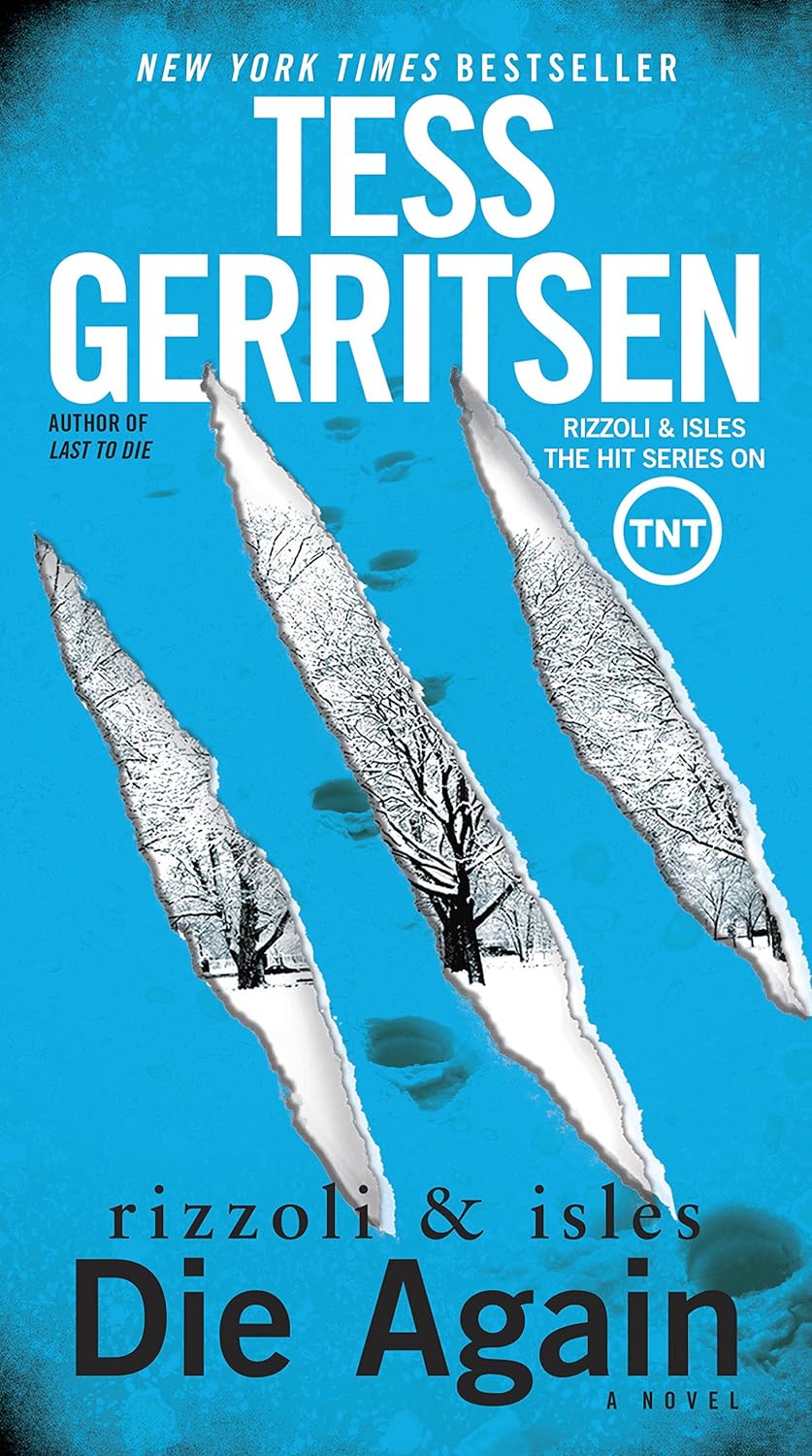
The eleventh book in Tess Gerritsen’s Rizzoli & Isles series, Die Again, was first released in December 2014, and it’s another page turner. Gerritsen has shown herself to be a compelling mystery writer drawing upon her own background knowledge as a doctor and her world travels. This time, the story covers ground in Boston and other places across the U.S. as well as in the wilds of the African Bush region of Botswana. For that last part, Gerritsen draws upon her own experiences on safari adding a lot of color and atmosphere to her descriptions. The initial introduction to a safari some years before the present time of the story at first seems like a diversion fraught with interpersonal drama, but as is often the case in a Gerritsen mystery, it’s far more than that. The safari details are riveting, making the reader feel the tension and the danger surrounding the expedition well before anything untoward occurs. How the safari relates to the crimes at hand, some particularly gory murders in the present day Boston area that become cause for disagreement amongst the detectives in the homicide squad, doesn’t become clear until very late in the story. The Boston murder victims are curious, as is their executioner’s modus operandi which is more predator-oriented than usual. The path the story and the team travel from discovery of each of the bodies to the ultimate solution is a complex one with plenty of plausible misdirection along the way. There’s even a weird turf battle between Rizzoli and Crowe on competing cases that furthers the misdirection. Continue reading

The fascinating story of Lyudmila Pavlichenko

By Ande Jacobson

The Diamond Eye is Kate Quinn’s largely biographical novel chronicling the story of Lyudmila Pavlichenko, a woman who made a huge contribution to defeating Hitler’s assault on her homeland during WWII. Pavlichenko was a Ukrainian born Russian woman who became a deadly sniper in the Red Army in the early days of the war. Her story shows that while there’s a certain amount of luck in surviving the horrific conditions she endured, her skills and determination were invaluable in her efforts. While Quinn is famous for writing historical fiction, weaving gripping stories surrounding historic times or events, this novel is drawn more directly from an original source than most. Her primary reference for the novel was Pavlichenko’s autobiography, Lady Death: The Memoirs of Stalin’s Sniper. She used an English translation by David Foreman as a central part of her research beyond various official records to which she had access. As such, almost all of the characters are from real life in this story, although one major character is a composite of two real men. Quinn also used a bit of poetic license with respect to Pavlichenko’s autobiography, at times reordering some events to create a more cohesive storyline and filling in some gaps in the timeline. It’s likely that some of the events in the source material were themselves smoothed and brightened given the work was approved by the Soviet Union and thus was potentially at least partially propaganda. On the other hand, the official record of various events is clear and independently verifies much of the material. Continue reading

The kids will be OK

By Ande Jacobson

Last to Die, is the tenth book in Tess Gerritsen’s Rizzoli & Isles series and was first released in 2012. Like the previous book, the Kindle version of this one includes a bonus short story in the Rizzoli & Isles canon entitled John Doe also from 2012. For the main story, Gerritsen weaves a complicated web of unlikely connections that build to a surprising conclusion. The focus is on three unfortunate children, Teddy Clock, Claire Ward, and Will Yablonski. The first part of the book gives some background on all three, and they have a strange connection in that they not only lost their families in tragic accidents, they lost the families that took them in afterwards in equally horrific fashion. The three seemingly had no connection to one another other than being their family’s last survivors. Through a series of unlikely events, they all end up at the Evensong School in an effort to keep them safe while the authorities investigate what happened to their families. Before meeting at the school, the three didn’t think they had ever met and didn’t think they had anything in common, at least at first. Julian Perkins also plays a major role in this story, and he and Dr. Maura Isles help one another with the investigation. Anthony Sansone also joins the fray in an important but peripheral capacity. Of course the police regulars including Jane Rizzoli, Barry Frost, Darren Crowe, Lieutenant Marquette, and others are prominent in the story as well. Continue reading

When myth and reality merges

By Ande Jacobson

The Silent Girl, is the ninth book in Tess Gerritsen’s Rizzoli & Isles series, first released in 2011. This book is a treat in that the Kindle version also includes a bonus short story in the Rizzoli & Isles canon entitled Freaks from 2010. Gerritsen considers The Silent Girl a very personal story in which she ties in ancient Chinese folklore that her mother had related to her. Her mother learned these fables and legends during her childhood in China, and they add an ethereal element to the story that infuses the mythos into Jane Rizzoli’s world in unexpected ways. As often happens in Gerritsen’s books, she starts in the past giving readers a foundation they don’t realize connects until much later in the story. This time, although the story starts in San Francisco in the past, it quickly returns to Boston in the present where Maura Isles is testifying in court. Maura’s background matches that of the author to a point – both author and protagonist majored in Anthropology as undergraduates at Stanford and attended medical school at UC San Francisco. From there they diverge in specialty and position, but that’s merely background. The trial in the story sets the scene for why Maura is at odds with most of Boston PD for much of this story. Her factual testimony is key in convicting a police officer accused of killing a young man while in custody. Although the court case has nothing to do with the crimes being investigated in the bulk of the story, it makes the connection between Maura and Jane all the more poignant despite the growing rift caused by Maura’s crossing the thin blue line through her court testimony. Continue reading

Ski trips can be dangerous

By Ande Jacobson

Tess Gerritsen’s eighth book in the Rizzoli & Isles series, Ice Cold, was first released in 2010. This time Gerritsen doesn’t dig into her anthropology background. Instead she uses her medical background on the living rather than the dead in this heart-stopping adventure. Reeling from her recent breakup with Father Daniel Brophy, Dr. Maura Isles attends a pathology conference in Wyoming of all places. In November. Before readers catch up with Maura’s adventure, they are first introduced to an insular community in Plain of Angels, Idaho. The compound is home to a small, religious group serving their leader, Prophet Jeremiah Goode. As is often the case in Gerritsen’s mysteries, this opening chapter from the past provides key pieces of information that will become crucial later in the story. In this look back, readers see that the prophet leads what can only be described as a cult. While the activities might jolt the hairs on the back of a reader’s neck, no specific crime is yet revealed. Continue reading