The Phoenix Crown by Kate Quinn and Janie Chang is a brilliant work of historical fiction that takes place surrounding the 1906 San Francisco earthquake. The story surrounds four fictional women who come together through happenstance and trauma and become not only fast friends, but heroes during the earthquake and after. Quinn and Chang weave a fascinating tale of intrigue, murder, survival, and quite a bit of history in this one. The Prologue begins with a glimpse many years past the end of the story. Then Chapter 1 quickly rewinds to just under two weeks before the earthquake. There was a lot happening in the city just then, and the authors capture the many events coalescing in those fateful two weeks. They also capture the horror and chaos that surrounded the earthquake and its aftermath as the city burned. For those from California and especially the San Francisco Bay Area, the earthquake portion of the story is terrifying, yet the courage and tenacity shown by the protagonists is uplifting and inspirational. Continue reading
Kate Quinn
Where do old spies go?
By Ande Jacobson
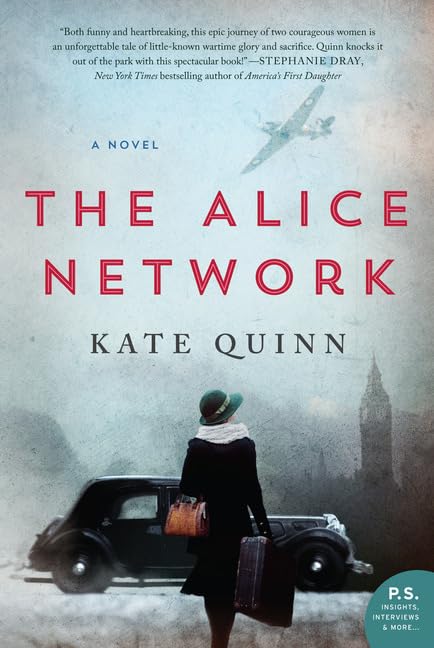
Kate Quinn’s The Alice Network is a masterful look at the heroic efforts by a female spy ring during WWI and beyond. While a work of historical fiction, she weaves in a lot of history following two timelines. The first is WWI and the efforts by the women of The Alice Network, a real underground network of British spies operating in foreign territory gathering huge amounts of crucial information that ultimately helped win the war. The parallel timeline in the “present” is just after the end of WWII. The story follows Charlotte (Charlie) St. Claire on her quest to find her missing cousin. On her travels, she connects with Evelyn Gardiner, a cranky, eccentric old woman with gnarled hands and a mysterious past, and her driver and protector, Finn Kilgore. The trio make their way through Europe first to help Charlie with her quest, but also to satisfy an old score of Eve’s. Continue reading
What does Briarwood House know?
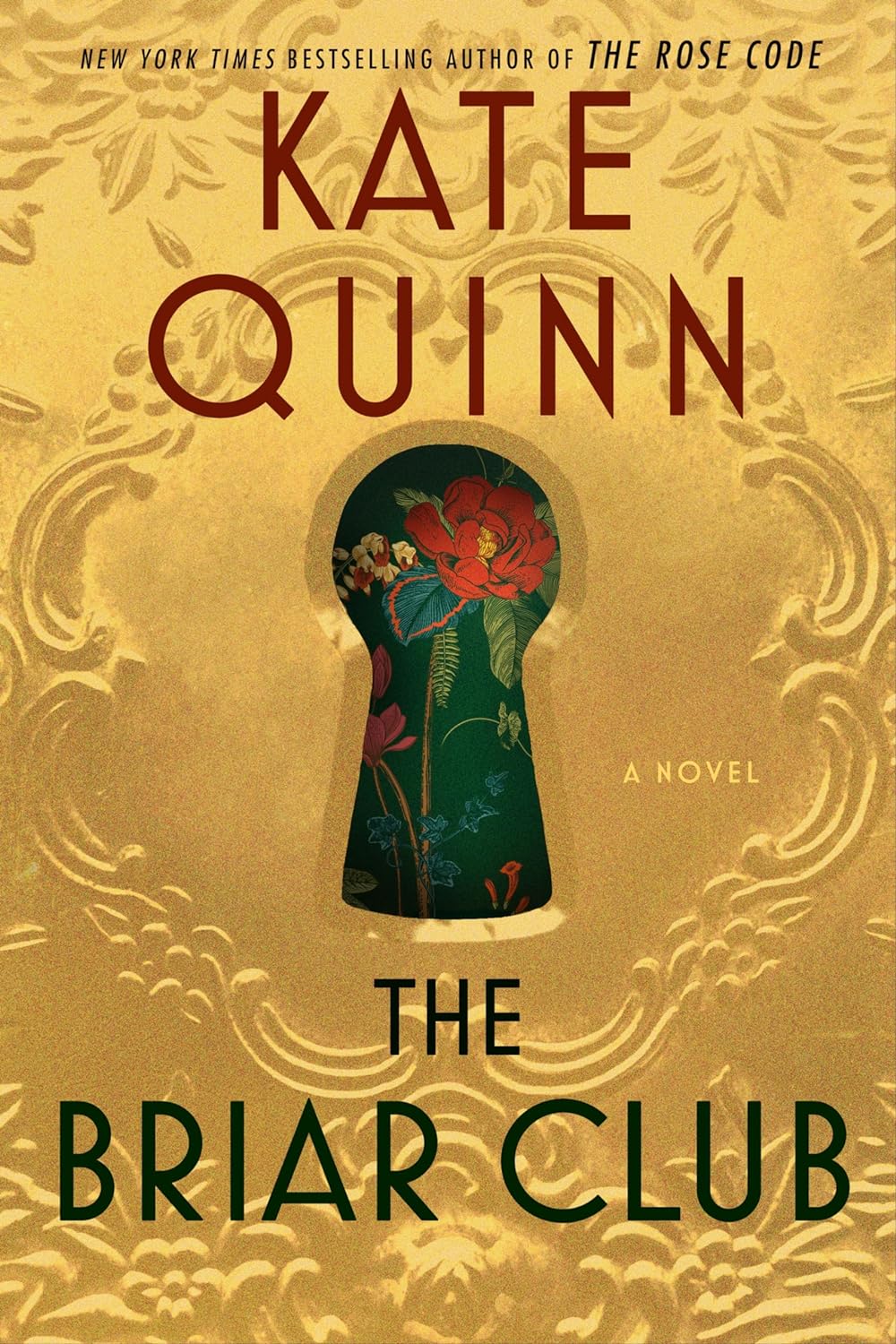
Kate Quinn’s latest book, The Briar Club, while historical fiction in the broad strokes, leans into fantasy a bit with an interesting central character – a sentient house! Briarwood House, so named because it’s at the corner of Briar and Wood streets in Washington, D.C., is a boarding house for single women. It’s owned and run by Mrs. Nilsson, a crusty woman with two children, Pete – her teenage son, and Lina – her young daughter. The story of how and when Mrs. Nilsson’s husband left seeps out slowly as the plot develops. Before that though, the prologue jump starts the story with a murder, and most of the rest of the book is a series of flashbacks just a few years before as the various boarders are introduced. Interludes where the house reports on the current situation pop up in between, and once all the pieces are in place, readers are treated to a wonderful resolution of the mystery at hand. Quinn’s masterful weaving of each boarder’s backstory is riveting. The sentient house is a charming way to meld all of the stories together in this work that takes place in the 1950s during a rather tumultuous time in U.S. history. The Korean War is a factor as are the Cold War and Joe McCarthy’s witch hunts. Continue reading
The search for Die Jägerin
Kate Quinn is known for her historical fiction, often intertwining vivid fictional characters with real people and major historical events. Her book, The Huntress, is no exception. The main characters are fictional, albeit in some cases composites of various real people. Along the way, historical figures are mixed into the story in more minor roles. The central conceit of the story is a team of Nazi hunters’ search for Die Jägerin, a vicious killer from WWII Germany. The title character; however, isn’t the target of their search. In this case, the huntress in the story is a composite character representing a number of brave women from the infamous Russian Nachthexen or Night Witches, so named by the German forces they bested. Nina Borisovna Markova is the huntress in this story, and while she is a fictional character, her achievements and actions are drawn from her actual “sestry” from the Russian forces. As Quinn illustrates, Russia was the only nation in WWII to eventually make use of women in frontline combat roles, including as pilots, navigators, and mechanics, often greatly outperforming their male counterparts. The Night Witches were a real entity that was key to the allies winning the war against the axis forces. Their inclusion in this story was a handy way to tie together the post war Nazi hunters with their lives during the war, and most importantly, provides the motivation for their somewhat obsessive search for one killer in particular. Continue reading
The fascinating story of Lyudmila Pavlichenko
The Diamond Eye is Kate Quinn’s largely biographical novel chronicling the story of Lyudmila Pavlichenko, a woman who made a huge contribution to defeating Hitler’s assault on her homeland during WWII. Pavlichenko was a Ukrainian born Russian woman who became a deadly sniper in the Red Army in the early days of the war. Her story shows that while there’s a certain amount of luck in surviving the horrific conditions she endured, her skills and determination were invaluable in her efforts. While Quinn is famous for writing historical fiction, weaving gripping stories surrounding historic times or events, this novel is drawn more directly from an original source than most. Her primary reference for the novel was Pavlichenko’s autobiography, Lady Death: The Memoirs of Stalin’s Sniper. She used an English translation by David Foreman as a central part of her research beyond various official records to which she had access. As such, almost all of the characters are from real life in this story, although one major character is a composite of two real men. Quinn also used a bit of poetic license with respect to Pavlichenko’s autobiography, at times reordering some events to create a more cohesive storyline and filling in some gaps in the timeline. It’s likely that some of the events in the source material were themselves smoothed and brightened given the work was approved by the Soviet Union and thus was potentially at least partially propaganda. On the other hand, the official record of various events is clear and independently verifies much of the material. Continue reading
‘The Rose Code’ puzzles reach beyond the walls of Bletchley Park
Kate Quinn’s The Rose Code is a masterwork of historical fiction. It’s a long book at 656 pages that reads quickly as the tension builds. Published by William Morrow in March 2021, this gripping story brings Bletchley Park, the famed hub of the British effort to break the German Enigma code during WWII, and the unique personalities who worked there to life. Quinn’s fascination with history and her deft storytelling add new twists to events past as she mixes historical figures together with her vibrant fictional characters, although her fictional characters are themselves composites of real people. Her history is not names and dates but is instead about how historical events changed and complicated people’s lives.
Three women meet through Bletchley Park where they each play a part in the monumental task at hand. They come from very different backgrounds from one another and from their fellow codebreakers. Osla Kendall is a debutant originally from Canada who had been helping the war effort bending metal building Hurricanes while dating a dashing prince. Mab Churt is a self-made London shop girl with a long held secret. Beth Finch is a shy young woman in her mid-20s with no confidence in her own abilities having been beaten down by her overbearing mother.
Osla and Mab are summoned to Bletchley Park. They meet on the train on their way to report and encounter one of the more interesting characters upon their arrival. He introduces them to the colloquial name for the place – GC & CS – which he explains stands for “Golf, Cheese, and Chess Society.” They later find out that GC & CS actually stands for “Government Code & Cypher School” which makes them wonder if they are being trained to be spies.
After reporting in and being assigned to different sections of the codebreaking effort, the two women are billeted close by at the Finch house which is a short walk from Bletchley Park. While there, they start to forge a friendship with Beth and take note of her wicked-sharp crossword puzzle skills. Much to Mrs. Finch’s chagrin, Osla manages to get Beth into Bletchley Park, and unbeknownst to either Osla or Mab at the time, Beth, assigned to “Dilly’s Fillies,” becomes one of Bletchley’s top cryptanalysts. Dilly Knox, it’s later revealed, prefers to hire brainy women because they take the job more seriously without their egos getting in the way. None of them can tell the others what their specific roles are at Bletchley which infuriates Mrs. Finch.
As the story develops, the three become quite close sharing the details of their private lives and loves as well as stories of some of the mishaps and odd personalities at work while always being careful to steer clear of divulging any work secrets. When each started at Bletchley Park, they signed a draconian oath that laid out severe or even life threatening penalties for breaking secrecy. Along the way, they start a Bletchley book club, affectionately known as the Mad Hatters after reading Louis Carroll’s Through the Looking Glass. Their meetings bring together disparate personalities from their different sections of Bletchley Park for some much needed recreation. Eventually the secrecy sparks a traumatic incident that ends in a massive falling out before the war ends, but the story doesn’t end there.
The novel flips between two timelines, one through the course of WWII, and the other a few years after the war ends surrounding a royal wedding. Quinn’s attention to detail brings forward fascinating aspects of the different sections at Bletchley Park showing how the various groups’ work fits together even though none of the workers knows the full story by design. Quinn reveals the machinery used and critical skills required of the elite workforce at Bletchley. They all know they are involved in work that not everyone is capable of doing, and in their own ways take pride in their contributions to the war effort. Some of the habits they pick up through their efforts stay with them long after the war ends which comes in handy when a new puzzle presents itself and threatens one of their own.
Quinn is careful to maintain accuracy surrounding historical locations as well as the tone and urgency of the events shaping the war torn world of the early 1940s. She shows how the war wears everyone down. Despite being relatively safe in the confines of their secluded little hamlet, those at Bletchley Park fear for their friends and families who are not so fortunately located. They also suffer a bit of survivor’s guilt at times from the knowledge that although their efforts are what give the fighting forces the information they need, the warfighters are putting their lives on the line daily to carry out their missions while the codebreakers sit in their safe hamlet away from the physical dangers of the war.
What is later discovered is that spies are everywhere, and the secrecy oaths while well-intentioned are not full proof in combating all disclosure. The heart-pounding adventure continues long after the Armistice, and their codebreaking skills come in handy well after they leave Bletchley Park. Along the way, despite their wartime grudges, Osla, Mab, and Beth discover that some bonds turn out to be thicker than blood and stronger than even the worst falling out, and families can be found in many unexpected forms.
References:
The Rose Code by Kate Quinn
Kate Quinn Author