 By Ande Jacobson
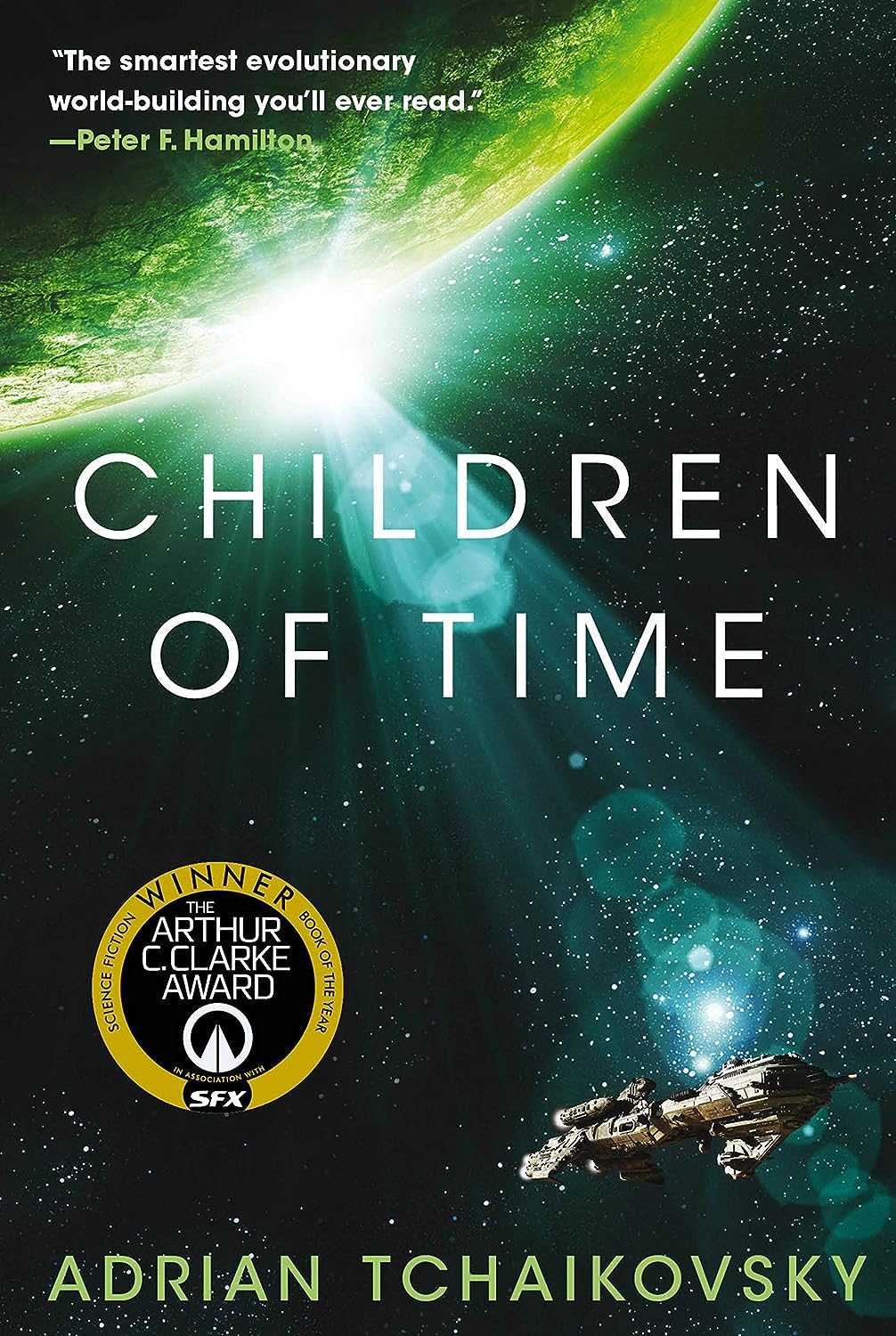
Adrian Tchaikovsky’s Children of Time trilogy begins with a bang. Or perhaps I should say the first book, Children of Time, originally released in June 2015 spins a mind expanding tale. The premise is one that draws deeply on Tchaikovsky’s roots as a zoologist (with a combination psychology/zoology pedigree). It is thought-provoking science fiction at its finest introducing a world where humans are not the dominant species. Although sparked by human interference, the green planet known as Kern’s World is home to a wide-ranging arachnid and insect population that has developed beyond the wildest human imagination. Marine life as well has surpassed what we know today on Earth. It wasn’t always this way, but humankind had run out of options. In the far future, humankind had finally destroyed the Earth. In their final days they sent out ark ships in hopes that the species could find a new home through advanced terraforming experiments intended to seed potential worlds with the ecosystems necessary to support human life. Alas, the best of the intentions are often usurped by unexpected events. Continue reading
 A Good Reed Review