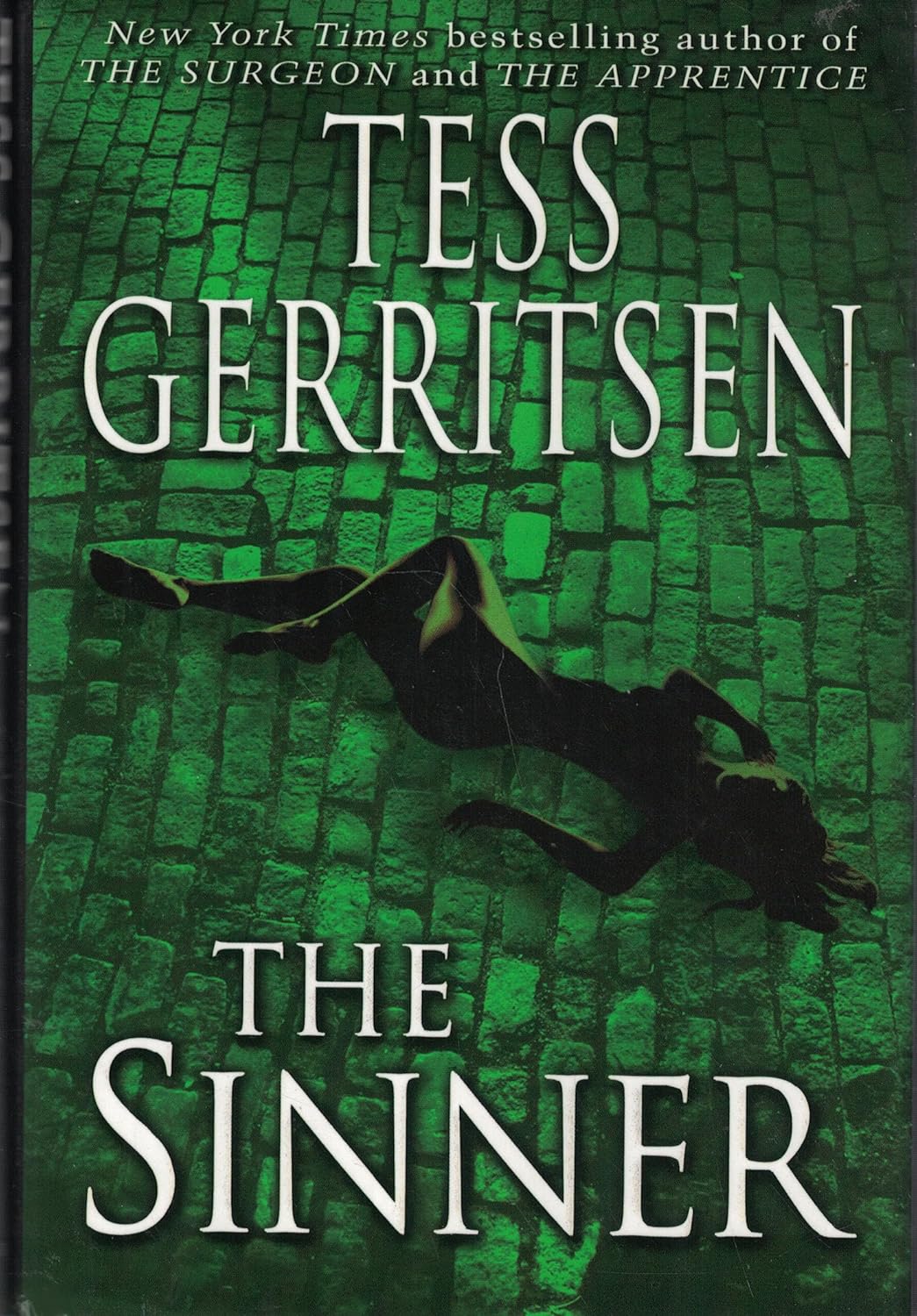
A most ungraceful exit

By Ande Jacobson

A Fatal Grace is the second of Louise Penny’s Chief Inspector Gamache stories. It was first released in Canada as Dead Cold in 2006. Although it takes several chapters before the primary murder of interest occurs, Armand Gamache ends up back in Three Pines again. For a small village outside of Montreal, Three Pines might rival Cabot Cove in Maine for the most murders per capita, and this is only one of the murders being investigated by the famed Chief Inspector this time. He has two investigations going on. The primary case occurs on Boxing Day in Three Pines and involves his full team. The secondary case is one involving the murder of a homeless woman in Montreal that occurred a few days earlier though most of his team is unaware of the Montreal murder. He keeps that case close to the vest as it is a recent one that he’s investigating on the side for a friend with the Montreal Metropolitan Police. Gamache is a Chief Inspector with the state police – the Sûreté du Quebec, and he and his wife (Reine-Marie) have a Boxing Day tradition of combing through the cold cases brought by Marc Brault of the city’s force while Brault does the same with some of Gamache’s more stubborn cases. Why such a recent murder would be a cold case intrigues Gamache. As for the trade, new sets of eyes could sometimes break the logjam. Continue reading

The pine cone mystery

By Ande Jacobson

For over 25 years, a giant pine tree that was rooted at the apartment complex next door loomed over the back half of my townhouse. It also sprawled over a large portion of the common area behind my building. That tree was monstrous. In addition to a constant flow of pine needles and twigs covering my roof year around, it dropped pine cones onto my roof that sometimes startled me out of a sound sleep. Many of those pine cones would eventually either roll off the roof onto the patio or fall there directly from the tree. That tree threatened to drop limbs which could make stormy nights especially daunting. Fortunately when limbs did fall on occasion, they fell into our common area, and our HOA would eventually have them cut up and hauled away. A few months ago, the apartment complex next door brought in a tree service to cut down that tree and turn it into mulch. It had been sick and posed a danger to people at both the apartments and our townhouse development. Continue reading

My magical, musical journey: Part 9 – For the love of music

By Ande Jacobson

Music can be all-encompassing whether making music or just listening to it. It can be healing. It can be invigorating. It can also stimulate the brain in ways that nothing else can. Music encourages artistic and emotional connection and expression. And unfortunately in our profit-centered world, it can also be far too expensive. In July of 2019, I wrote a piece exploring some of the differences between those playing to live and those who lived to play for the sheer love of it, though in both cases my essay focused on the performance aspects and the range of compensation musicians received for their services.

I’ve written about the recent demise of two local theater companies. I had worked for both companies in the past, and they each served the community in numerous ways. Between the ongoing risks associated with the prevalence of COVID-19 reducing audiences, escalating facility costs, and legislation in California forcing performing arts organizations to treat any paid person as an employee with all of the overhead costs that entails, it’s become increasingly difficult to keep small theater groups and community music ensembles afloat. It’s also made accessing those that are still functioning far more cost prohibitive for many audience members. Continue reading

Niceness should matter

By Ande Jacobson

A few weeks ago, I wrote an essay about needing more cooperation and less competition. I still stand by that as a means to improve society and human quality of life overall. After more thought, I’ve begun to wonder if perhaps humankind is experiencing a negative aspect of evolution and as a result is breeding for greed, aggression, and other negative traits because they achieve more evolutionary success in the short term. Yuval Noah Harari posits in his book Sapiens: A Brief History of Humankind that to be an evolutionary success, an organism needs to create as many copies of itself as possible. Seeing the changes that society has incurred over the last several decades, it appears that for a variety of reasons, people have gotten meaner toward one another. We need look no further than the ultra-extremism in today’s GOP and its supporters. Their devotion to the morbidly rich, their love affair with guns, and their ongoing efforts to strip away the rights of everyone who isn’t a rich, straight, white Christian male to have any say at all in society has pitted everyone against one another for a smaller and smaller piece of the pie. They want to achieve a complete destruction of democracy through violence and domination. They keep talking of revolution while freely displaying weapons of war. Continue reading

A day for the history books: a former president has been indicted

By Ande Jacobson

30 March 2023 was a day that will loom large in our nation’s history. Given all that has transpired, it had to happen eventually, but only after extensive investigation. While we cannot know for sure, it’s likely that we’ll see more such days as the continuing investigations complete. Donald J. Trump, a former president of the United States of America, has been indicted. We don’t yet know the specific charges. Those will be unsealed in due time when he is arraigned.

In the U.S., the last 8 years have yielded many unprecedented events, some of which are undoubtedly criminal activities directed by the former president. His personal criminal past may well go back long before he entered politics, but because the investigations are ongoing, we can’t know the full content of what has been discovered surrounding those activities just yet. Now they are starting to land squarely in the courts with him as the focus of attention in criminal rather than just civil matters. This is a big change. In the case of the former president, this is all of his own making, and now he’s being held accountable, something he likely never believed could ever happen to him. While someone’s misfortune is not a cause for celebration, it’s a little hard not to view the events of 30 March 2023 with a bit of pride that we are still a nation of laws that apply to everyone, even former presidents. Continue reading

Life is anything but still

By Ande Jacobson

Still Life is Louise Penny’s first Chief Inspector Gamache story from 2005. Armand Gamache is a Chief Inspector from the Sûreté du Québec in Montreal who gets called to investigate a suspicious death in a small village not too far away. This is both Penny’s first novel and the first book in her long series of beloved detective stories. While the mystery in this story unfolds in the fictional village of Three Pines, it has been hypothesized that the location is based on Penny’s hometown of Knowlton in Southern Québec. Still Life was first written in English and has since been translated into multiple languages. In the English version, Penny sprinkles bits of French into the description and the dialog on occasion given where the story takes place. Fortunately, a knowledge of French isn’t necessary to fully enjoy the book.

Penny draws vivid characters who delight readers with their quaint observations and local quirks and customs. Her stories are thought of as gentler crime novels with very little violence and no sex which makes them far different from most of the aggressive stories that are so pervasive these days. These stories are instead built through character studies and relationships as Penny focuses on the human and humane interactions. Continue reading

Justice in Divine

By Ande Jacobson

Divine Justice is the fourth book in David Baldacci’s Camel Club series. The Camel Club is a ragtag team of eccentrics who are attuned to and intent on exposing the missteps of our government from all sides. They are led by John Carr, AKA Oliver Stone, a former government-trained assassin from a highly secret (and fictional) branch of the CIA who’s been on the fringes of society since his ouster by the corrupt leadership that had his family executed when he wanted out. When he went on the run, he took the name Oliver Stone because he saw real conspiracies everywhere. The other charter members of the club are Reuben Rhodes, Caleb Shaw, and Milton Farb. Continue reading

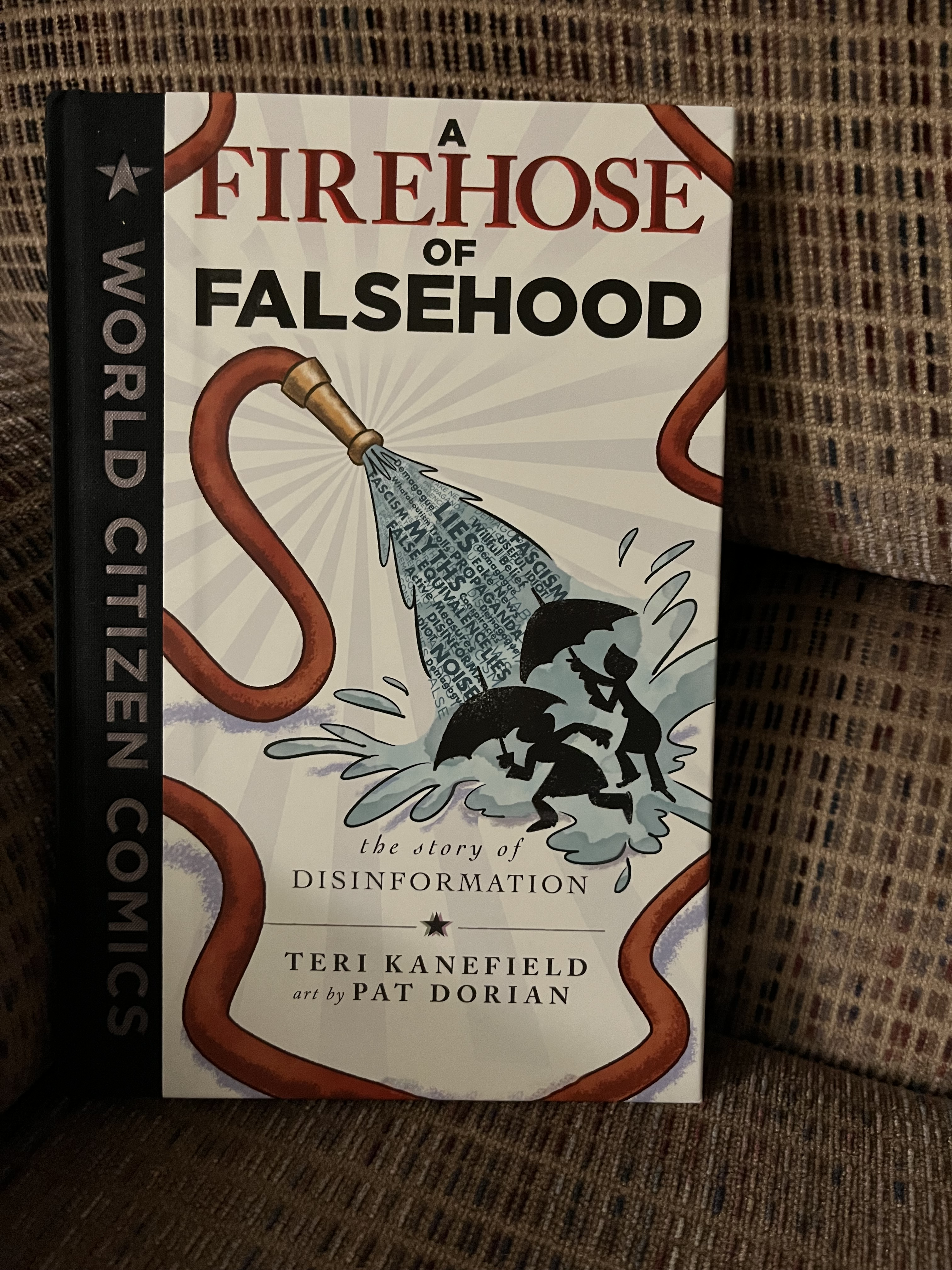
The dangers of disinformation in a compelling novel

By Ande Jacobson

Teri Kanefield is many things. She’s a former appellate defense lawyer who helped those who couldn’t afford representation. She’s an educator who taught at the high school and college level. She’s an author who has published informative works of nonfiction as well as compelling novels. And most recently, she’s tirelessly working to educate the public in hopes of helping people understand the political and legal minefield that has been thrust upon us by the rising authoritarian threat. She’s paraphrased Max Weber in numerous blog posts and social media commentary regarding the three types of political authority. Those include:

  1. Traditional authority: Defined by long-held cultural patterns. These vary depending on the culture and can include religious or monarchical rulers.
  2. Charismatic authority: This is the foundation for a strongman or a dictator. This authority stems from one who captures the attention of the population, often through legitimate means, then often abuses that power.
  3. Rational-legal authority: This authority is based on a system of laws which is fundamental to a democracy.

Most recently, Kanefield has given her regular readers a gift. After researching and writing her upcoming book on disinformation, she wanted to do more. Seeing the damage that disinformation has done, and following the extraordinary saga that has taken the U.S. from being a world-leading democracy to the brink of an authoritarian takeover, she’s written a short novel that chronicles the path we’ve seen unfold over the last half century. She’s framed it within a fictional construct surrounding the confessions of a true believer who is faced with the horror that he helped unleash when it comes back to threaten his freedom and his life. To date, Kanefield released the story, entitled Memoirs and True Confessions of a Disinformation Warrior, in three lengthy posts on her blog, initially linked from the end of her 18 March 2023 entry about Trump’s imminent arrest. The pieces of the novel can be found here: Part 1, Part 2, and Part 3. Continue reading

Less competition, more cooperation

By Ande Jacobson

In the U.S., it seems like everything is turned into a competition. Our economic system, capitalism, is based on competition, at least in theory. Schools are usually based on some kind of competition for grades. We’re trained from early childhood to compete. To win. We’re often told by society that if we don’t win, there’s something wrong with us. Rather than striving to improve our skills for the personal satisfaction of doing something well, the goal is instead to be better than somebody else. Sports permeate society reinforcing a mindset of striving to beat the other guy rather than focusing on helping one another hone our skills. Continue reading

You can’t run a theater on a shoestring anymore

By Ande Jacobson

After hearing about the Tabard era coming to an end, I thought back on some of the community theaters that used to thrive in years past. One such community group was The Shoestring Theatre Company, later renamed Shoestring Family Theatre. Shoestring was a little different than most theaters. It hearkened back to what community theater was in a bygone era. The Andrews family was the driving force behind Shoestring, and they got the whole community involved.

Shoestring spent most of its tenure affiliated with the Presbyterian Church of Los Gatos (PCLG) serving not only their congregation, but the local community in the area. Unlike so many groups, Shoestring took all comers. Everyone came to audition, and the Andrews family (who served as producers, directors, and choreographers in addition to being in the shows) would then cast the productions based on those auditions. They used to double cast their shows for a good part of their history giving as many people a chance to shine as possible. Their productions were all family friendly and infinitely expandable to allow for large ensembles and audiences of all ages. Their shows included Seussical, Cinderella, Annie, The Wizard of Oz, and whole host of others that were equally applicable. They ended up with performers with a wide range of talents and experience, and every year, they made it all work. The other truly unique aspect of their shows was that their casts were intergenerational with children and adults working together on every show.

Everyone could participate, and for most of their tenure, there was no cost barrier to attend or perform in Shoestring shows. In fact, for most of their existence, Shoestring didn’t even have tickets. People could just show up for performances, and there was also no participation fee for the performers. There was an expectation that the performers (or their families) would provide some sweat equity in their productions by pitching in with things like set building, painting, child wrangling, providing goodies for the green room and/or the snack tables during intermission at performances, etc., but the group thrived on donations and grants from a very appreciative community.

While Shoestring was at PCLG, they performed on a small stage in the social hall. They also used live orchestras, including musicians from the church’s congregation and others from around the community. I had a connection to Shoestring early on, not through the church, but as a music director for a few summers, and for that, I owe them a debt of gratitude. As I wrote in Part 5 of my Magical Musical Journey my first time as the director for a pit orchestra was a production of Seussical that came about because of a fluke of timing. A musical director for whom I’d played numerous times got himself in a bit of a scheduling pickle and ended up handing me the baton and his orchestra in which I was supposed to play. My first action was replacing myself in that orchestra, and then learning everything I needed to know about directing as quickly as possible. I talked a bit about the uniqueness of the theater group in that earlier essay, but what I left out was that the group was The Shoestring Theatre Company of PCLG.

After Seussical, I continued serving as their orchestral music director for three subsequent shows including Cinderella, Children of Eden, and Once Upon a Mattress, all of which turned out well and played to very appreciative full houses. That church social hall wasn’t a luxurious theater setting. It was more a multipurpose room, but in the midst of the shows with theater lighting and music in the air, audiences were swept into the stories unfolding on stage.

Shoestring eventually had to move out of their church location and spent two years affiliated with the Addison-Penzak Jewish Community Center (JCC) where a number of their performers were affiliated. Finally, they moved out into the commercial world and performed for four summers before the pandemic lockdowns at the Historic Hoover Theater in San Jose. They reopened with a production of SpongeBob in the summer of 2022, but for the last stretch without sponsorship from either PCLG or the JCC, they had to start charging a small participation fee for minors along with nominal ticket prices to help cover their facility fees and show licensing, but they still kept those costs far lower than most other local community theater groups to ensure that cost wasn’t a barrier either for their participants or for their audiences.

Unfortunately in the current pandemic, AB5 environment in California, Shoestring had to close their doors this month. They resisted raising either their ticket prices or their participation fees to equal many of the other groups that have stayed afloat because they strongly believed that the arts should be available to everyone, no matter their economic status. They had been focused on the arts through community volunteer efforts as a labor of love. Even just paying their musicians had become more costly because of AB5 forcing performing arts groups to treat them as employees rather than paying small stipends in appreciation. Many other community theater companies have increased their ticket prices significantly. Audiences have been smaller as many patrons have been slow to return to crowded venues due to the pandemic, and at the same time, material and facility costs have increased.

Shoestring will be missed, but they spent over a quarter of a century serving the local community in a way few groups do in today’s challenging economic environment. With their take all comers policy, their performing artists ranged from professional performers to those who had never seen a stage before they started rehearsals. Shoestring served to introduce a lot of people to all sides of theater who might not otherwise have had that opportunity in the past. Several of their alumni have gone on to careers in the arts all because one or more of those gentle summer shows captured their hearts and minds and gave them a taste of the magic of theater early on.


A Good Reed Review also gratefully accepts donations via PayPal to help defray the costs of maintaining this site without creating paywalls.
Donate with PayPal