Gerrymandering is cheating

By Ande Jacobson

Gerrymandering is a practice that has a long history in the U.S., and no matter who’s doing it, it’s cheating by taking away the voices of the electorate and predetermining an outcome based on partisanship. In practice, it’s done by drawing electoral district boundaries to serve the party doing the drawing by silencing the voices of any opposition through packing or cracking any voting blocks in the party’s favor. Packing entails grouping large blocks of opposition voters together even if they wouldn’t normally be in single district to limit how many districts they can control. Cracking entails breaking up opposition party blocks across districts and separating them further to dilute their votes. In short, gerrymandering is a method of voter suppression and election fraud that’s unfortunately legal but completely unethical. While electoral districts should be effectively a grid based on population density, instead, gerrymandered districts tend to resemble abstract art. Both major parties have engaged in various levels of the practice over the years, and it stems from serious corruption and an inability to compete fairly in an election. Continue reading

Blind spots can be challenging

By Ande Jacobson

Kingdom of the Blind is the fourteenth mystery novel in Louise Penny’s Gamache series and like its predecessor picks up where the previous story left off. Armand Gamache is on suspension after a tenuous but mostly successful gambit to address the drug problem plaguing Canada (and the U.S.). Because of the actions he took, there are serious consequences in the making, but they haven’t hit just yet, so Armand is officially in limbo. He made a lot of political enemies while he was Chief Superintendent of the Sûreté du Québec. While Isabelle Lacoste is also on leave still recovering from her almost fatal injuries from the last project, Armand’s son-in-law, Jean-Guy Beauvoir, is the acting head of Homicide. Superintendent Madeleine Toussaint has been promoted to acting Chief Superintendent. Despite all of that, Armand unofficially still has work to do. He’s determined to find the missing drugs that his team couldn’t recover over the course of events that ended with his suspension, and he uses some rather unorthodox methods to go about doing so. Much of his plan is only known to himself and one other person who is neither Isabelle nor Jean-Guy frustrating the two of them given their close relationships with Armand. Continue reading

Public education and common knowledge

By Ande Jacobson

I was lucky. I grew up in a time when public education was thriving. There were still some differences depending upon where one lived. Still, everyone had access to public education for K-12, and public colleges and universities were affordable. At that time, the federal government covered about 80% of the public education costs while states, students, and other private funding covered the remaining 20%. Beyond the minimal costs, I lived in a state that had an excellent public education system at the time. There were general requirements that ensured that graduates had a core of knowledge that allowed them to be productive citizens. Beyond fundamental math, reading, and writing skills, high school graduates had a basic understanding of how our government was structured and functioned, and at least a passing familiarity with our nation’s history, the good and the bad. That gave them the basic skills necessary to pursue employment, to vote responsibly, and if desired, to pursue higher education. Continue reading

We all have to be our kind

By Ande Jacobson

I was thinking back to a show years ago when I moved from the pit to the cast as an actor. I wrote about my experience of climbing out of the pit in a commentary piece a few months after the show closed as I prepared to jump back into the pit in another production. Being an actor rather than a musician for that production was memorable in so many ways. Overall it was a good experience to move to a new perspective and role. As I think back on that, one preshow conversation keeps coming to mind in a completely different light than it shed at the time. The theater company that put on the show had a long standing tradition of holding a company call before each performance. It happened after the house was open, the audience was milling about the lobby and the auditorium, and the performers had hopefully completed their final preparations to begin the performance. The entire company was invited to meet just outside of the stage left entrance. Announcements were made. Awards were sometimes given. Hugs were shared. Questions were answered. And it was a pleasant time for the company to come together as a whole before getting to places for curtain. Continue reading

Making it appear that all is lost

By Ande Jacobson

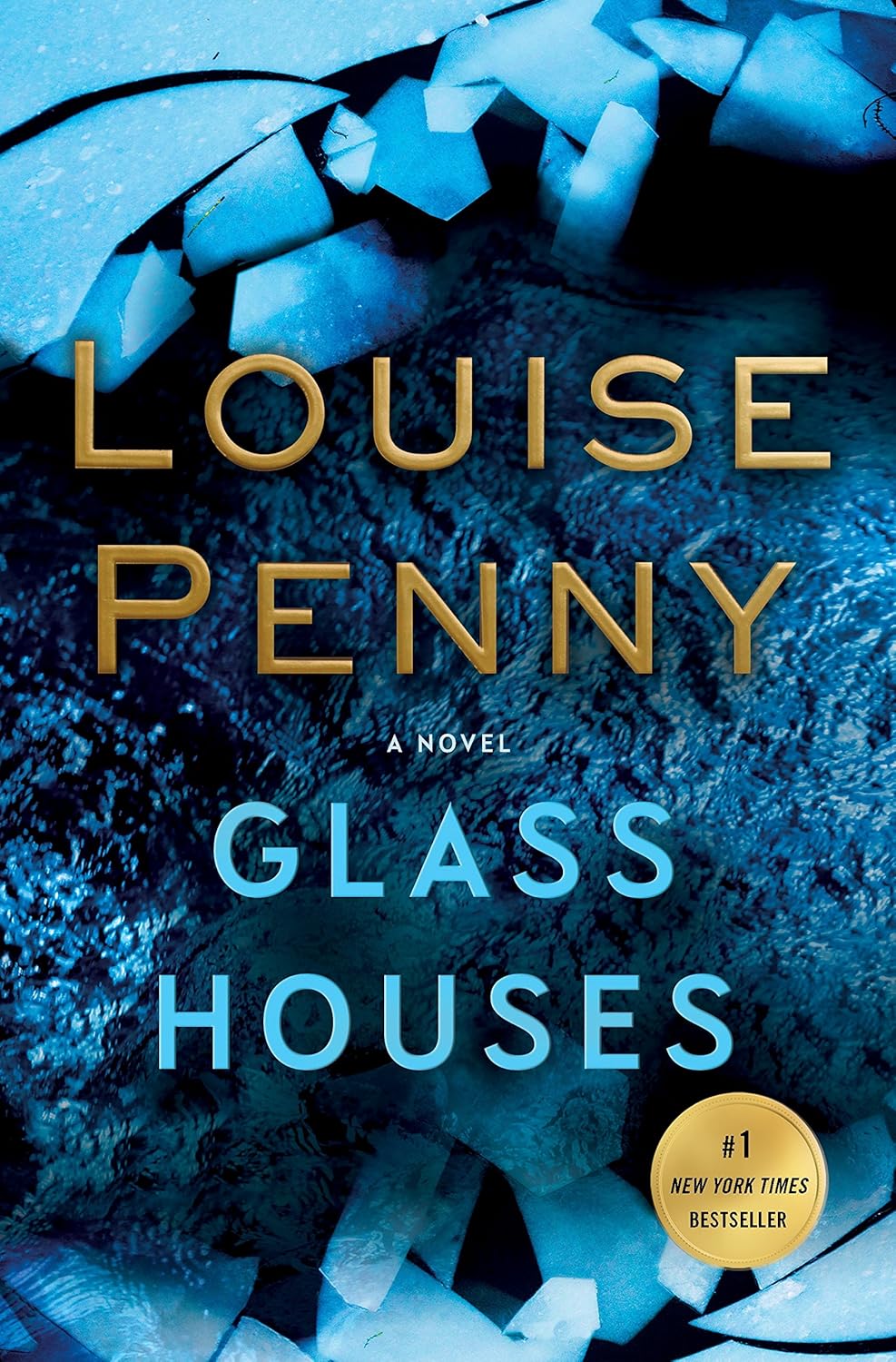
Glass Houses, is the thirteenth mystery novel in Louise Penny’s Gamache series. As in the previous book, this one picks up where its predecessor left off, this time with Armand Gamache taking the position of Chief Superintendent of the Sûreté du Québec. Having cleaned out the service and the academy of the former deep-seated corruption, he now faces the reality that the service is fighting what seems an unwinnable battle against the drug trade. Canada had become the entry point for drugs flowing from Europe, Asia, and parts beyond so proficiently that there isn’t an obvious way to stop them. Those drugs then blanket both Canada and the U.S. causing death and destruction in their wake. Given this dire situation, Armand, with his second-in-command and son-in-law Jean-Guy Beauvoir, create a committee of the most trusted heads of Sûreté departments including Chief Inspector Isabelle Lacoste, the agent who rose to replace Armand when he retired earlier, and Superintendent Madeleine Toussaint among others to address this in a way that promises serious consequences whether or not they are successful. Armand also enlists the chief prosecutor for the province, Barry Zalmanowitz, in his complex plan. At the same time, Armand is a key prosecution witness in a contentious murder trial. The presiding judge, Judge Maureen Corriveau, suspects something is amiss in the trial early on, but it takes time for the depth of the scheme to fully come to light. Part of Armand’s plan necessitated him making it seem like the Sûreté was completely inept to give those they were pursuing a false sense of security. The danger of course puts many innocents in grave danger. At what point are sacrifices for the greater good too great? Continue reading

Thoughts on a somber Independence Day

By Ande Jacobson

July 4, 2025. This day marks the 249th anniversary of the founding of the United States of America as stated in the Declaration of Independence. That declaration was revolutionary at the time stating that people had the right to self-governance and didn’t have to cater to the whims of a king.

I’ve long had a complicated relationship with this particular holiday, and this year it’s even more so. On the one hand, as a musician I enjoyed the music that was prevalent on this American holiday as I used to play in a variety of community bands. I no longer perform, but I’ve been listening to a wide swath of American music on my favorite classical radio station throughout the day today. Continue reading

Finishing cleaning house

By Ande Jacobson

A Great Reckoning, is the twelfth mystery novel in Louise Penny’s Gamache series. The story picks up the thread of what’s next for Armand Gamache, formerly the chief inspector of homicide for the Sûreté du Québec. After cleaning the corruption out of the service itself and the top leadership and retiring to Three Pines, there’s one piece left – the academy that trains new recruits. Recently (in the previous book), Armand saw first-hand the caliber of recent academy graduates and was appalled at their lack of decorum and their dangerous and violent attitudes. After receiving numerous offers from various services that value his expertise, he chooses to accept the position of commander of the Sûreté Academy. His first task is to adjust the staff, letting some of the old guard go, and ushering in some new faces. He keeps a few of the old guard though, including a few potentially dangerous individuals. Unfortunately for him, one of them turns out to be far worse than he knew. Continue reading

The Phoenix Crown: A tale of intrigue and survival

By Ande Jacobson

The Phoenix Crown by Kate Quinn and Janie Chang is a brilliant work of historical fiction that takes place surrounding the 1906 San Francisco earthquake. The story surrounds four fictional women who come together through happenstance and trauma and become not only fast friends, but heroes during the earthquake and after. Quinn and Chang weave a fascinating tale of intrigue, murder, survival, and quite a bit of history in this one. The Prologue begins with a glimpse many years past the end of the story. Then Chapter 1 quickly rewinds to just under two weeks before the earthquake. There was a lot happening in the city just then, and the authors capture the many events coalescing in those fateful two weeks. They also capture the horror and chaos that surrounded the earthquake and its aftermath as the city burned. For those from California and especially the San Francisco Bay Area, the earthquake portion of the story is terrifying, yet the courage and tenacity shown by the protagonists is uplifting and inspirational. Continue reading

What happened to Ruth Zardo?

By Ande Jacobson

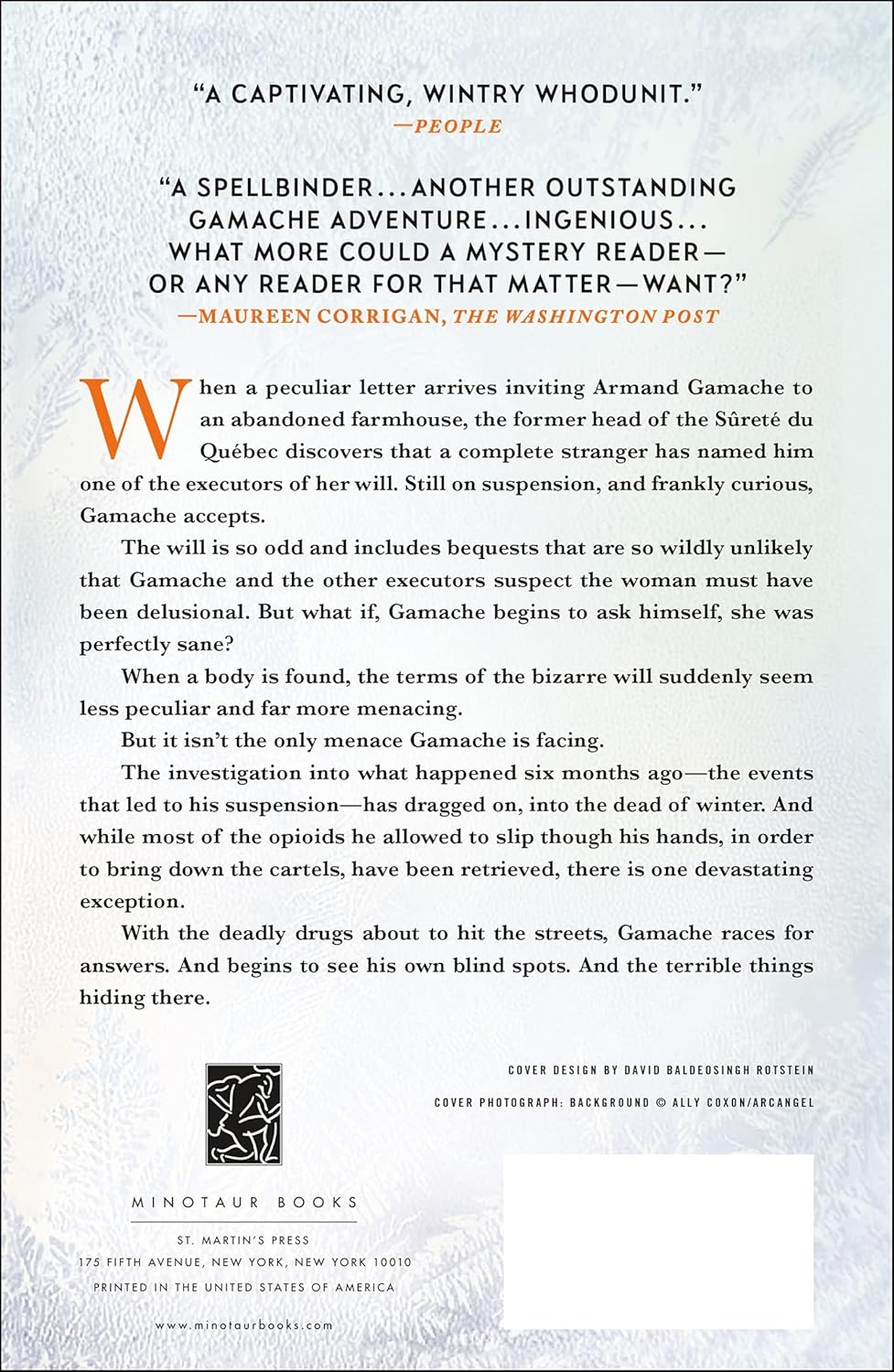
The Nature of the Beast, the eleventh mystery novel in Louise Penny’s Chief Inspector Armand Gamache (of the Sûreté du Québec) series, is more than a murder mystery. It’s also a work of historical fiction. While the current day murders are works of fiction, the core discovery driving them is a bit of real history that could have changed the world in a frightening way. Penny uses what could have been the most devastating technological development ever created by man to weave a fascinating tale of intrigue and personal growth. Continue reading

Spring thoughts

By Ande Jacobson

May 2025, the heart of spring. While my favorite season is fall because I greatly prefer the weather compared to that of any other season, spring normally signals hope and energy after the winter recedes and the plants reawaken. This year, nature is doing its thing. The trees are green. The flowers are blooming. The bugs are starting to amass. Little squirrels and birds are running all over the place. But this spring still doesn’t feel like spring. Yes, the outside appears much the way it always does this time of year. Alas, the inside is different. There are always things to be concerned about, but this year it’s hard to know where to start because so many things are at risk that don’t have to be. There are many things to consider, and not all of them are related directly to the crises we face.

I recently posted an article across my various social media accounts about habits that will make us happier. It was a compilation of recommendations from a psychologist who heads the Department of Psychiatry at a major medical center in the U.S., and it was truly about self-care, something that becomes even more important during trying times. A friend commented on my post on one of the platforms I use that he didn’t think it was appropriate to feel happy when we’re losing our democracy, which got me thinking. Continue reading