A bit of medical history and a mystery

By Ande Jacobson

Tess Gerritsen’s last standalone medical thriller was The Bone Garden, first released in September 2007. This one is a departure from her previous works in that it’s more a work of historical fiction concerned with the study of medicine, a couple of love stories, and a murder mystery built-in. As always, the introduction is a flashback, this time a letter dated March 20, 1888 signed O.W.H. who is a well-known historical figure. The letter is short, and it offers an intriguing introduction to a family history of note. The reader is then immediately transported to the present (at the time of book’s writing), and its present-day protagonist, Julia Hamill. Recently divorced, she set out to start a new life for herself purchasing a country estate outside Boston for a steal because its elderly previous owner had died on the premises. While working hard to rejuvenate her garden, Julia happens upon some remains which opens up an excavation, first by the local police and ME (a cameo by none other than Maura Isles, but this isn’t part of the Rizzoli & Isles series), and later by a well-known forensic anthropologist from Harvard once the remains are determined to be rather old. And so begins the main story. Continue reading

When ET lands, the unexpected happens

By Ande Jacobson

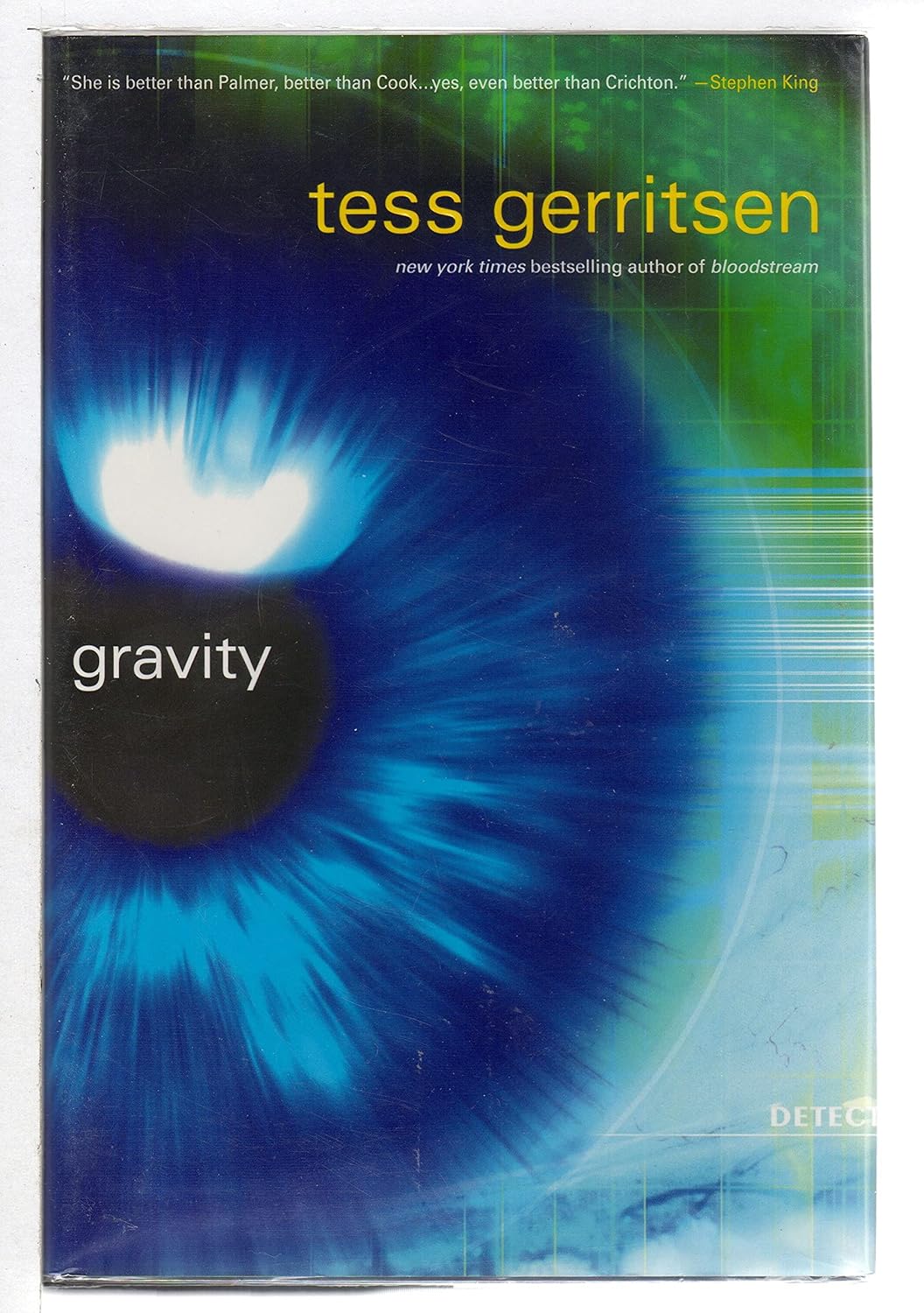
Tess Gerritsen continues her medical thrillers with Gravity, first released in September 1999. This time, she explores the unknown both on earth and in space. As she often does, she starts the book with a seemingly disconnected event, a deep sea researcher encountering an unknown life form on the ocean floor. It’s known that the fauna in the deep waters is not seen anywhere else on Earth, and many of the creatures living and even thriving there have unusual properties such as being able to live in super-heated, poisonous waters near volcanic vents. Gerritsen has done her homework on this one melding deep sea biology with space biology in a riveting story of what happens when life forms are thrust into alien environments. One of the biggest dangers to humans living in space is encountering a pathogen that threatens their existence, and this is a story of such an occurrence aboard the International Space Station (ISS). Continue reading

What does Briarwood House know?

By Ande Jacobson

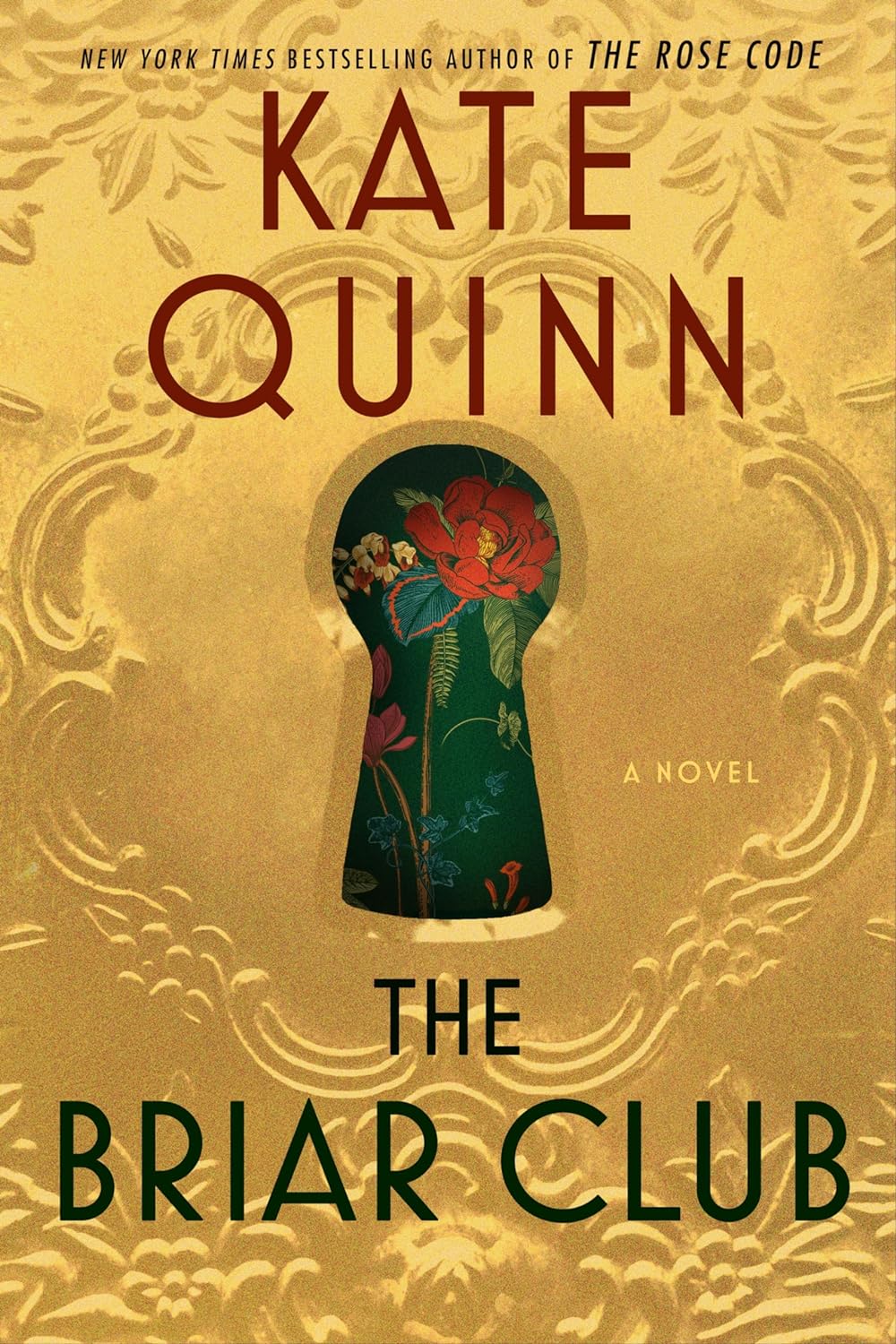
Kate Quinn’s latest book, The Briar Club, while historical fiction in the broad strokes, leans into fantasy a bit with an interesting central character – a sentient house! Briarwood House, so named because it’s at the corner of Briar and Wood streets in Washington, D.C., is a boarding house for single women. It’s owned and run by Mrs. Nilsson, a crusty woman with two children, Pete – her teenage son, and Lina – her young daughter. The story of how and when Mrs. Nilsson’s husband left seeps out slowly as the plot develops. Before that though, the prologue jump starts the story with a murder, and most of the rest of the book is a series of flashbacks just a few years before as the various boarders are introduced. Interludes where the house reports on the current situation pop up in between, and once all the pieces are in place, readers are treated to a wonderful resolution of the mystery at hand. Quinn’s masterful weaving of each boarder’s backstory is riveting. The sentient house is a charming way to meld all of the stories together in this work that takes place in the 1950s during a rather tumultuous time in U.S. history. The Korean War is a factor as are the Cold War and Joe McCarthy’s witch hunts. Continue reading

The first Foothill Band Review

By Ande Jacobson

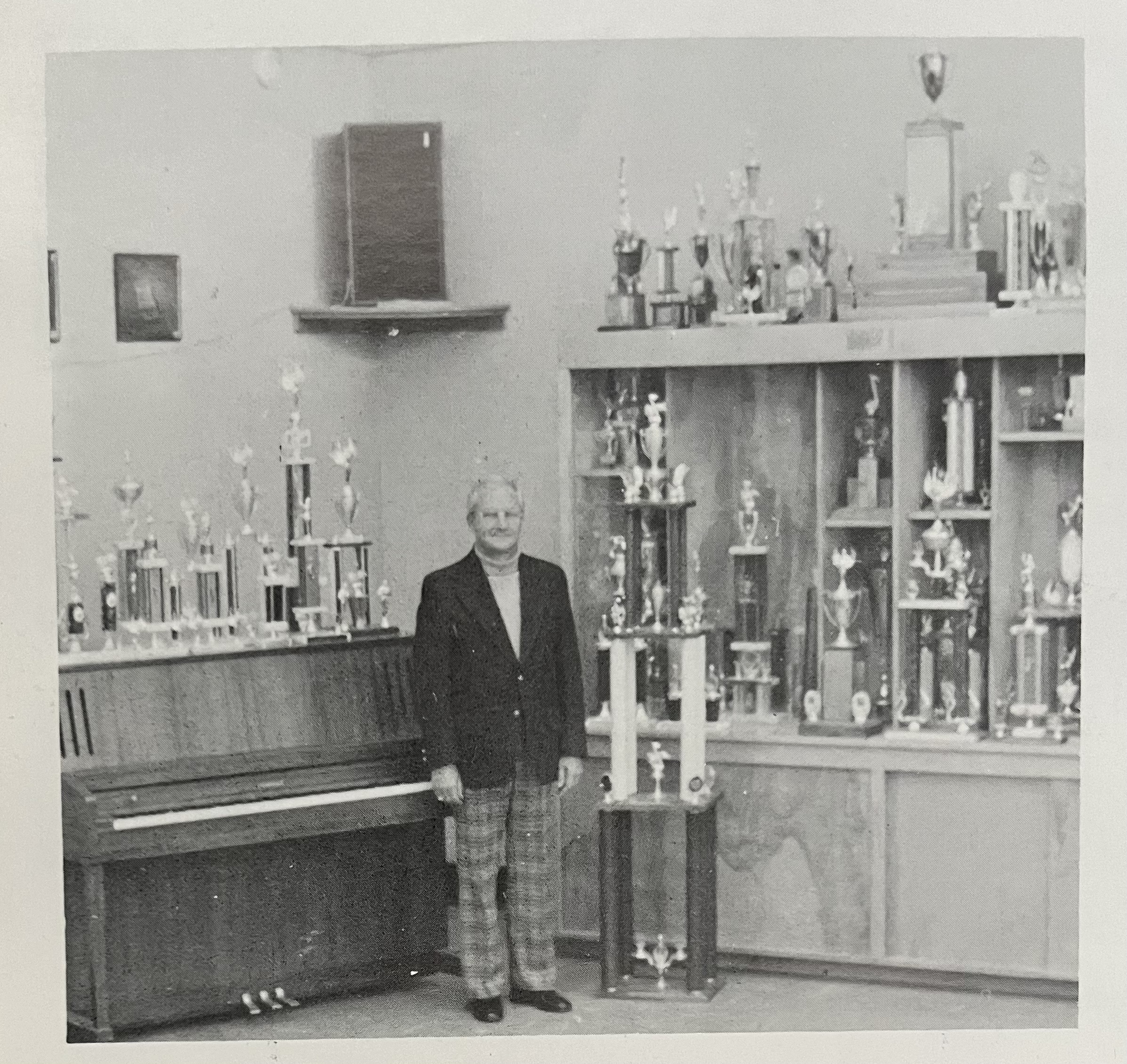
It’s October. I’ve been so preoccupied by the biggest general election of my life, I completely forgot about another huge event that hits its 50th anniversary this year on 26 October 2024 – The 50th Annual Foothill Band Review in Pleasanton, CA. I was there for the first one back in October 1975 when our band, The Capuchino High School Marching Band, won sweepstakes in the parade competition. The six foot sweepstakes trophy from that competition graced the band room for decades after that. Our band director, Ralph Bredenberg – fondly known as “Mr. B,” retired after that school year, but what a final year it was. Continue reading

Our votes matter

By Ande Jacobson

Most of my friends have made up their minds for this contentious 2024 election, and the vast majority are voting Democratic up and down the ticket for the good of the country as a whole even if they aren’t completely in line with some specific policies or even registered as Democrats. This makes sense to me. I’m never completely in line with any politician’s policies, but I learned a long time ago that with politics you never get everything exactly the way you want it. I learned that you should vote based on the overall good of a given candidate and whether they want to help us all or not. This election, I agree with most of the Democratic Party’s policies such as:

  • Enacting fair taxation where everyone pays their fair share including the wealthy and corporations
  • Lowering prescription drug prices not just for seniors but for everyone
  • Stopping price gouging, especially for essentials like food, housing, and healthcare
  • Protecting Social Security and Medicare without raising the retirement age or cutting benefits
  • Producing more clean energy
  • Enacting initiatives to address climate change
  • Enacting sensible gun safety laws
  • Protecting reproductive choice and freedom by codifying the protections of Roe v. Wade nationwide
  • Enacting bipartisan legislation to tighten border security and enact humane immigration policies
  • Continuing job growth and strengthening unions
  • Making education affordable and accessible
  • Continuing to improve the ACA to make healthcare available to all without the threat of financial ruin
  • Protecting voting rights so that every eligible voter can cast their ballot – a bedrock principle of democracy
  • Appointing judges and justices who will uphold the Constitution and rule of law, not shred it
  • Strengthening our democracy
  • Maintaining the separation of church and state enshrined in our Constitution

VP Harris recently announced that she also supports expanding Medicare to cover long term care at home to help the disabled and our seniors when they need it most without the threat of financial ruin.

Kamala Harris, Tim Walz, and the Democratic Party understand that we have to work together and support making things better for all Americans through the above initiatives and the rest of the platform and policies they support. As such, I am very enthusiastically supporting Democrats up and down the ballot in this election along with most of my friends. Continue reading

What makes us tick?

By Ande Jacobson

Tess Gerritsen continues her medical thrillers with Bloodstream, first released in August 1998. As she has done with her previous medical stories, she again tackles a complex medical mystery that wreaks havoc on a community and intersects with a serious societal issue. This time the story takes place in a quaint fictional town in Maine named Tranquility. As a point of interest, Gerritsen later revisits Tranquility in a different book series – The Martini Club series. Tranquility is modeled after the town where Gerritsen and her husband live. It’s a town where everyone knows everyone else, but there are some skeletons in the community closet both in real life and in the fictional counterpart. For Bloodstream, the story begins in the past in 1946 when a horrific spate of violence occurred. While readers are introduced to the rage that ensued, it’s not fully explained at that point. Gerritsen then moves to the present at the time of her writing in the late 1990s. Claire Elliot is the town’s new doctor having bought her medical practice after the previous town doctor died. She and her teenage son Noah moved to Tranquility from Baltimore for a new start. Claire had been widowed young, and she and her son were both still having difficulty coming to grips with their loss. She is a very capable general practitioner, but she runs up against the provincial attitudes often seen in many small towns. There is an inherent distrust of any outsider that acts as a barrier to community inclusion. Noah too has difficulty fitting in with his cohort, and at the start at least, he really wants to go back to Baltimore. Continue reading

Courageous followership matters

By Ande Jacobson

Ira Chaleff’s To Stop a Tyrant is both timely and timeless. Although he completed writing the book in March 2024, and it was released a few months later in early September just two months before a major U.S. presidential election with democracy on the line, there is no mention of this crucial election despite everything in the book being directly applicable. Chaleff chose not to discuss the election brewing in his midst in part because so much was changing very quickly at the time of his writing, and also because he wanted this book to transcend any current crises or partisanship. He uses numerous examples not only from his own personal experience but also from throughout human history, especially from the last 100 years up through fairly current times. From the more current perspective at the time of his writing, he covers the evolution from activist to prototyrant to dictator of both Victor Orbán of Hungary and Vladimir Putin of Russia to illustrate many of his points while also including some mention of the same phenomena during ancient Roman times to show that none of this is new. Continue reading

Are left-handers sinister?

By Ande Jacobson

Historically, left-handedness was considered sinister, stemming from the Latin for left. Its counterpart is dexter meaning right. The term sinister took on its nefarious character fairly early on though.

From a population perspective, about 10-12% of the human population is naturally left-handed, though some cultures strongly either discourage left-handedness, or outright forbid it. In the U.S. it was common to “convert” left-handers to using their right hand instead through the first half of the 20th Century. That slowly started changing in the 1960s and 70s, but educational theory at that time still focused on ensuring that children had a dominant side. Even that has fallen out of favor today. After all, being ambidextrous can be a great advantage at times. Continue reading

Parts for sale

By Ande Jacobson

Before Tess Gerritsen began writing her Rizzoli & Isles series, she wrote a number of medical thrillers. The first of these was Harvest, released in September 1996. Her experience as a physician leant itself to tell compelling stories surrounding medical situations, and it also raised her awareness of various societal crises based on manipulation of the healthcare system. Harvest combines a riveting thriller with a very real crisis situation surrounding organ transplants. In particular, the mystery in this story explores how the morbidly wealthy and the very greedy can sometimes work together to circumvent the need-based processes in place. In the real world, organ transplants are lifesaving. They can take a person from death’s door to restored health, but they come at a cost. For most organs, particularly things like hearts and lungs, they come available only when an organ donor dies. While a directed donation can be made in some cases, the general system in place to provide these precious organs is based on patient need. The more severe the need, the higher a patient’s priority on the recipient list. Their financial and social status is not taken into account, only their medical need is relevant. Unfortunately, there’s a rather robust black market that some very wealthy individuals turn to in order to jump the line. The market consists of profiteers who garner the services of some less than reputable physicians to harvest organs from donors that are sometimes “created” to supply these precious organs to those willing to pay. Sadly, some with the resources available would be willing to pay almost any price to save their loved ones denying those in greater need of their very lives. Of course, evaluating medical need can also be tricky, particularly when so few organs are available meaning that whoever doesn’t get a given organ may not live long enough for another compatible organ to come available the normal way. Continue reading

The search for Die Jägerin

By Ande Jacobson

Kate Quinn is known for her historical fiction, often intertwining vivid fictional characters with real people and major historical events. Her book, The Huntress, is no exception. The main characters are fictional, albeit in some cases composites of various real people. Along the way, historical figures are mixed into the story in more minor roles. The central conceit of the story is a team of Nazi hunters’ search for Die Jägerin, a vicious killer from WWII Germany. The title character; however, isn’t the target of their search. In this case, the huntress in the story is a composite character representing a number of brave women from the infamous Russian Nachthexen or Night Witches, so named by the German forces they bested. Nina Borisovna Markova is the huntress in this story, and while she is a fictional character, her achievements and actions are drawn from her actual “sestry” from the Russian forces. As Quinn illustrates, Russia was the only nation in WWII to eventually make use of women in frontline combat roles, including as pilots, navigators, and mechanics, often greatly outperforming their male counterparts. The Night Witches were a real entity that was key to the allies winning the war against the axis forces. Their inclusion in this story was a handy way to tie together the post war Nazi hunters with their lives during the war, and most importantly, provides the motivation for their somewhat obsessive search for one killer in particular. Continue reading