The book every woodwind player and technician should have

By Ande Jacobson

Woodwind Instruments: a practical guide for technicians and repairers by Daniel Bangham is a new release that will be a useful reference for woodwind technicians and players alike. Expected in late October 2022 through The Crowood Press, Bangham’s book provides instructions for setting up a complete workshop to repair and maintain clarinets, flutes, saxophones, oboes, and bassoons. The detailed repair instructions for technicians include most routine and complex repairs they might encounter. For players, the book can serve as a guide on caring for their instruments along with what to look for when they are encountering problems going so far as instructing them on some stop gap measures until they can get their instruments to a repair shop. The book is aimed at technicians, particularly given the specialized equipment needed to affect repairs, but understanding more about how their instruments work helps players get the most out of them even if they don’t want to try to make the repairs themselves. Continue reading →

The law applies to everyone, even the ‘First Family’

By Ande Jacobson

In 2009, David Baldacci’s fourth book in the King and Maxwell series dropped. As so many of his stories seem to be, First Family has some references that could directly apply over a decade later. Sean King and Michelle Maxwell are former Secret Service agents who had to leave the service under murky circumstances in the first book in their series, Split Second. At the end of that one, they established a partnership as private investigators. They’ve maintained some of their contacts within the service and other law enforcement agencies and have since taken on some complex cases as PIs. Continue reading →

What keeps a Secretary of State up at night?

By Ande Jacobson

What happens when a former U.S. Secretary of State and a best-selling crime novelist decide to collaborate on a book? In October 2021, a gripping political thriller resulted from such a partnership. The book is State of Terror by Hillary Rodham Clinton and Louise Penny. The two became friends through a series of unlikely events. Clinton and her very close childhood friend, Betsy Johnson Ebeling shared a love of books. By chance in the summer of 2016, the two of them were reading one of Louise Penny’s books, something that Ebeling mentioned in an interview. Penny’s publicist happened to see the interview, and she arranged for Penny and Ebeling to meet at a publicity tour for Penny’s latest book that year. The two hit it off and became fast friends. In the fall of 2016 not long after her book tour, Penny’s beloved husband died of dementia. As Penny was reading some condolence cards, she opened one that changed her life again. The writer was Hillary Rodham Clinton, and it was toward the end of her brutal 2016 presidential campaign. Despite the intense pressure, she took the time to write an eloquent and heartfelt condolence note to Louise Penny, a woman she’d never met. Clinton knew Penny through her books and through Ebeling’s recent friendship with her and had to reach out. That was the first direct contact between Penny and Clinton. That, along with some other timely in-person meetings, started a close friendship. Sometimes that rapport thing just happens, and the three of them, Betsy, Hillary, and Louise, had that spark. And then in 2019, ending her long battle with breast cancer, Betsy died. Continue reading →

How to stop the evil doers

By Ande Jacobson

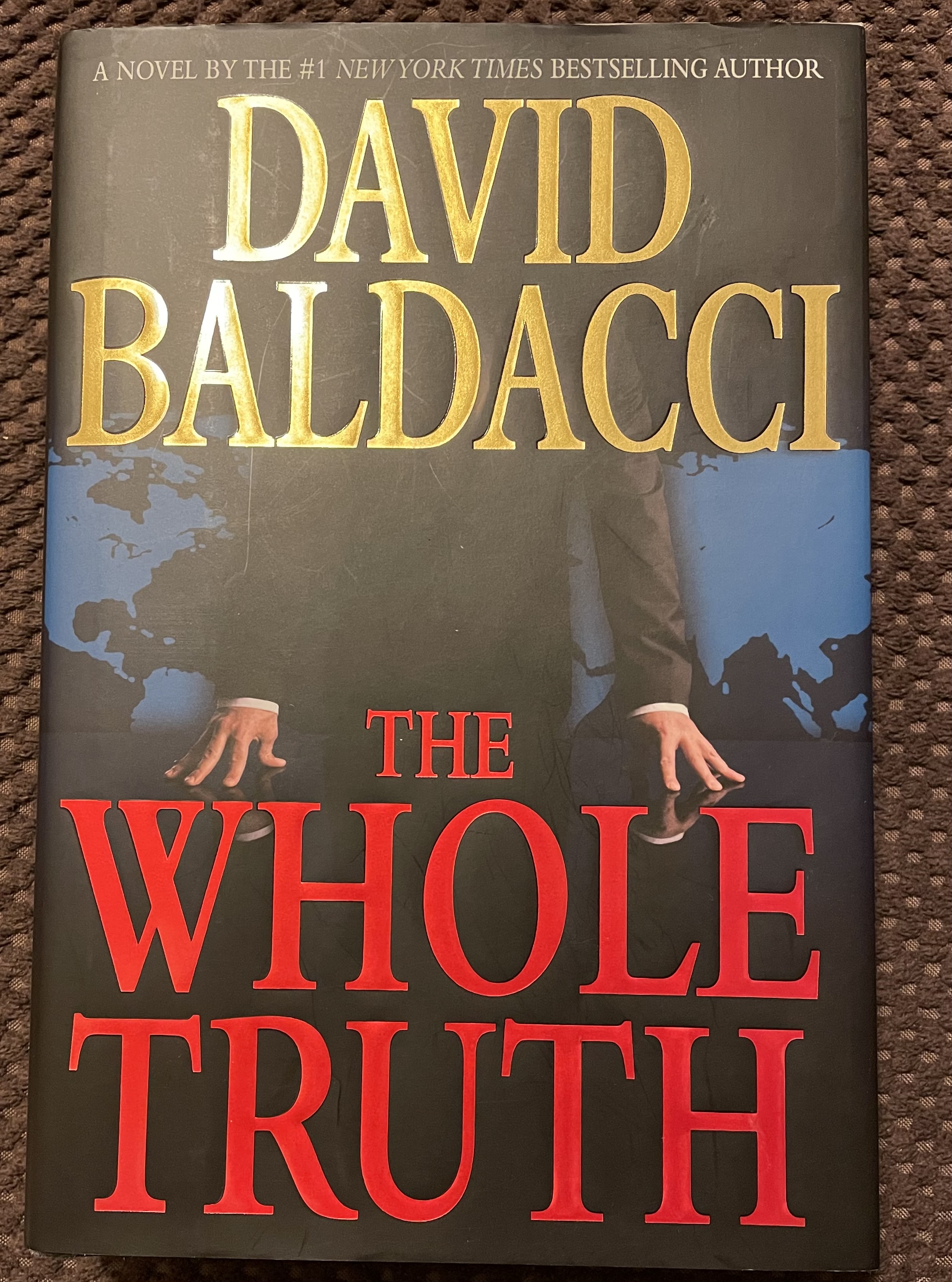
Though first released in 2010, David Baldacci’s Deliver Us from Evil is just as relevant today. This is the second (and so far last) in the Shaw series. The story can stand alone and grips the reader from the very first page. Shaw works for a shadowy international organization under Frank Wells and was originally conscripted for his considerable talents in exchange for dismissing some sticky legal issues in which he’d been ensnared. While his every move is tracked, he takes on assignments to apprehend the most dangerous criminals to hand off to the appropriate law enforcement organizations through a cooperative, multinational effort. At the outset, Shaw is still smarting from his previous assignment through which his fiancée lost her life, and with her, he lost his heart. The bulk of his backstory was shared in the first book of the series, The Whole Truth. Continue reading →

It only takes a ‘Split Second’

By Ande Jacobson

David Baldacci’s Split Second came out in 2003 and provides the origin story behind the Sean King/Michelle Maxwell partnership. King, a former Secret Service agent, and Maxwell, a current agent, become targets of a long-running conspiracy that bring them together after similar career mishaps. King had ended his career with the service in disgrace after his protectee was executed right in front of him during a split second’s distraction. Maxwell’s charge is abducted eight years later when she leaves him alone very briefly per his request. Both were rising stars in the service. Both had been in the wrong place at the wrong time and fell victim to horrific events that were far more complicated and violent than they realized at the time. Continue reading →

Can we believe the reports?

By Ande Jacobson

David Baldacci is known for gripping adventure novels that can sometimes seem a bit too plausible in today’s world of perception management. In his 2008 book, The Whole Truth, he introduces a new hero, Shaw. The reluctant international intelligence agent with no first name and a mysterious past may be the only person who can unravel a manufactured crisis before it’s too late. Teaming up with Katie James, a Pulitzer Prize winning journalist who has fallen from the top of her field and is looking to redeem herself, they desperately seek the source of the crisis de jour that begins as a humanitarian catastrophe and expands to include a London massacre that blanket the news worldwide. Which events actually happened? Who is behind these events, and why did they set them in motion? Continue reading →

The God Delusion – Why limit our perception?

By Ande Jacobson

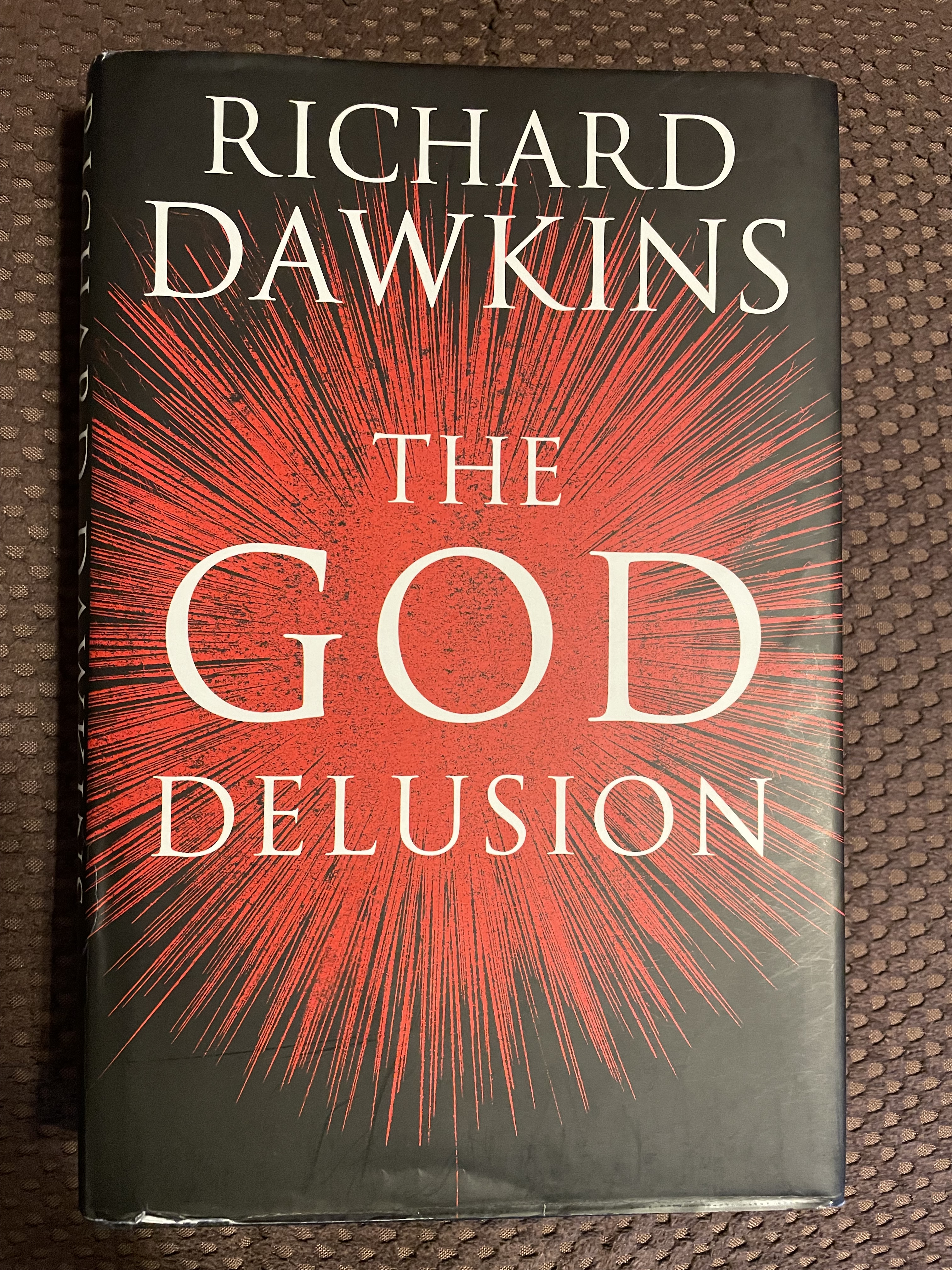
In 2006, Richard Dawkins wrote a book that has garnered high praise from some and unabashed fury from others. The book has the provocative title, The God Delusion. Dawkins uses his background as a scientist specializing in evolutionary biology to examine a simple conceit to explain why so many people refuse to even consider leaving religion behind despite compelling evidence to refute its validity: “I didn’t know I could.” In his Preface he explains that his intention in writing this particular book is to raise consciousness to a few ideas such as why atheism has merit and can facilitate a productive and fulfilling life without guilt or apology; how concepts like natural selection, though often misunderstood, provide more probable alternatives to religious dogma; and how religion corrupts childhood and encourages exclusion. He acknowledges the importance of various scriptures such as the Bible, not as divine instruction, but as works of literature or historical fiction. As such, he explains how they provide cautionary tales and cultural references while inspiring countless modern works of literature, and he laments the ever decreasing familiarity with such sources even amongst those who claim to be religious. Mostly he intends his book to inspire people to think and examine the world around them anew, open to the beauty that comes with greater understanding through science. Continue reading →

The nation is in ‘Peril’

By Ande Jacobson

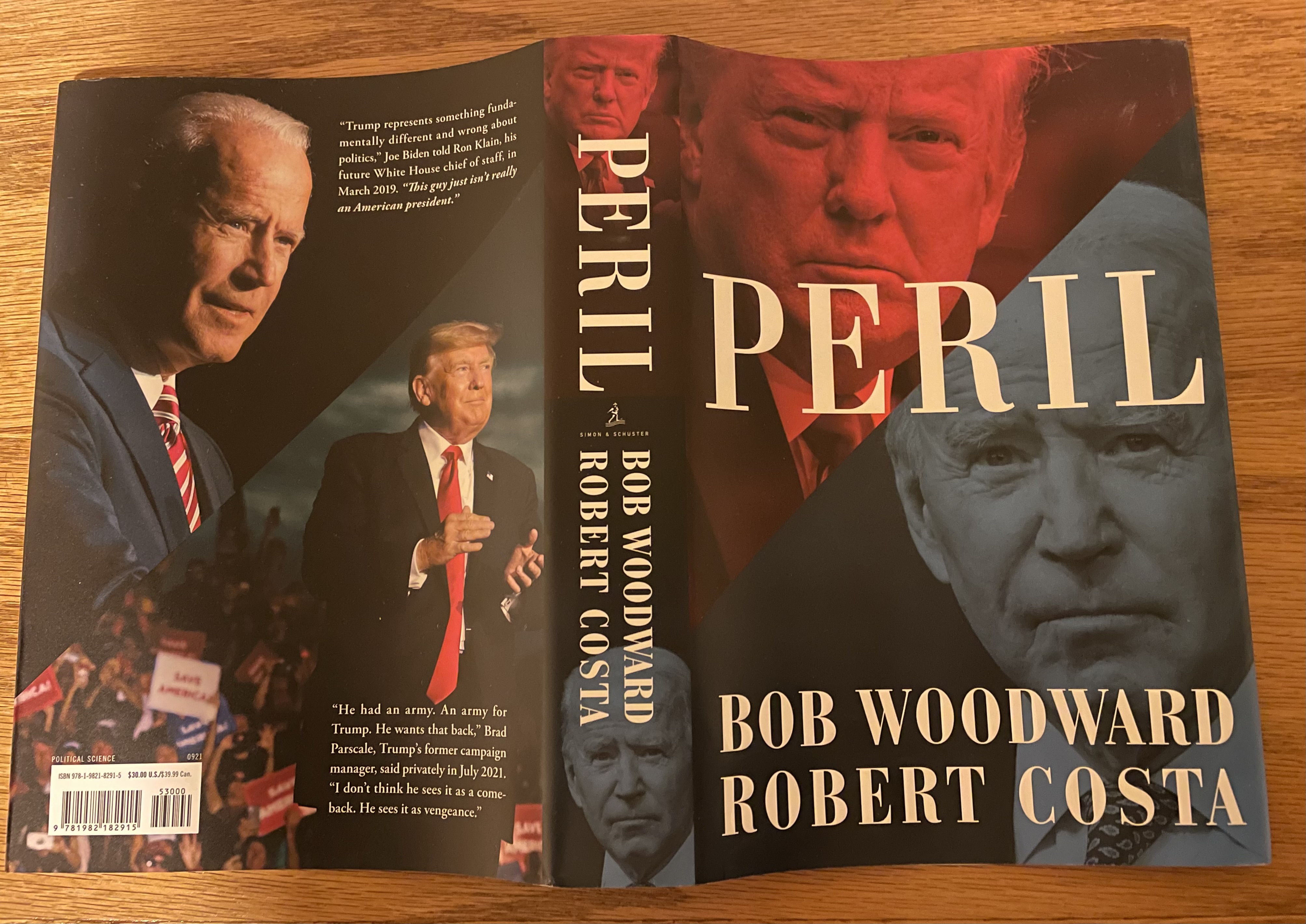
The final book in Bob Woodward’s trilogy chronicling the Trump presidency and its aftermath is aptly named Peril. Woodward co-authored this third book with Robert Costa and released it in September 2021. While the first two books, Fear and Rage, together cover the Trump presidency prior to the historic 2020 election and its aftermath, Peril overlaps a bit with Rage and focuses on the extraordinary actions within the Trump administration, the Pentagon, and Congress in the lead up to the election, the administration’s attempts to thwart the legitimate outcome of losing reelection, and the first several months of the Biden administration. While the House Select Committee to Investigate the January 6th Attack on the U.S. Capitol and the Department of Justice are hard at work investigating what happened from a legal perspective, Peril tells the story drawn from personal interviews of more than 200 people at the center of the events resulting in more than 6,000 pages of transcripts, much of the information never before seen in the news or in publicly released documents. In a historical context, this is an important book. It chronicles what happened from the perspective of those involved rather than strictly what was made public or reported in the news. Continue reading →

Breaking the code

By Ande Jacobson

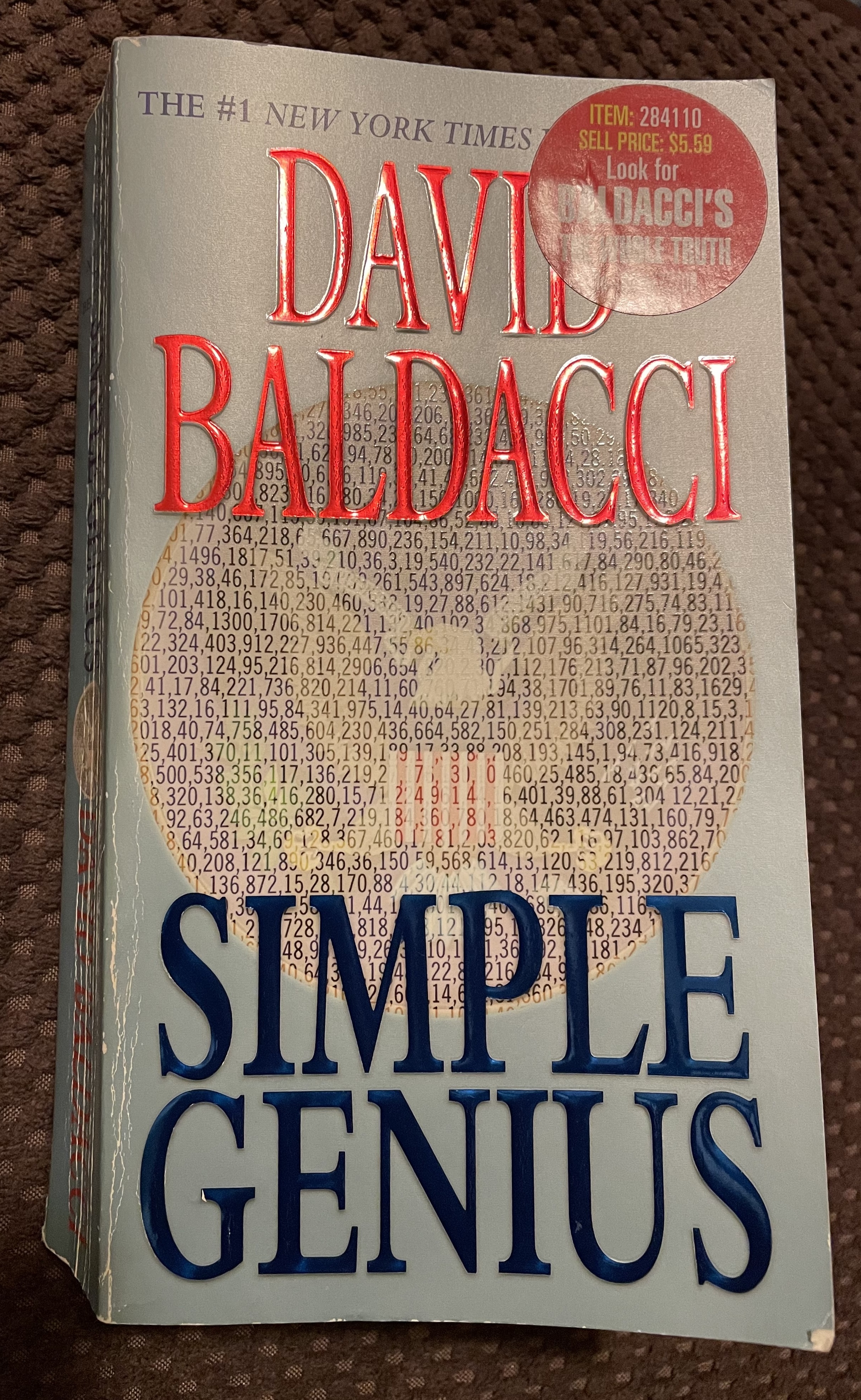
I recently read and reviewed Kate Quinn’s The Rose Code for an upcoming book club Zoom, and at the same time, I was reading David Baldacci’s Simple Genius. I had started Baldacci’s book first, but as I decided to get a jump on my book club reading, I discovered an unexpected connection. Both books feature the mystique of codebreaking and of Bletchley Park, albeit at different times in history. As mentioned in my previous review, The Rose Code takes place at the time that Bletchley Park was active during WWII and its immediate aftermath and provides the reader with riveting historical fiction. Simple Genius doesn’t qualify as historical fiction and is instead a political thriller/murder mystery, the third in Baldacci’s King and Maxwell series. Continue reading →

‘The Rose Code’ puzzles reach beyond the walls of Bletchley Park

By Ande Jacobson

Kate Quinn’s The Rose Code is a masterwork of historical fiction. It’s a long book at 656 pages that reads quickly as the tension builds. Published by William Morrow in March 2021, this gripping story brings Bletchley Park, the famed hub of the British effort to break the German Enigma code during WWII, and the unique personalities who worked there to life. Quinn’s fascination with history and her deft storytelling add new twists to events past as she mixes historical figures together with her vibrant fictional characters, although her fictional characters are themselves composites of real people. Her history is not names and dates but is instead about how historical events changed and complicated people’s lives.

Three women meet through Bletchley Park where they each play a part in the monumental task at hand. They come from very different backgrounds from one another and from their fellow codebreakers. Osla Kendall is a debutant originally from Canada who had been helping the war effort bending metal building Hurricanes while dating a dashing prince. Mab Churt is a self-made London shop girl with a long held secret. Beth Finch is a shy young woman in her mid-20s with no confidence in her own abilities having been beaten down by her overbearing mother.

Osla and Mab are summoned to Bletchley Park. They meet on the train on their way to report and encounter one of the more interesting characters upon their arrival. He introduces them to the colloquial name for the place – GC & CS – which he explains stands for “Golf, Cheese, and Chess Society.” They later find out that GC & CS actually stands for “Government Code & Cypher School” which makes them wonder if they are being trained to be spies.

After reporting in and being assigned to different sections of the codebreaking effort, the two women are billeted close by at the Finch house which is a short walk from Bletchley Park. While there, they start to forge a friendship with Beth and take note of her wicked-sharp crossword puzzle skills. Much to Mrs. Finch’s chagrin, Osla manages to get Beth into Bletchley Park, and unbeknownst to either Osla or Mab at the time, Beth, assigned to “Dilly’s Fillies,” becomes one of Bletchley’s top cryptanalysts. Dilly Knox, it’s later revealed, prefers to hire brainy women because they take the job more seriously without their egos getting in the way. None of them can tell the others what their specific roles are at Bletchley which infuriates Mrs. Finch.

As the story develops, the three become quite close sharing the details of their private lives and loves as well as stories of some of the mishaps and odd personalities at work while always being careful to steer clear of divulging any work secrets. When each started at Bletchley Park, they signed a draconian oath that laid out severe or even life threatening penalties for breaking secrecy. Along the way, they start a Bletchley book club, affectionately known as the Mad Hatters after reading Louis Carroll’s Through the Looking Glass. Their meetings bring together disparate personalities from their different sections of Bletchley Park for some much needed recreation. Eventually the secrecy sparks a traumatic incident that ends in a massive falling out before the war ends, but the story doesn’t end there.

The novel flips between two timelines, one through the course of WWII, and the other a few years after the war ends surrounding a royal wedding. Quinn’s attention to detail brings forward fascinating aspects of the different sections at Bletchley Park showing how the various groups’ work fits together even though none of the workers knows the full story by design. Quinn reveals the machinery used and critical skills required of the elite workforce at Bletchley. They all know they are involved in work that not everyone is capable of doing, and in their own ways take pride in their contributions to the war effort. Some of the habits they pick up through their efforts stay with them long after the war ends which comes in handy when a new puzzle presents itself and threatens one of their own.

Quinn is careful to maintain accuracy surrounding historical locations as well as the tone and urgency of the events shaping the war torn world of the early 1940s. She shows how the war wears everyone down. Despite being relatively safe in the confines of their secluded little hamlet, those at Bletchley Park fear for their friends and families who are not so fortunately located. They also suffer a bit of survivor’s guilt at times from the knowledge that although their efforts are what give the fighting forces the information they need, the warfighters are putting their lives on the line daily to carry out their missions while the codebreakers sit in their safe hamlet away from the physical dangers of the war.

What is later discovered is that spies are everywhere, and the secrecy oaths while well-intentioned are not full proof in combating all disclosure. The heart-pounding adventure continues long after the Armistice, and their codebreaking skills come in handy well after they leave Bletchley Park. Along the way, despite their wartime grudges, Osla, Mab, and Beth discover that some bonds turn out to be thicker than blood and stronger than even the worst falling out, and families can be found in many unexpected forms.


References:
The Rose Code by Kate Quinn
Kate Quinn Author


A Good Reed Review also gratefully accepts donations via PayPal to help defray the costs of maintaining this site without creating paywalls.
Donate with PayPal