How to stop the evil doers

By Ande Jacobson

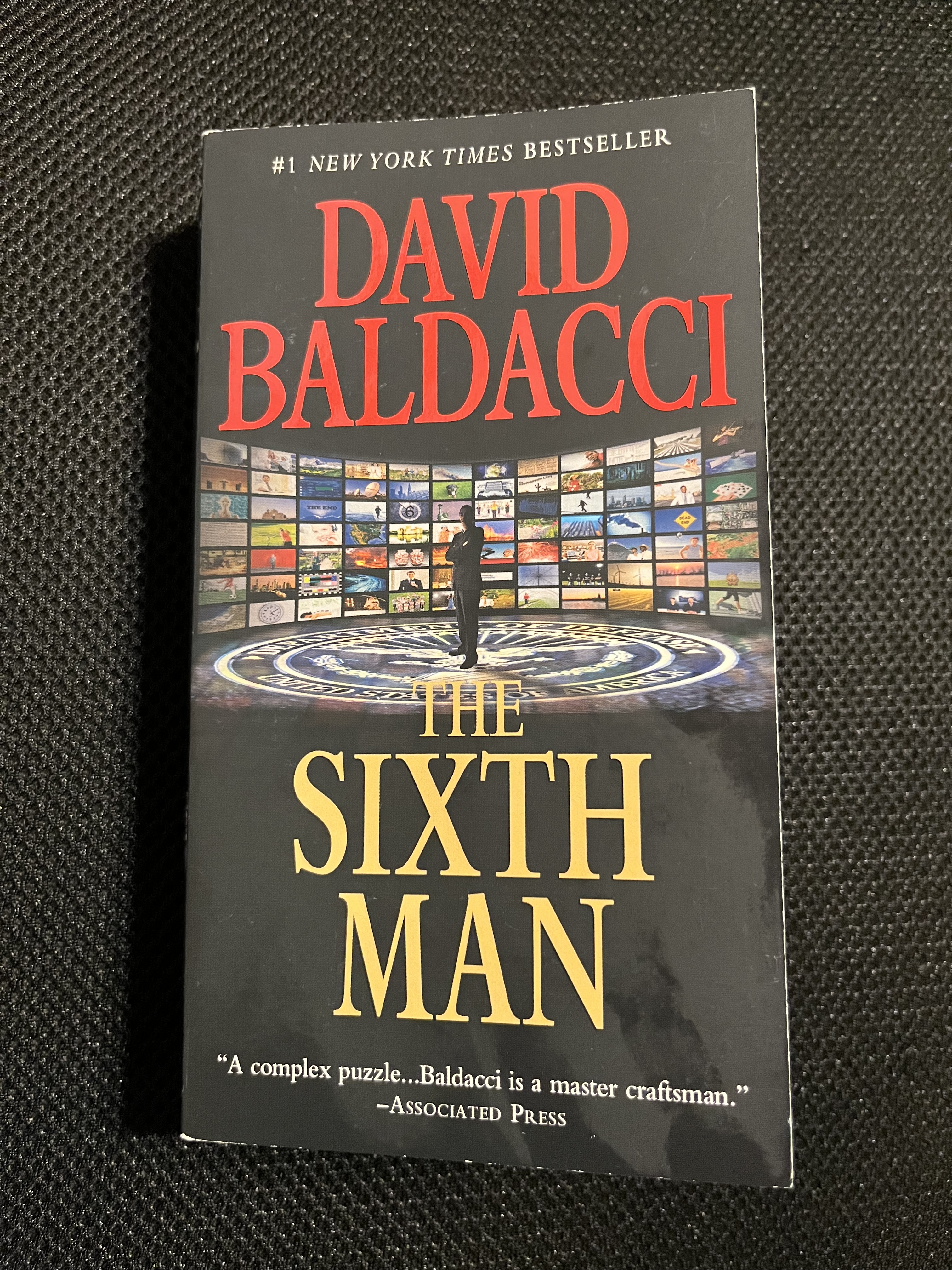
Though first released in 2010, David Baldacci’s Deliver Us from Evil is just as relevant today. This is the second (and so far last) in the Shaw series. The story can stand alone and grips the reader from the very first page. Shaw works for a shadowy international organization under Frank Wells and was originally conscripted for his considerable talents in exchange for dismissing some sticky legal issues in which he’d been ensnared. While his every move is tracked, he takes on assignments to apprehend the most dangerous criminals to hand off to the appropriate law enforcement organizations through a cooperative, multinational effort. At the outset, Shaw is still smarting from his previous assignment through which his fiancée lost her life, and with her, he lost his heart. The bulk of his backstory was shared in the first book of the series, The Whole Truth. Continue reading

Rights and life

By Ande Jacobson

Several months ago as Dobbs was heating up, a dear, pro-life friend asked me if I considered a fetus a life. My knee jerk reaction was absolutely not. I kept thinking about my answer, and after a good night’s sleep realized that my friend had asked the wrong question. She didn’t really want to know if I considered a fetus a life. Of course it’s living tissue. What my friend was really asking was whether I believed that a fetus was a person. There my answer is still unequivocally, no. Clinically, it really shouldn’t be considered a person until it is born, or as Roe v. Wade decided almost 50 years ago, at least until the point when it is viable outside of its host/mother’s body. Before that point, options to terminate a pregnancy if so desired should remain legal, safe, and available to all. Continue reading

The Animal Kingdom includes us

By Ande Jacobson

In early March, The New Yorker published a fascinating report on a legal crusade to confer “personhood” on Happy the elephant to help protect her rights. The article, entitled The Elephant in the Courtroom: A curious legal crusade to redefine personhood is raising profound questions about the interdependence of the animal and human kingdoms, discusses the fierce debate over what constitutes personhood, and why that is important for legal protection. Several cases from around the world are discussed where various non-human species were granted “non-human person” rights as part of various efforts to protect them from abuse. Animals on the endangered species lists gain a few more protections as well, but they are still not considered persons and don’t enjoy the same freedoms as humans. While the legal calisthenics over which animals deserve additional consideration based on human determination of whether they are sentient or not provide an interesting intellectual exercise, there is a basic fact of science that is lost. Rather than being separate from the Animal Kingdom, humankind is part of the Animal Kingdom as any introductory biology class (based on science) makes abundantly clear. There is indeed an interdependence between various animal species, and our arrogance aside, it should not be a legal matter but a biological imperative that supports the expansion of what we call animal rights or perhaps even personhood. Continue reading

It’s strange in my land

By Ande Jacobson

Sometimes I don’t recognize the country I thought I knew. The news is filled with terrifying reports on all kinds of things as the world grapples with the ongoing struggle between authoritarianism and democracy as various individual rights are being restricted in ways that were incomprehensible just a few years ago. The struggle is exacerbated by the huge wealth disparity in the U.S. between a small number of ultra-wealthy individuals and a large number of regular people just trying to live their lives. The world is far more connected now that it was 50 or 60 years ago. Since the widespread use of the internet, information that used to have daily, weekly, or even monthly cycles now flows continuously with 24/7 access to current information, some of which is factual, and some of which is entirely fictional. The sorting is left to the interested reader or viewer, and it can be exhausting sometimes. Continue reading

It only takes a ‘Split Second’

By Ande Jacobson

David Baldacci’s Split Second came out in 2003 and provides the origin story behind the Sean King/Michelle Maxwell partnership. King, a former Secret Service agent, and Maxwell, a current agent, become targets of a long-running conspiracy that bring them together after similar career mishaps. King had ended his career with the service in disgrace after his protectee was executed right in front of him during a split second’s distraction. Maxwell’s charge is abducted eight years later when she leaves him alone very briefly per his request. Both were rising stars in the service. Both had been in the wrong place at the wrong time and fell victim to horrific events that were far more complicated and violent than they realized at the time. Continue reading

Promo – Upstage Theater’s ‘Falsettos’ breaks the mold

By Ande Jacobson

After almost a year, Upstage Theater’s production of Falsettos (with music and lyrics by William Finn and book by James Lapine) is ready for prime time. Its short run hits the Second Stage at the Mountain View Center for the Performing Arts tonight and runs through this Sunday, 11-13 March 2022, and it’s definitely worth seeing. I first mentioned this upcoming production last December in my profile of Val Zvinyatskovsky. He submitted a proposal for this show early last year and was given the formal approval last summer for the project in which he’s stage directing, music and vocal directing, and doing the lighting and sound design. It’s taken a lot of hard work, and it’s time for audiences to enjoy the fruits of this company’s dedication. Tickets are on sale now. Continue reading

What is reality?

By Ande Jacobson

In our current world, there is a great deal of effort being expended to bend people’s perceptions of reality to gain personal, organizational, or even national advantage. I’ve written about the dangers of propaganda before, and in modern society with its current technological advancements there are more tools available today than ever before to impose false realities, i.e., to create mythologies. Granted, not all propaganda is necessarily negative since the term applies to any attempt to create a narrative to further a cause, some of which could be focused on good things. Still, there is far more press reporting on the dangerous side of the equation. Continue reading

Finding the limits of the rules

By Ande Jacobson

Amid the ongoing circus of seeking accountability for those breaking the rules at the highest levels of our society, I think back to my school days when I learned something about how limits might apply. As children we all push against the boundaries imposed upon us in some ways which helps to define our sense of right and wrong. I’m reminded of two particular incidents from my grammar school days that affected me beyond the simple situations at hand. Continue reading

Can we believe the reports?

By Ande Jacobson

David Baldacci is known for gripping adventure novels that can sometimes seem a bit too plausible in today’s world of perception management. In his 2008 book, The Whole Truth, he introduces a new hero, Shaw. The reluctant international intelligence agent with no first name and a mysterious past may be the only person who can unravel a manufactured crisis before it’s too late. Teaming up with Katie James, a Pulitzer Prize winning journalist who has fallen from the top of her field and is looking to redeem herself, they desperately seek the source of the crisis de jour that begins as a humanitarian catastrophe and expands to include a London massacre that blanket the news worldwide. Which events actually happened? Who is behind these events, and why did they set them in motion? Continue reading

The God Delusion – Why limit our perception?

By Ande Jacobson

In 2006, Richard Dawkins wrote a book that has garnered high praise from some and unabashed fury from others. The book has the provocative title, The God Delusion. Dawkins uses his background as a scientist specializing in evolutionary biology to examine a simple conceit to explain why so many people refuse to even consider leaving religion behind despite compelling evidence to refute its validity: “I didn’t know I could.” In his Preface he explains that his intention in writing this particular book is to raise consciousness to a few ideas such as why atheism has merit and can facilitate a productive and fulfilling life without guilt or apology; how concepts like natural selection, though often misunderstood, provide more probable alternatives to religious dogma; and how religion corrupts childhood and encourages exclusion. He acknowledges the importance of various scriptures such as the Bible, not as divine instruction, but as works of literature or historical fiction. As such, he explains how they provide cautionary tales and cultural references while inspiring countless modern works of literature, and he laments the ever decreasing familiarity with such sources even amongst those who claim to be religious. Mostly he intends his book to inspire people to think and examine the world around them anew, open to the beauty that comes with greater understanding through science. Continue reading