Breaking the code

By Ande Jacobson

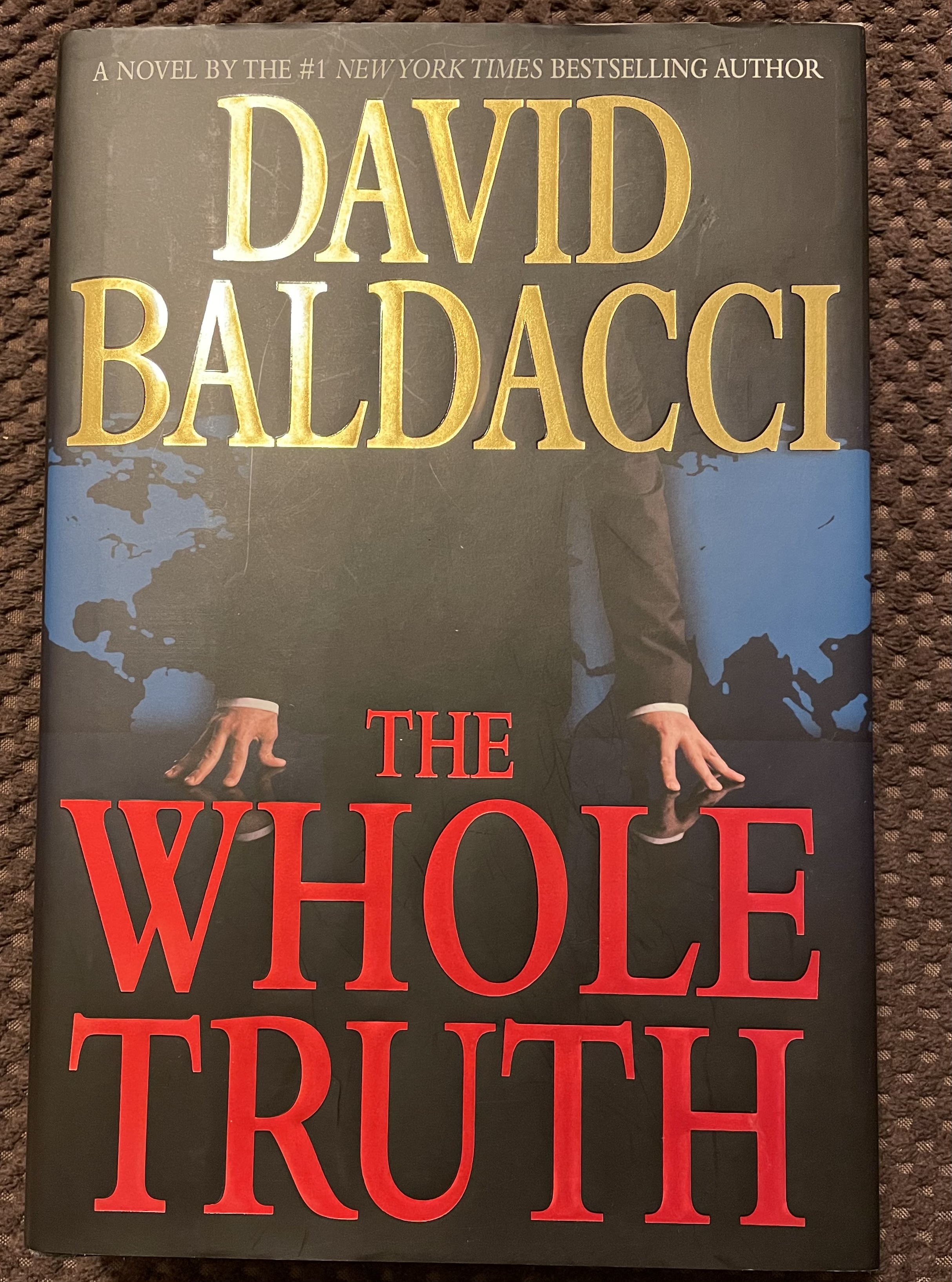
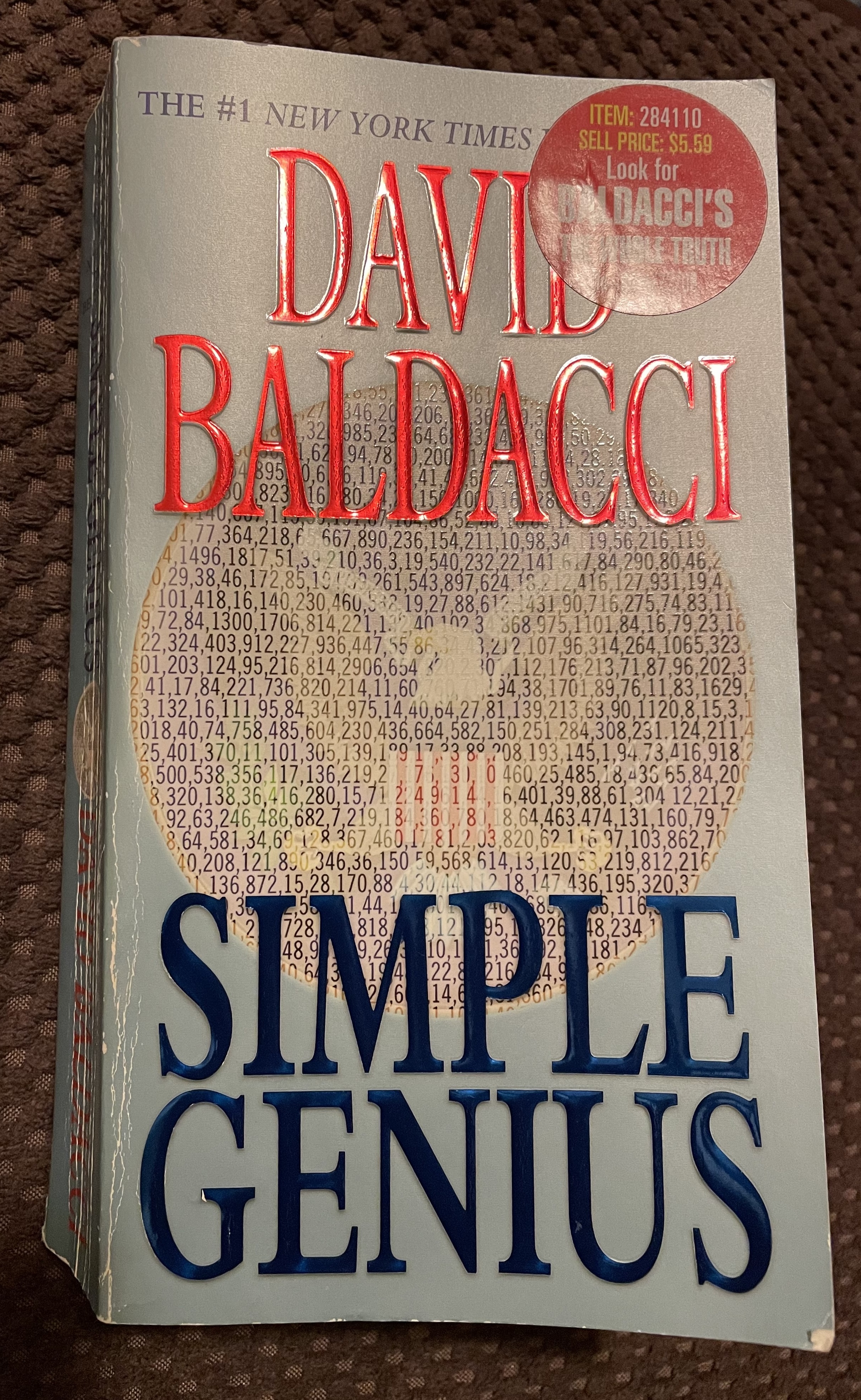
I recently read and reviewed Kate Quinn’s The Rose Code for an upcoming book club Zoom, and at the same time, I was reading David Baldacci’s Simple Genius. I had started Baldacci’s book first, but as I decided to get a jump on my book club reading, I discovered an unexpected connection. Both books feature the mystique of codebreaking and of Bletchley Park, albeit at different times in history. As mentioned in my previous review, The Rose Code takes place at the time that Bletchley Park was active during WWII and its immediate aftermath and provides the reader with riveting historical fiction. Simple Genius doesn’t qualify as historical fiction and is instead a political thriller/murder mystery, the third in Baldacci’s King and Maxwell series. Continue reading

‘The Rose Code’ puzzles reach beyond the walls of Bletchley Park

By Ande Jacobson

Kate Quinn’s The Rose Code is a masterwork of historical fiction. It’s a long book at 656 pages that reads quickly as the tension builds. Published by William Morrow in March 2021, this gripping story brings Bletchley Park, the famed hub of the British effort to break the German Enigma code during WWII, and the unique personalities who worked there to life. Quinn’s fascination with history and her deft storytelling add new twists to events past as she mixes historical figures together with her vibrant fictional characters, although her fictional characters are themselves composites of real people. Her history is not names and dates but is instead about how historical events changed and complicated people’s lives.

Three women meet through Bletchley Park where they each play a part in the monumental task at hand. They come from very different backgrounds from one another and from their fellow codebreakers. Osla Kendall is a debutant originally from Canada who had been helping the war effort bending metal building Hurricanes while dating a dashing prince. Mab Churt is a self-made London shop girl with a long held secret. Beth Finch is a shy young woman in her mid-20s with no confidence in her own abilities having been beaten down by her overbearing mother.

Osla and Mab are summoned to Bletchley Park. They meet on the train on their way to report and encounter one of the more interesting characters upon their arrival. He introduces them to the colloquial name for the place – GC & CS – which he explains stands for “Golf, Cheese, and Chess Society.” They later find out that GC & CS actually stands for “Government Code & Cypher School” which makes them wonder if they are being trained to be spies.

After reporting in and being assigned to different sections of the codebreaking effort, the two women are billeted close by at the Finch house which is a short walk from Bletchley Park. While there, they start to forge a friendship with Beth and take note of her wicked-sharp crossword puzzle skills. Much to Mrs. Finch’s chagrin, Osla manages to get Beth into Bletchley Park, and unbeknownst to either Osla or Mab at the time, Beth, assigned to “Dilly’s Fillies,” becomes one of Bletchley’s top cryptanalysts. Dilly Knox, it’s later revealed, prefers to hire brainy women because they take the job more seriously without their egos getting in the way. None of them can tell the others what their specific roles are at Bletchley which infuriates Mrs. Finch.

As the story develops, the three become quite close sharing the details of their private lives and loves as well as stories of some of the mishaps and odd personalities at work while always being careful to steer clear of divulging any work secrets. When each started at Bletchley Park, they signed a draconian oath that laid out severe or even life threatening penalties for breaking secrecy. Along the way, they start a Bletchley book club, affectionately known as the Mad Hatters after reading Louis Carroll’s Through the Looking Glass. Their meetings bring together disparate personalities from their different sections of Bletchley Park for some much needed recreation. Eventually the secrecy sparks a traumatic incident that ends in a massive falling out before the war ends, but the story doesn’t end there.

The novel flips between two timelines, one through the course of WWII, and the other a few years after the war ends surrounding a royal wedding. Quinn’s attention to detail brings forward fascinating aspects of the different sections at Bletchley Park showing how the various groups’ work fits together even though none of the workers knows the full story by design. Quinn reveals the machinery used and critical skills required of the elite workforce at Bletchley. They all know they are involved in work that not everyone is capable of doing, and in their own ways take pride in their contributions to the war effort. Some of the habits they pick up through their efforts stay with them long after the war ends which comes in handy when a new puzzle presents itself and threatens one of their own.

Quinn is careful to maintain accuracy surrounding historical locations as well as the tone and urgency of the events shaping the war torn world of the early 1940s. She shows how the war wears everyone down. Despite being relatively safe in the confines of their secluded little hamlet, those at Bletchley Park fear for their friends and families who are not so fortunately located. They also suffer a bit of survivor’s guilt at times from the knowledge that although their efforts are what give the fighting forces the information they need, the warfighters are putting their lives on the line daily to carry out their missions while the codebreakers sit in their safe hamlet away from the physical dangers of the war.

What is later discovered is that spies are everywhere, and the secrecy oaths while well-intentioned are not full proof in combating all disclosure. The heart-pounding adventure continues long after the Armistice, and their codebreaking skills come in handy well after they leave Bletchley Park. Along the way, despite their wartime grudges, Osla, Mab, and Beth discover that some bonds turn out to be thicker than blood and stronger than even the worst falling out, and families can be found in many unexpected forms.


References:
The Rose Code by Kate Quinn
Kate Quinn Author


A Good Reed Review also gratefully accepts donations via PayPal to help defray the costs of maintaining this site without creating paywalls.
Donate with PayPal

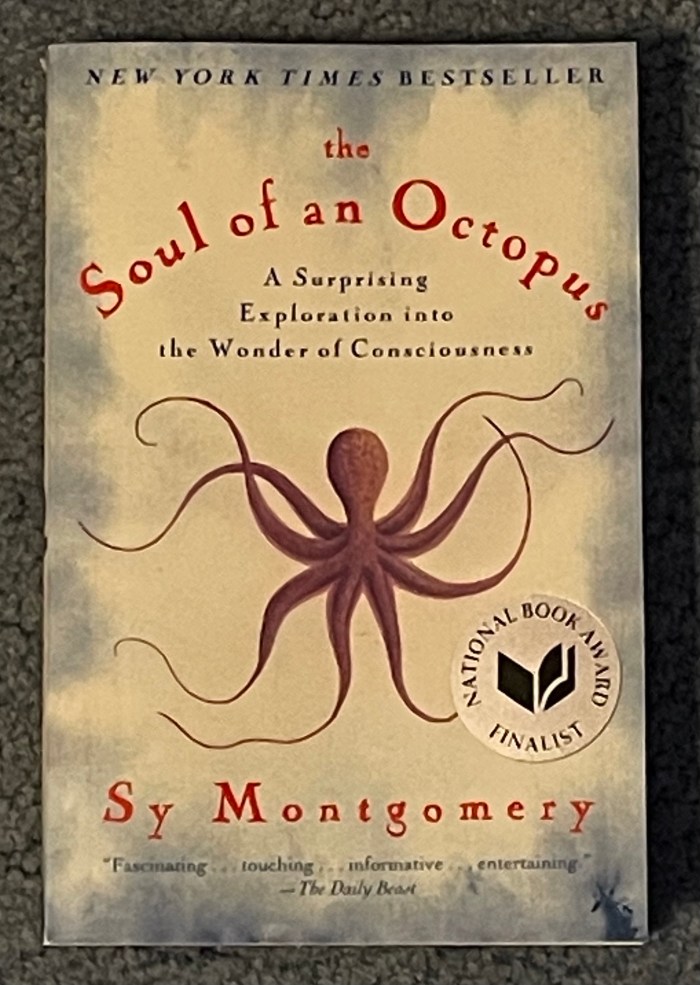
‘The Soul of an Octopus’ opens up a whole new world

By Ande Jacobson

Naturalist, Sy Montgomery, opens up a fascinating world that is foreign to most of us in her 2015, best-selling memoir, The Soul of an Octopus: A Surprising Exploration into the Wonder of Consciousness. She tells her story of how she was introduced to her first octopus at the New England Aquarium in Boston, MA and was hooked. She was taken with their curious nature, their intelligence, their cunning, and their charisma. The book is her personal tribute to all that is the octopus as she educates her readers by dispelling many misconceptions and fears and bringing these extraordinary creatures to life on the page. The first thing she teaches readers is that the scientifically correct plural for octopus, contrary to common belief, is not the Latin “octopi.” The word octopus is derived from the Greek, oktṓpous, so the plural is instead “octopuses” despite what Dictionary.com may imply. She also gives an initial description of the animal thusly:

“Here is an animal with venom like a snake, a beak like a parrot, and ink like an old-fashioned pen. It can weigh as much as a man and stretch as long as a car, yet it can pour its baggy, boneless body through an opening the size of an orange. It can change color and shape. It can taste with its skin.”

Through her years working with the folks at the New England Aquarium, she joined an inner circle of staff and volunteers in getting to know a succession of octopuses. Behind the scenes, she was able to interact directly with these magnificent animals, letting them get to know her as she did them, and when she was with them, she felt time stand still. Each had its own unique personality. Some were game players. Others were downright cuddly in a slimy, octopus kind of way. And all of the octopuses she met there over time become dear friends as she, along with the octopus experts in the inner circle, plunged their arms into freezing water to let each octopus taste them with their suckers and get to know them.

An octopus is effectively a very dexterous snail without a shell, although it is far more capable and wily than a snail. Through many examples, Montgomery shows just how smart these creatures so alien to land dwellers actually are. She notes that as she watches them, they watch her with just as much fascination. Unlike mammals, octopuses have decentralized nervous systems that allow their arms to act independently without direct commands from their brain, a point that Montgomery drives home describing how one particular octopus stole a bucket of fish unnoticed while actively interacting with three people simultaneously. An octopus can also regenerate their arms if they get bitten off by a predator.

The key to determining the sex of a given octopus is to examine the tip of their third right arm. In females, their suckers extend to the tip of all of their arms. In males, the suckers do not extend all the way to the tip of their third right arm, known as the hectocotylized arm. While it would seem an easy task to identify the sex of an octopus, the animals often keep the tips of their arms curled, so it can take some time before the crucial arm tip is visible, even for those handling the octopuses directly. Montgomery provides a detailed look at how octopuses reproduce through her description of the Seattle Aquarium’s Annual Blind Date.

On Valentine’s Day each year, the Seattle Aquarium brings a pair of Giant Pacific Octopuses together to give them an opportunity to mate. The pair doesn’t always get along, but often they do, and the day brings a very large audience to observe. Montgomery documents one such event when she got the opportunity to fly across the country to attend the blind date several years into her study of octopuses.

Most octopus species are loners, only coming together at the end of their lives to mate. A female can lay up to 100,000 eggs, each the size and appearance of a grain of rice. The last undertaking of a female octopus is often laying and meticulously caring for those eggs until just before they hatch. Very few newly hatched octopuses survive to adulthood as the young are left to fend for themselves, their mother dying just before they emerge, and their father nowhere to be found. When they first hatch, they float amidst the plankton until they grow big enough to swim to the bottom of the sea to find a den, evade predators, and to hunt for their own food. If they do survive, octopuses are very short-lived; the Giant Pacific Octopus being the longest lived species lasts only 3-5 years.

Montgomery tells her story of her introduction to, and certification in, scuba diving. She describes her difficult start to her dive lessons and provides a detailed look into the dangers of the sport recounting not only her own experience, but also that of one of the close friends she made in Boston who was injured so badly he could no longer dive at all. She was determined to dive and after being certified, was invited to accompany some research teams on a couple of very eye opening expeditions around the world. Although focused on octopus behavior, she was also exposed to a whole new world in the wilds of the oceans off Mexico and French Polynesia. Oceans cover more than 70% of the planet, and there are far more animal species in the oceans than on land. Many aquatic animals can only be observed through dives, and others live so deep in the ocean that they have never been observed by humans.

It took Montgomery several years to complete her research for this book, and over that time, she came to know a few individual octopuses at the New England Aquarium. Because octopuses will often eat one another, the aquarium can only have one in their main public display tank, and as that octopus ages, they’ll acquire another younger octopus that they keep behind the scenes in a barrel type arrangement until the old octopus dies. Montgomery describes a few of the mishaps they had over the years with their octopuses. Unlike most of the aquatic animals cared for at the aquarium, octopuses are serious escape artists. Between their curiosity, intelligence, and dexterity, it’s a real challenge to create a truly escape-proof tank. They can hide in very small spaces, and if they do get out, they can actually run across the floor for a brief period. They can live outside of water for just under 30 minutes before they suffocate.

The book is a loving adventure story providing an inside look at these incredible creatures and is well worth a read. The writing is a little colloquial at times, and there are a few editorial errors, but the story is compelling and hard to put down.


Reference:
The Soul of an Octopus by Sy Montgomery


A Good Reed Review also gratefully accepts donations via PayPal to help defray the costs of maintaining this site without creating paywalls.
Donate with PayPal

‘Why We Sleep’ shows that sleep makes us smarter and healthier

By Ande Jacobson

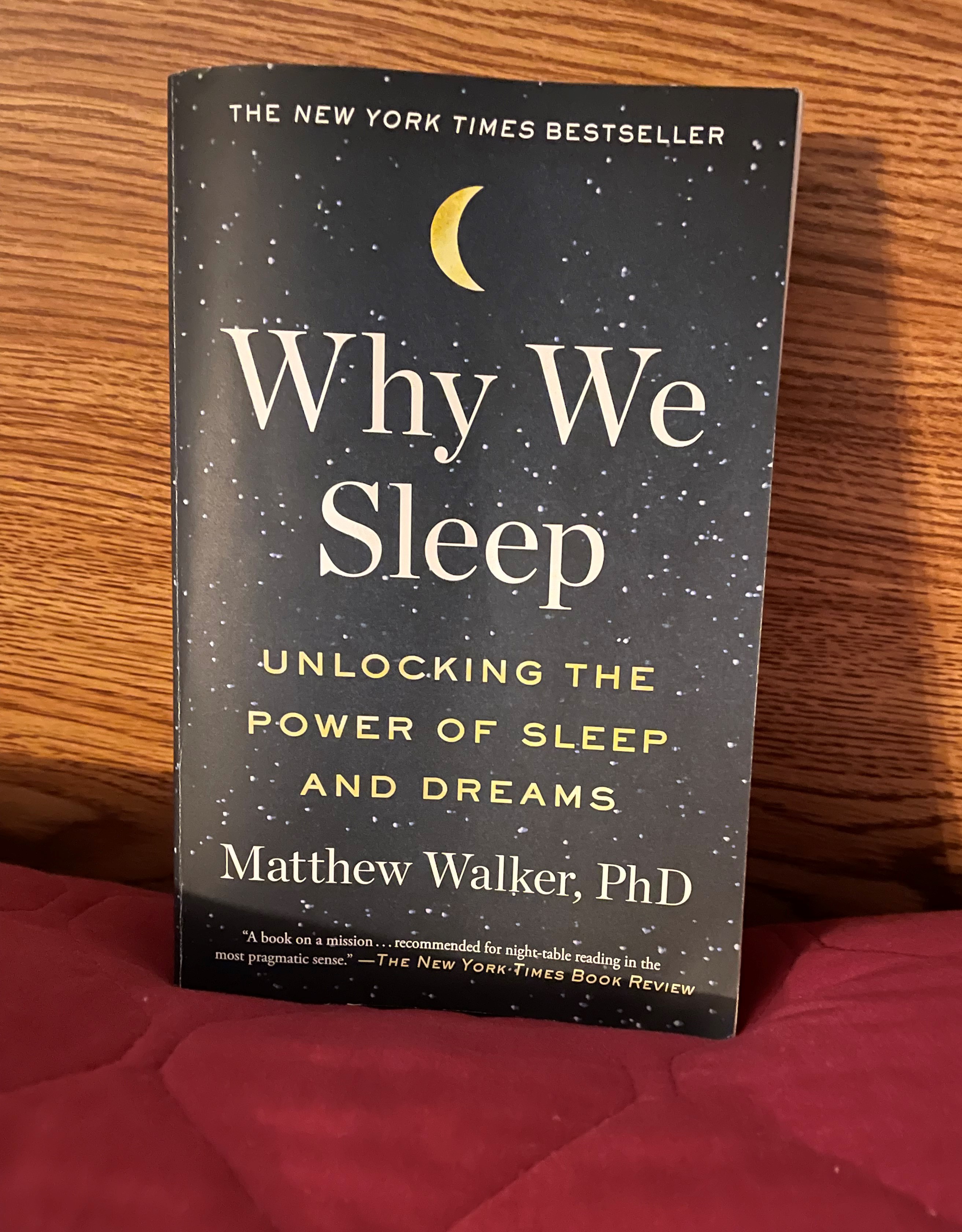
Matthew Walker, PhD is a world renowned sleep researcher who shares some astonishing, well-kept secrets in his 2017 New York Times Bestseller, Why We Sleep: Unlocking The Power Of Sleep And Dreams. In this fascinating book, Walker starts with the basics such as what sleep actually is, how widespread sleep is in the animal kingdom, and why it is needed. He goes on to explain what the various stages of sleep do for us and what happens when they are missed. He closes with an enlightening discussion of how our societal norms help and harm us with respect to sleep. To accomplish this, he breaks the book into four main parts including:

  1. This Thing Called Sleep
  2. Why Should You Sleep?
  3. How and Why We Dream
  4. From Sleeping Pills to Society Transformed

He draws a startling and compelling conclusion at the end. He also provides a helpful appendix drawn from the NIH Guide to Healthy Sleep with 12 common sense tips.

Walker’s book packs insights from decades of research and over three million years of evolution into under 350 pages, and it’s worth reading every word. He is a masterful storyteller citing numerous studies and expanded material via footnotes throughout the book to support his assertions. In format, while the index is extensive, the one thing missing is a consolidated bibliography that would help readers refer back to those informative studies. Continue reading

Dan Brown’s ‘Inferno’ takes readers on an unforgettable journey

By Ande Jacobson

Dan Brown is known for writing entertaining adventure stories centered on his fictional character, Harvard professor of symbology, Robert Langdon. Langdon is drawn as a kind of super-sleuth who uses his knowledge of symbols, particularly religious symbols, to solve earthshaking crimes. Brown’s 2013 book, Inferno, is the fourth in the Langdon series and takes a rather Malthusian look at the world as it intertwines imagery and symbols from Dante Alighieri’s The Inferno in a plot threatening human existence. Although written in 2013, the story has unexpected relevance now as the world takes steps to recover from the coronavirus pandemic. Continue reading

Are we training people to fear rather than think?

By Ande Jacobson

Historically, the bastions of higher learning were centers of intellectual stimulation where students could gain exposure to myriad concepts, ideas, and philosophies and could participate in scientific advancement. The learning process gave students not only exposure to a broad spectrum of ideas, it helped them learn to examine those ideas critically to separate fact from fiction. It also taught them important skills to deal with intellectual and social challenges. It sometimes made them uncomfortable and encouraged them to use that discomfort to stretch themselves and grow. They learned the great value of being challenged intellectually as well as skills necessary for conflict resolution without resorting to violence. Starting around 2013, Greg Lukianoff and Jonathan Haidt noticed a disturbing trend that was beginning to assert itself and was antithetical to the broad pursuit of knowledge on which colleges and universities thrived. This trend was exemplified by a combination “three Great Untruths:”

  1. The Untruth of Fragility: What doesn’t kill you makes you weaker.
  2. The Untruth of Emotional Reasoning: Always trust your feelings.
  3. The Untruth of Us Versus Them: Life is a battle between good people and evil people.

These three concepts are the basis for Lukianoff and Haidt’s 2018 book, The Coddling of the American Mind: How Good Intentions and Bad Ideas Are Setting Up a Generation for Failure. They use the following criteria to determine if something is a Great Untruth (it must meet all three criteria):

  1. It contradicts ancient wisdom (ideas found widely in the wisdom literatures of many cultures).
  2. It contradicts modern psychological research on well-being.
  3. It harms the individuals and communities who embrace it.

Continue reading

To dream of a world without caste

By Ande Jacobson

Isabel Wilkerson ends her latest book with a powerful truth:

            “A world without caste would set everyone free.”

The book is Caste: The Origins of Our Discontents, and it should be required reading for everyone, particularly in the United States. Most people in the U.S. are aware of the nation’s history of slavery that was theoretically vanquished after the Civil War. As many historians and journalists have written, it wasn’t really, and there is a much deeper pathology at play. Wilkerson crystalizes the formation and perpetuation of the caste system that persists to this day in the U.S. through a detailed exploration of how it relates to caste systems in India and in WWII Germany in her latest book which is part personal essay, part investigative journalism, and part history text. As difficult as many of the stories she relates are, she also offers ideas on how we might address and reform this vicious hierarchy, though to do so will require effort on all our parts. To do so would also allow us to finally achieve the key ideal set forth in our Declaration of Independence, i.e., true equality of all people. While the founders didn’t actually mean everyone, or even all men, the ultimate ideal expressed is still one to which we should all aspire. Instead, we have to date been plagued by a system of equality that is based on inequality. In other words, for the favored members of society to be equal amongst themselves, all others must be unequal. This U.S. system has been based on caste since before the founding of the nation despite the advances in equality stated in the law. Continue reading

‘Musicophilia’ – how music touches us all

By Ande Jacobson

In the preface of Oliver Sacks’ landmark book Musicophilia, he muses about how human interactions with music might puzzle a highly intelligent alien being with no frame of reference conjuring a scene from the world of Arthur C. Clarke. Science fiction aside, music is central to human existence, and yet on the surface it’s confounding trying to discern its purpose. Music can touch us in ways nothing else can. It can provide great solace. It can bring us to tears. It can excite us and inspire us. It can stimulate the brain and enhance learning. It can also torment us. Music can have these effects on us just by listening as well as in the course of making music. In the face of certain brain injuries or disease, it can also provide insights helping with diagnosis and can reach people who are otherwise uncommunicative. Drawing on extensive case studies, Dr. Sacks instructs, entertains, and enlightens readers on the complexities of human perceptions of music and just how important music is in innumerable circumstances. While this book will fascinate any musician wanting to understand their own musical drive, it will also delight non-musicians by opening up a whole world of perception they previously took for granted. Continue reading

How the South Won the Civil War unmasks the American paradox

By Ande Jacobson

Professor Heather Cox Richardson, a prominent professor of American history at Boston College, has gained notoriety in the last several months as the author of a popular series entitled “Letters from an American” which appear on her website as well as on her professional Facebook page on a nightly basis. She began writing these letters in early November 2019 in response to numerous questions she received trying to make sense of the political events of the day. In these letters she provides a nightly roundup of the day’s political news, and along the way, she provides lessons delving the depths of American history to show where many of these ideas and tactics originated. On April 1, 2020 (after she was well into her nightly series), her latest book, How the South Won the Civil War: Oligarchy, Democracy, and the Continuing Fight for the Soul of America, was released. In this book, she describes what she refers to as the American paradox. This paradox is based on the principle that throughout American history, equality depended on inequality. She shows how this paradox started before the founding of the country and ripples throughout our nation’s history driving much of the division we see in American society today. Continue reading

Clive Fleury’s ‘Kill Code’ is a compelling read

By Ande Jacobson

In December 2018, TCK Publishing released a new science fiction novel, Kill Code, by Clive Fleury. This gripping dystopian story is packed with action, intrigue, and a hero who might just have bitten off more than he bargained for as he tries to right the wrongs he’s seen all too often. In a not-too-distant future look at the little blue marble in space, the planet is ravaged by climate changes. The planet, and especially the Los Angeles area, has heated beyond all imagination, and there are really only a few hours of daylight that are even partially tolerable. The oceans have risen so quickly that weekly measurements show massive encroachment on waterfront areas, and humans have been pushed further and further inland. Over the top of it all, corruption is rampant, normal citizens have lost almost everything, and Hogan Duran wants to do something about it.

Duran is a former soldier and disgraced cop living in squalor with his former police partner, Max Creeling. Creeling is now wheelchair bound after a shooting that ultimately got them both removed from the police force. Instead of just squeaking by, Duran wants to make a difference. After years of scrambling to get what work he could, an opportunity finally presents itself that Duran just can’t ignore. The prestigious National Security Council (NSC for short) beckons to him to join. Well to be fair, Duran had applied and been rejected several times, but finally he’s invited to take the entrance exam. There’s just one small problem. The test can be deadly. If that weren’t bad enough, Duran comes to realize, beyond the challenges of getting in, there are some terrible secrets that are even more dangerous.

The book is short, only 149 pages, and it moves very quickly, much like the pilot of an action-packed television series. This is not surprising given Fleury has produced, directed, or written several projects for television and film, so he knows those mediums well.

The story is told in first person from Duran’s point of view, so the reader can only know what he knows. The reader learns Duran’s and Creeling’s backstories early on, and when Duran makes his way to the gleaming NSC headquarters to try to win entrance into the elite NSC forces, several other characters are introduced, each with secrets in their past that unfold to Duran slowly throughout story. As such, some of the supporting characters are a little underdeveloped or single dimensional because Duran can be fooled, and by extension, so can the reader. Although portions of Kill Code read a bit like a script, Fleury adds plenty of descriptive material to allow the reader to easily visualize the settings as Duran experiences them.

There are a few minor editorial issues such as using the subject form “Max and I” when it should be “Max and me” as an object, but they can generally be forgiven as the reader digs into this fast-moving, near-future world.

In addition to being Fleury’s first novel, Kill Code is the first book in a series under development. While the series may well take the reader in numerous, unexpected directions, this particular story doesn’t so much resolve as setup the next installment of the story. As such, the last chapter ends abruptly, leaving the reader hanging. Still, overall the book is an enjoyable read, and even though the world is dystopian, it provides a nice escape from the current world’s reality.

Kill Code is available in both paperback and digital formats.


References:
Kill Code: A Dystopian Science Fiction Novel
TCK Publishing
Clive Fleury’s other projects
Clive Fleury’s Author website


A Good Reed Review also gratefully accepts donations via PayPal to help defray the costs of maintaining this site without creating paywalls.
Donate with PayPal