Our votes matter

By Ande Jacobson

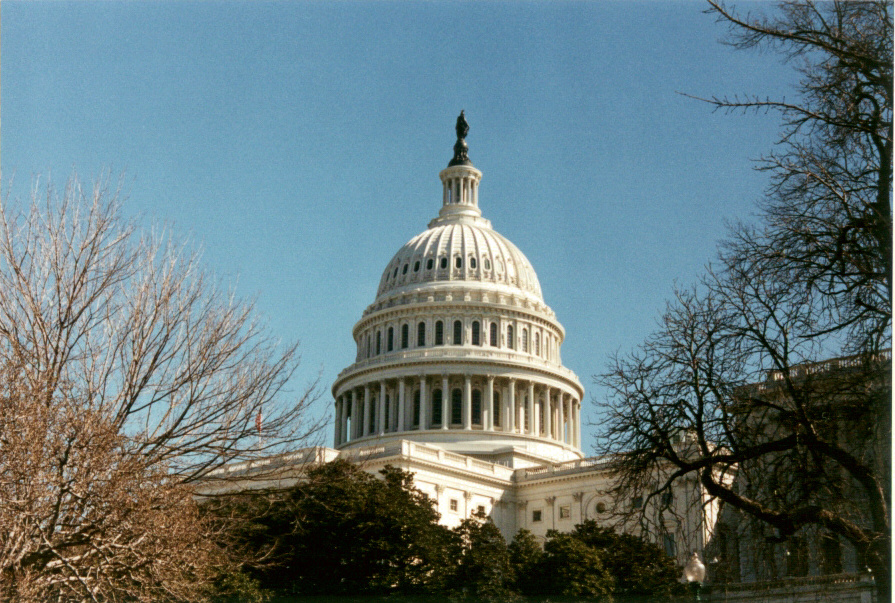
Most of my friends have made up their minds for this contentious 2024 election, and the vast majority are voting Democratic up and down the ticket for the good of the country as a whole even if they aren’t completely in line with some specific policies or even registered as Democrats. This makes sense to me. I’m never completely in line with any politician’s policies, but I learned a long time ago that with politics you never get everything exactly the way you want it. I learned that you should vote based on the overall good of a given candidate and whether they want to help us all or not. This election, I agree with most of the Democratic Party’s policies such as:

  • Enacting fair taxation where everyone pays their fair share including the wealthy and corporations
  • Lowering prescription drug prices not just for seniors but for everyone
  • Stopping price gouging, especially for essentials like food, housing, and healthcare
  • Protecting Social Security and Medicare without raising the retirement age or cutting benefits
  • Producing more clean energy
  • Enacting initiatives to address climate change
  • Enacting sensible gun safety laws
  • Protecting reproductive choice and freedom by codifying the protections of Roe v. Wade nationwide
  • Enacting bipartisan legislation to tighten border security and enact humane immigration policies
  • Continuing job growth and strengthening unions
  • Making education affordable and accessible
  • Continuing to improve the ACA to make healthcare available to all without the threat of financial ruin
  • Protecting voting rights so that every eligible voter can cast their ballot – a bedrock principle of democracy
  • Appointing judges and justices who will uphold the Constitution and rule of law, not shred it
  • Strengthening our democracy
  • Maintaining the separation of church and state enshrined in our Constitution

VP Harris recently announced that she also supports expanding Medicare to cover long term care at home to help the disabled and our seniors when they need it most without the threat of financial ruin.

Kamala Harris, Tim Walz, and the Democratic Party understand that we have to work together and support making things better for all Americans through the above initiatives and the rest of the platform and policies they support. As such, I am very enthusiastically supporting Democrats up and down the ballot in this election along with most of my friends. Continue reading

Update to a landline alternative

By Ande Jacobson

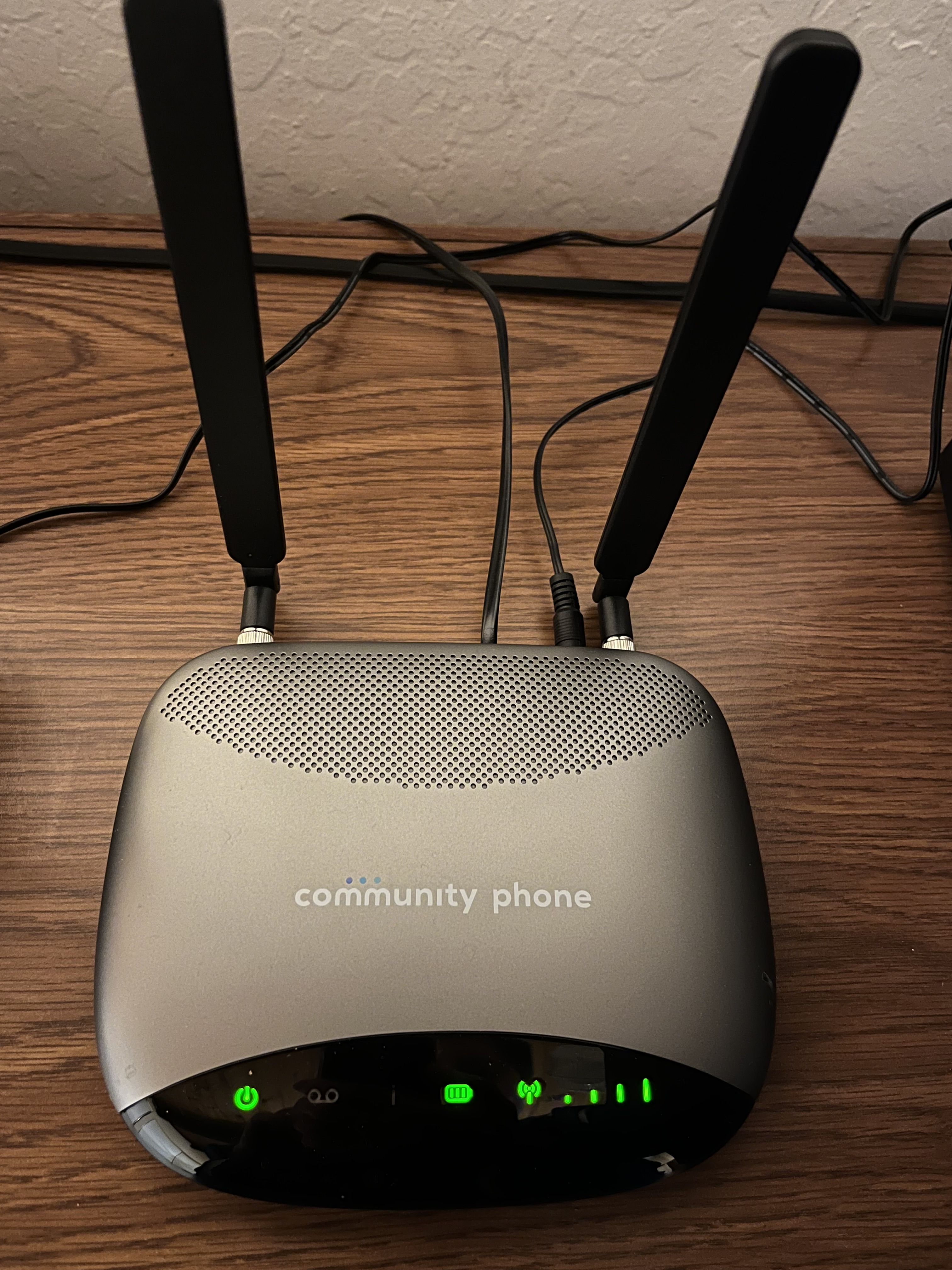
In late April, I wrote a piece about Community Phone talking about its benefits as a landline alternative. In short, Community Phone provides a landline-like alternative to customers that doesn’t require internet connectivity and can work for up to 12 hours without power using two major nationwide cellular networks. Although they use cellular networks, their service isn’t a mobile service. It’s fixed to the service address, and the network used is whichever of the two is stronger at that location. Their base is a strong receiver that connects to a traditional landline/analog phone. Their service provides excellent call quality at that location. It’s not quite the same as copper of course, but it is better than VoIP services that require active internet service. The concept is good.

That said, I need to revise my initial recommendation a bit by first saying that I have recently downgraded my plan to their standard service. While their premium service has some excellent additional features, the system running that level of service is not yet stable. In the six months or so that I had Community Phone’s premium service, many of the advanced features had not been available most of the time, and even some of the standard features running on their advanced system had not been reliable. The price depends on where your service is located, but in general, the premium service is about $10 more per month than the standard service. For both levels of service, there is a discount for paying annually rather than monthly that equates to one month free per year at the monthly rate. Continue reading

Are left-handers sinister?

By Ande Jacobson

Historically, left-handedness was considered sinister, stemming from the Latin for left. Its counterpart is dexter meaning right. The term sinister took on its nefarious character fairly early on though.

From a population perspective, about 10-12% of the human population is naturally left-handed, though some cultures strongly either discourage left-handedness, or outright forbid it. In the U.S. it was common to “convert” left-handers to using their right hand instead through the first half of the 20th Century. That slowly started changing in the 1960s and 70s, but educational theory at that time still focused on ensuring that children had a dominant side. Even that has fallen out of favor today. After all, being ambidextrous can be a great advantage at times. Continue reading

Substance matters

By Ande Jacobson

I’m concerned. No, that’s not right. I’m terrified.

We recently celebrated another U.S. Independence Day marking the anniversary of when the United States of America was founded. Now the biggest election of my lifetime (and perhaps in our nation’s history) looms over us in just under four months, and we have a media machine that seems determined to foment division by continuing its years long assault on the Democratic incumbent while at the same time ignoring his record of accomplishments and ignoring or normalizing the outright malfeasance of his likely GOP opponent. The media has presented the presidential race as a horse race rather than focusing on the real issues at hand which does the country a huge disservice. Why they are doing this is the subject of a lot of speculation. On the one hand, the media long ago moved away from their role as impartial observers and sources of information about current events into a much more lavish, dynamic, and profitable role as entertainers. They are businesses intent on turning a profit, so they do all they can to build audience and keep people coming back for more. Division and controversy sells far better than dry data, so their move toward the former in this quest became their imperative. Profits after all are more important than informing the public to many of these entities. A GOP presidency, particularly with their likely candidate, would garner them higher profits given the crises and favorable tax modifications that would result. Unfortunately, far too many people accept what they are told by the media without looking beyond the hype, and that could spell disaster for the country and the world. Continue reading

Insights through the arts

By Ande Jacobson

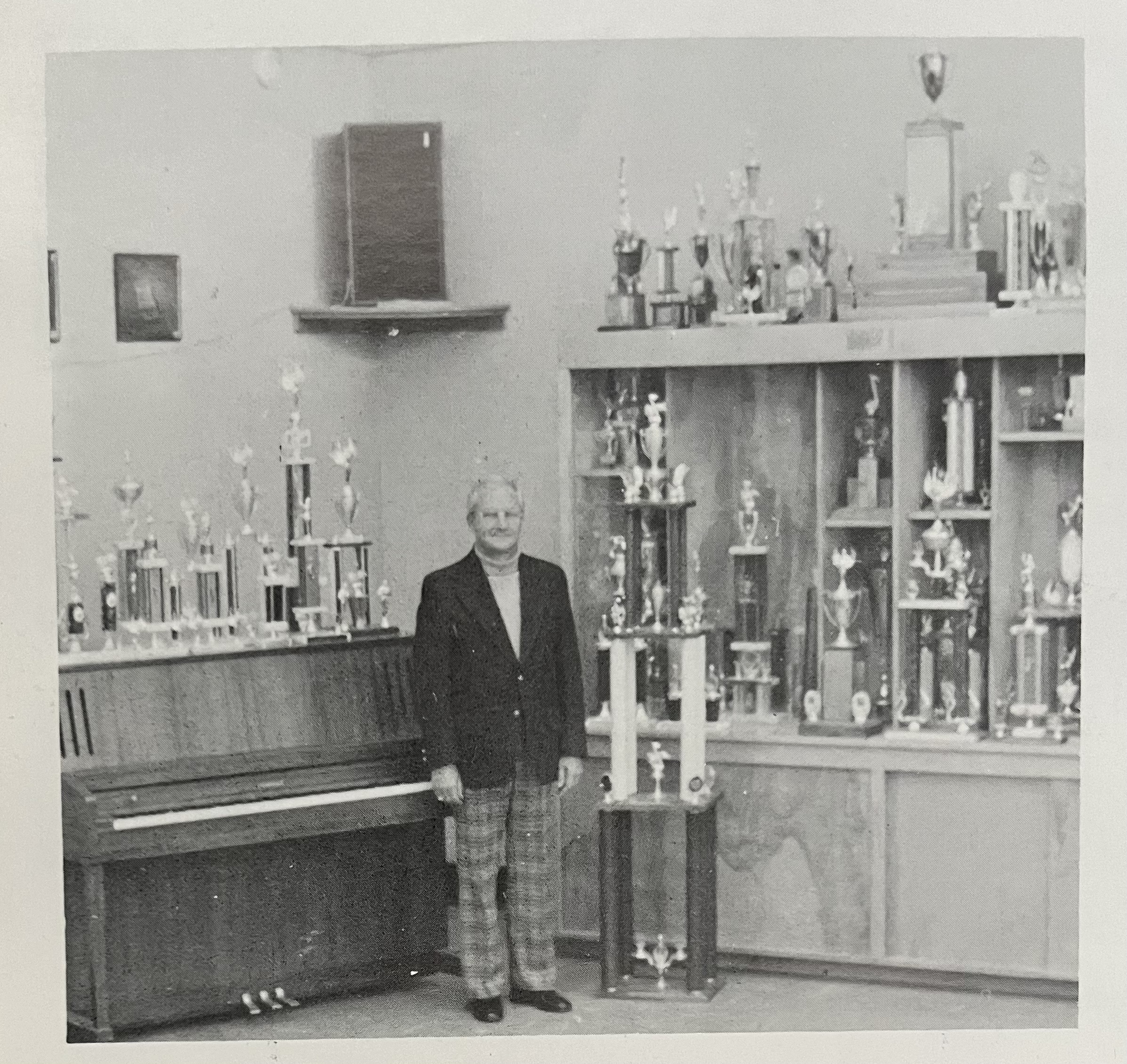
Senior year of high school is often fraught with decisions. For the academically inclined, this is the year when students make a series of decisions that have a monumental impact on the rest of their lives. It’s the year when they have to decide which colleges they’ll apply to (if indeed they are planning to go straight from high school to college). Later when the acceptances start rolling in, they have to decide which college they’ll attend. For many of these students, these college related decisions overtake their world. They visit campuses. They talk with friends, family, school advisors, current college students, faculty, and admissions staff, and they try to make the decision that is best for them given what they know about their interests at that time. They also still continue to attend their high school classes through their senior year, maintaining their academic performance that got them to this point in their lives. They may also have part time jobs that require their attention. They have familial responsibilities. For those students seeking an arts related college program, they may also have to audition or submit portfolios for consideration as part of the application process. In short, they are busier than they have ever been. For Val Zvinyatskovsky, this was only part of what occupied his time through his senior year of high school. In addition to his studies, campus visits, and holding down several arts-related jobs across performance, tech, and teaching, he also put his thoughts into a musical production as the composer, lyricist, librettist, and director. Barely a week after his high school graduation, he debuted his new one-act musical, The Right: A Gameshow Musical, in a special one night presentation, a video of which is available for all interested viewers. Continue reading

30 May 2024 was a good day for America

By Ande Jacobson

On 30 May 2024, a jury in Manhattan unanimously convicted Donald J. Trump, a former U.S. president, of 34 counts in his first criminal trial. Some might think this was a sad day because for the first time, a former president was tried and convicted in a criminal proceeding. That former president is now a convicted felon, but it’s not necessarily a sad day in our history. The sad part really is that a former president would commit crimes in the way that this one has, but through both civil and criminal trials, we are showing the nation and the world that nobody is above the law, not even a former president, and that’s a very good thing. Continue reading

Lower birth rates are a good thing

By Ande Jacobson

We’re seeing some disturbing reports of late that are born of a faulty thesis. We’re seeing manufactured panic over birth rates declining, but there are already over 8 billion people on the planet which is unsustainable over the long haul. As I wrote in January 2023, too many people combined with humankind’s bizarre focus on infinite growth on a finite planet rather than working toward a sustainable steady state is truly a crisis. So what do we do? We create the opposite crisis over the ideal mix of people on the planet based on greed, misogyny, xenophobia, and tribalism. Instead, we should be embracing a long term decrease in the human population to reach a level that is more in tune with our global environment and conducive to long term success under more equitable and comfortable living conditions for all. Continue reading

Then and now, how different is it?

By Ande Jacobson

When I was growing up, it was a turbulent time. Being a child of the 60s and 70s, I saw some thrilling scientific advances, as well as numerous disturbing events throughout my childhood. Both the positive and negative had an impact on how I viewed the world, but I always thought that things would continue to get better for society overall.

We had lots of books at home – both of my parents were avid readers of all sorts of material, and they instilled in me a healthy love of learning. We had numerous academic texts (both of my parents were medical professionals, so they had an extensive medical library), and we had our Encyclopedia Britannica along with the Great Books as more general references. We even had the Children’s Stories Great Books collection to round out things from the literary side. We had numerous dictionaries, lots of history books, and shelves overflowing with literary works including both fiction and nonfiction on countless subjects. We also had our library cards for both pleasure and for those times when our research needs exceeded what was available at home. Learning was fun. Continue reading

A landline alternative

By Ande Jacobson

Some services that have been around for more than a century have improved over time. Unfortunately, sometimes that improvement stops and regresses the service, and we lose something we didn’t used to think about not being there when we needed it. A good old-fashioned telephone can be one of those things. Growing up, we always had a phone with multiple extensions throughout the house. At first they were clunky rotary phones that weighed a lot more than it seemed like they should, but they worked even when the power went out which happened frequently for a time. It seemed like if the wind blew, we’d lose power. If it rained, we’d lose power. But even when it was dark, our phone worked. Continue reading

What is imagination?

By Ande Jacobson

Some time ago, a friend and colleague posited that religious fundamentalists and extremists, which he equated to cult members, had no imagination. He said that’s what locked them into doggedly following their leader’s demands without question no matter how extreme or dangerous those demands were. While he was specifically talking about some egregious situation surrounding the rabid political divisions between the far-right extremists and pretty much everyone else, I started thinking about the concept of imagination overall. What is imagination? How is imagination employed? What are the benefits of having an imagination? Does a lack of imagination make somebody more susceptible to fundamentalism or cult participation, or more perilously, does lacking an imagination make somebody dangerous? For the purposes of this discussion, consider the Oxford Dictionary’s definition of imagination thus:

imagination n. the faculty or action of forming ideas or mental images. > the ability of the mind to be creative or resourceful.”

From this definition, imagination, or some level of it at least, seems to be required for any substantial amount of learning in human society. Continue reading