‘Lord of the Flies’ reveals the savageness within us

By Ande Jacobson

A Theatre Near U tackles the stage adaptation of William Golding’s classic novel, Lord of the Flies, a story touching on timeless themes showing just how tenuous a thing civilization can be. Golding’s novel was published in 1954, a time of high tension in various parts of the world. He’s quoted as saying that writing this story was “like lamenting the lost childhood of the world.” He knew of whence he wrote having lived through both world wars, served in the Royal Navy in WWII, and spent several years as a schoolmaster. As such, he was well-versed in the fortitude and foibles of humanity overall, and of schoolboys in particular. Continue reading

FMT lets its Freak Flag fly!

By Ande Jacobson

This summer, Foothill Music Theatre (FMT) shows its heart with its rendition of Shrek The Musical. The show is based on the animated DreamWorks film, Shrek, and it puts all of the magic and message of the film live on stage. The musical version (with book and lyrics by David Lindsay-Abaire and music by Jeanine Tesori) debuted on Broadway in 2008 and in London in 2011. Since then, the show continues to be a family-friendly audience favorite as it now makes the rounds in regional and community theatres.

The story is, in broad strokes, a sassy mashup of traditional fairy tales mixed with some current events. Its well-known Freak Flag anthem packs a powerful, positive message about celebrating one’s uniqueness. The lively story turns the traditional boy meets girl theme on its head with a clever twist and sends audiences home in high spirits. Continue reading

The piano: the principal prelude to musical prowess

By Ande Jacobson

There is no question that music touches us deeply. There are also myriad studies showing the cognitive benefits of listening, but there are even more benefits when actively participating in making music. For the purposes of this discussion, the assumption is that the reader, for whatever reason, is now intent on learning to play a musical instrument. Whether their goal is personal or professional, an initial instrument must be chosen, i.e., they have to start somewhere. This commentary proposes that the piano be that starting point.

There can be many goals such as:

  • Mastering the piano and all of its intricacies;
  • Composing music;
  • Playing the guitar, or bass, or drums in a rock band;
  • Playing the violin, or cello, or bassoon in a symphony orchestra;
  • Playing the clarinet or trumpet in a wind band;
  • Playing the saxophone or trombone in a jazz band;
  • Conducting a band or an orchestra;
  • Teaching music;
  • Becoming a music therapist;
  • Developing more tools for connecting with family and friends;
  • Mastering one’s voice for the theater, the opera, or that rock combo.

No matter the goal, the piano is still the best prelude for all of it. It can take a lifetime to master the piano (if one ever truly does). Even when one studies it as a stepping stone to any other musical endeavor, the foundation that piano study helps to build makes everything else much easier to learn. Continue reading

Why care about classical music?

By Ande Jacobson

Many years ago when I was still married, my husband asked me if I would have become a musician if my parents hadn’t played instruments. I told him that there was no way to know for sure if my study and lifelong affinity for music would have happened had I not had my early childhood exposure. That answer surprised him a bit. He knew that I grew up with music as a very important part of our family life, a subject I wrote about in my book, Remembering Mom and Dad, in the story entitled Music in the House. He also frequently had to put up with my practicing various instruments for my numerous musical endeavors.

After taking a music appreciation college course and dabbling with the piano for the first time, he decided that wasn’t for him. Still, he wanted to learn to play an instrument in self-defense, although he was careful to select something I didn’t play (I play the woodwinds shown above for public consumption along with piano and trumpet for my ears only). He didn’t have any musical training other than that very brief introduction in his music appreciation course, so he found a teacher and started from scratch learning classical guitar. Continue reading

Take a farcical romp back to high school

By Ande Jacobson

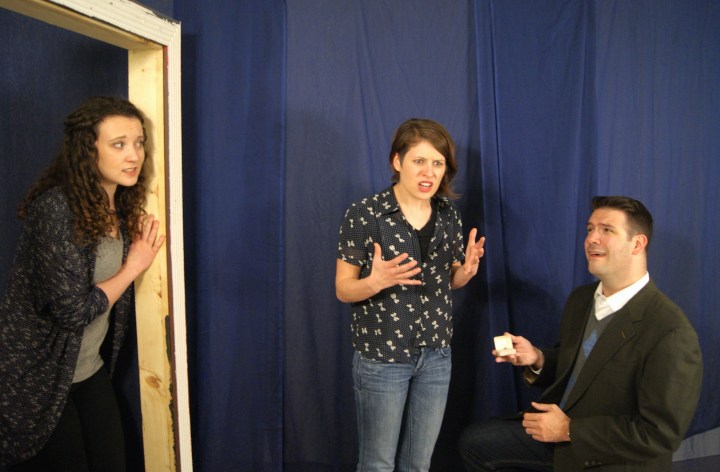
A Theatre Near U is presenting another Tony Kienitz world premiere, this time taking a farcical trip down memory lane back to the all-important crises of high school. His latest work, Like, Like, Like?, presents a unique view of high school to which audience members of all ages can relate. For those whose high school years are viewed from a distance through the rear-view mirror of their life, this presentation will likely trigger a bit of nostalgia. For those in the midst of their high school years, these young actors may embody a view of their friends with a level of familiarity. And for those eagerly awaiting to start high school, the characterizations may show them that they have nothing to fear and plenty to savor. Continue reading

Hershey Felder conjures an incredible portrait of ‘Beethoven’ at TheatreWorks

By Ande Jacobson

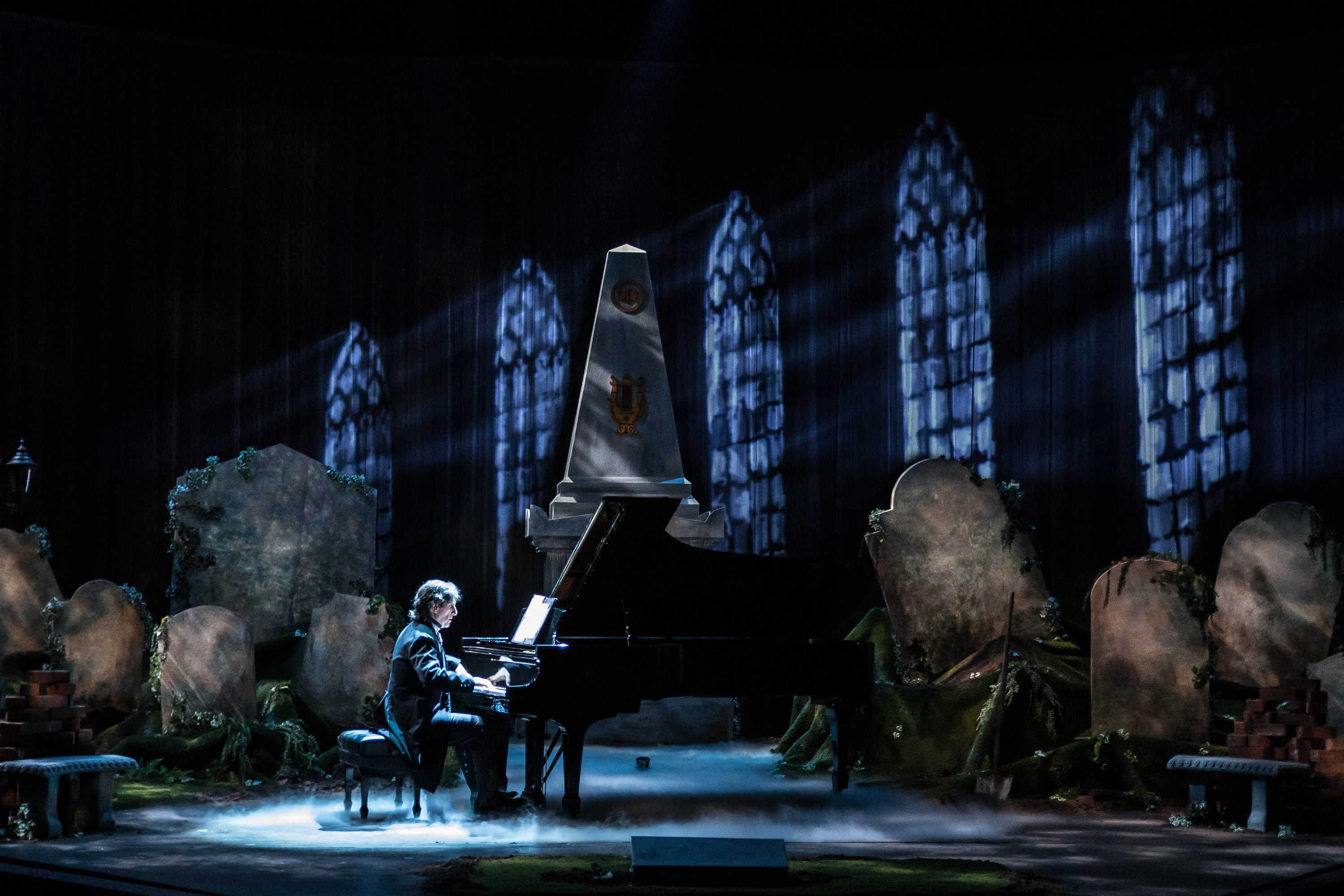
We have all heard his music. Ludwig van Beethoven, famous for his nine symphonies along with his ubiquitous piano compositions and other chamber works, is more than just the sum of his music. Hershey Felder is back on the TheatreWorks stage telling the fascinating story of Beethoven’s life from the perspectives of both Gerhard von Breuning and the maestro himself. Hershey Felder, Beethoven, with text by Hershey Felder, is based on Dr. Gerhard von Breuning’s personal recollections published in 1874 in “Aus dem Schwarzspanierhaus.” Felder’s presentation, punctuated by his piano virtuosity, is absolutely stunning. Continue reading

Book Review: ‘Sapiens: A Brief History of Humankind’ – a story of where we came from and where we might be going

By Ande Jacobson

Sapiens: A Brief History of Humankind, by Yuval Noah Harari, was first published in the U.S. in 2015, and it took the country by storm. It quickly became a New York Times best seller and is used in numerous history courses around the country. Great Britain saw its English language release a year earlier in 2014, but the author’s countrymen saw it first published in his native Hebrew a few years before that in 2011. Beyond that, the book has been translated into over thirty languages worldwide, and at least the American English version is credited as being translated by Harari, with help from John Purcell and Haim Watzman. Why did Sapiens:… make such a splash around the world? It tells a fascinating story. Harari is an Israeli born historian and a tenured history professor at Hebrew University of Jerusalem with a passion for how every human endeavor affects history and the world. Continue reading

It’s time for ‘Pear Slices 2017’

By Ande Jacobson

For the 14th time, the Pear lovingly offers up eight new slices of theatre in the form of short, one-act plays (in reality more akin to a series of single scenes) that provide a full evening (or afternoon) of entertainment. What started as an experiment has become an annual event showcasing somewhere between six and nine new works, written by members of the Pear Playwrights Guild, and performed by a select troupe of actors assuming multiple roles throughout the presentation. This year’s Slices includes:

  • For Art’s Sake by Elyce Melmon
  • Stella Wind by Bridgette Dutta Portman
  • Mirror to Face by Leah Halper
  • Anasazi Breakdown by Douglas Rees
  • Deuce Cooper: The Bloomfield Case by Paul Braverman
  • Aboriginal by Susan Jackson
  • Meantime in Between Time by Leah Halper
  • Proposal by Max Gutmann

Continue reading

Book Review: ‘Harry Potter and the Cursed Child’ adds a thrilling eighth chapter to the series

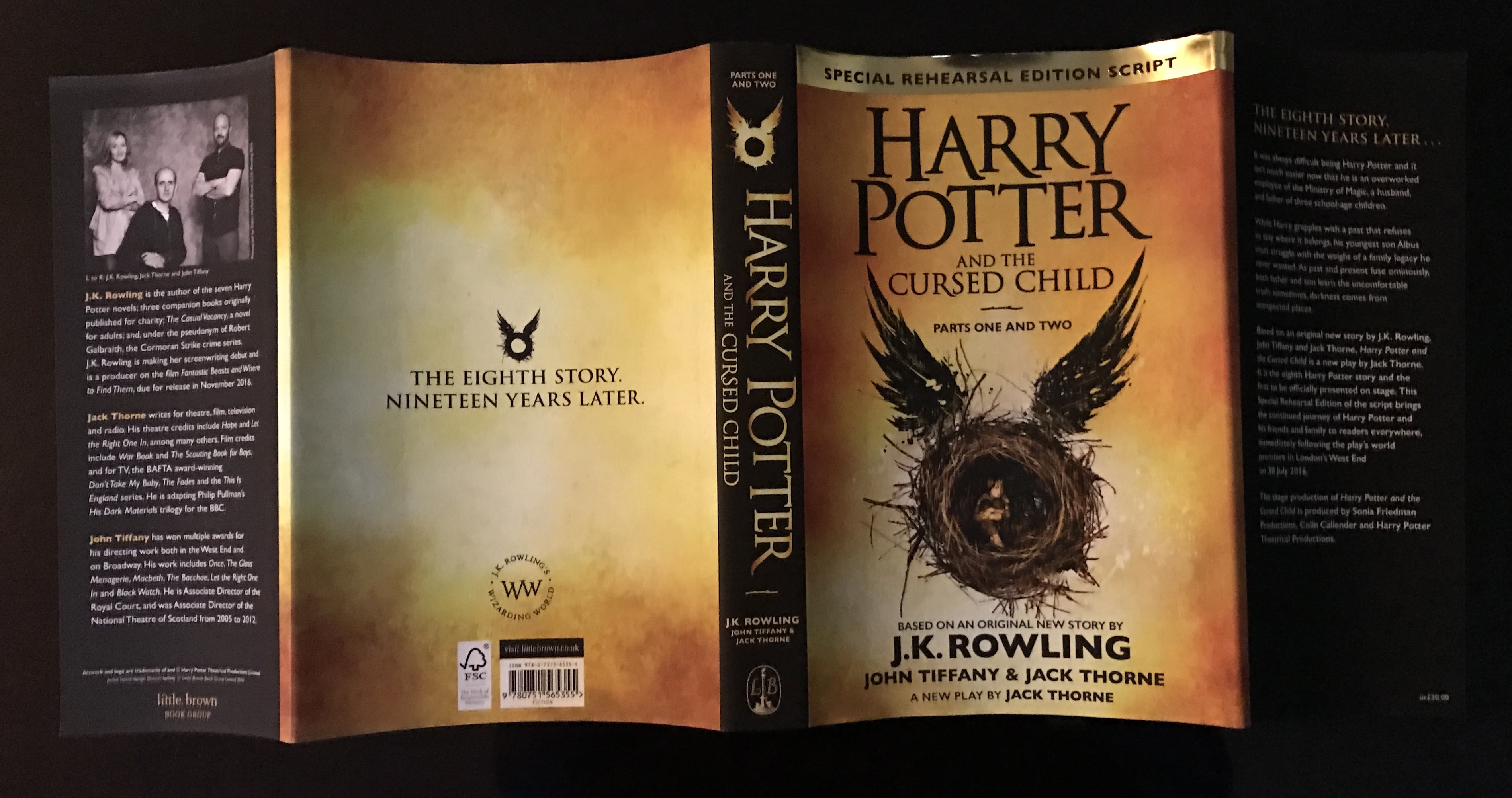
cursed-child-dust-jacket-edBy Ande Jacobson

J.K. Rowling discovered gold when her first Harry Potter book, Harry Potter and the Philosopher’s Stone (renamed to Harry Potter and the Sorcerer’s Stone outside of the U.K.), hit the presses in 1997. Intended as the first installment of a seven-part children’s book series, it fortuitously (though unexpectedly) appealed to readers of all ages. Rowling released the subsequent books over the next decade with the final installment reaching the shelves in July 2007 with Harry Potter and the Deathly Hallows. The reception was phenomenal. Not only did readers clamber for each new book, the movie industry embraced the stories and released blockbuster adaptations of each one, the last taking two films to fully explore.

In 2015, a new story synopsis in the Harry Potter oeuvre surfaced. The story was written by J.K. Rowling, John Tiffany, and Jack Thorne, and Thorne went on to put this story into the form of a play. The full rehearsal script of Harry Potter and the Cursed Child was released on 31 July 2016, one day after the maiden voyage of the play opened in London. This review discusses only the script as a book, not as commentary on any performance of the material. Continue reading

The Pear’s “Uncanny Valley” touches the heart of the Silicon Valley

uncanny-valley-2By Ande Jacobson

The Pear takes a stunning leap into the world of science fiction with Thomas Gibbons’ play, Uncanny Valley. What constitutes sentience, and more than that, what makes a person a person? Taking a further leap, can we conceive of a time when a robot could be considered a person? The world of science fiction has explored this in myriad ways over the years. In the mid-20th century, Isaac Asimov set forth the Three Laws of Robotics in his short story Runaround (one of the stories in the I Robot collection) which stated:

  • A robot may not injure a human being or, through inaction, allow a human being to come to harm.
  • A robot must obey the orders given it by human beings except where such orders would conflict with the First Law.
  • A robot must protect its own existence as long as such protection does not conflict with the First or Second Laws.

Continue reading